What areas does the center have, and why?
Every space in the center serves a therapeutic purpose. These are the main areas and what each is for:
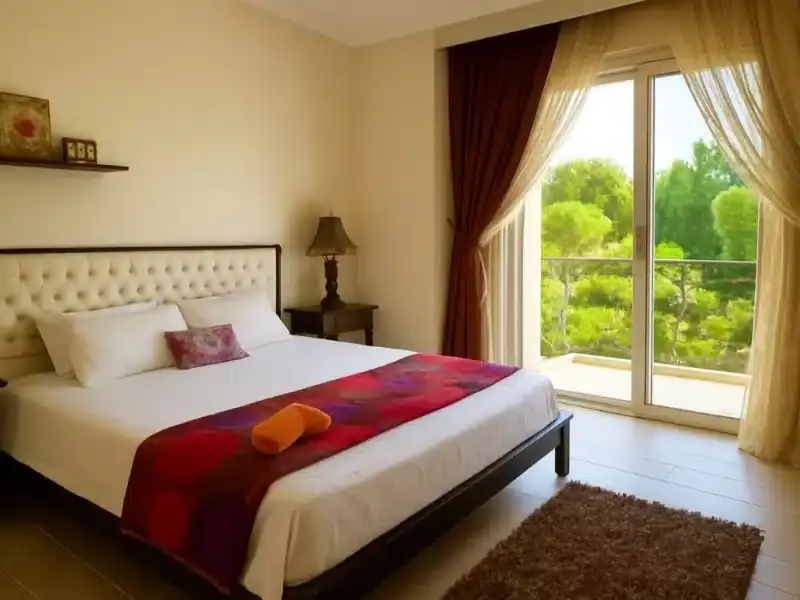
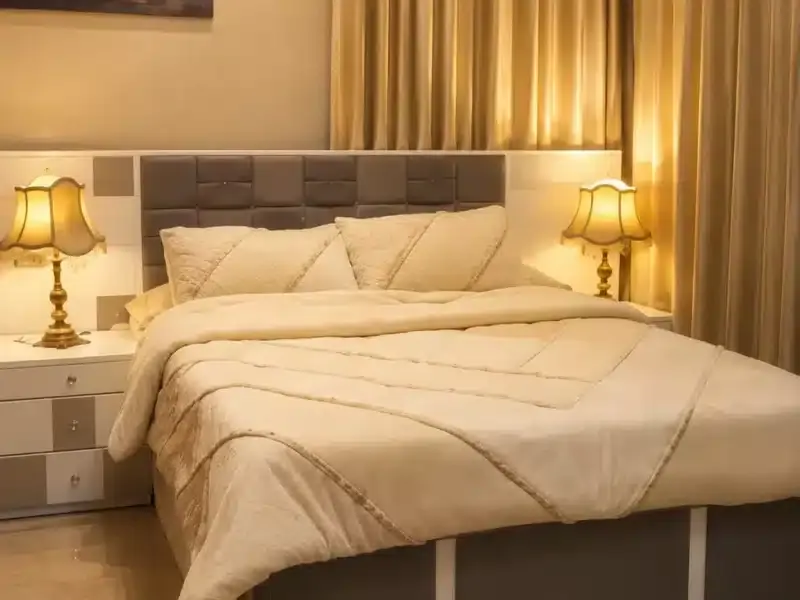
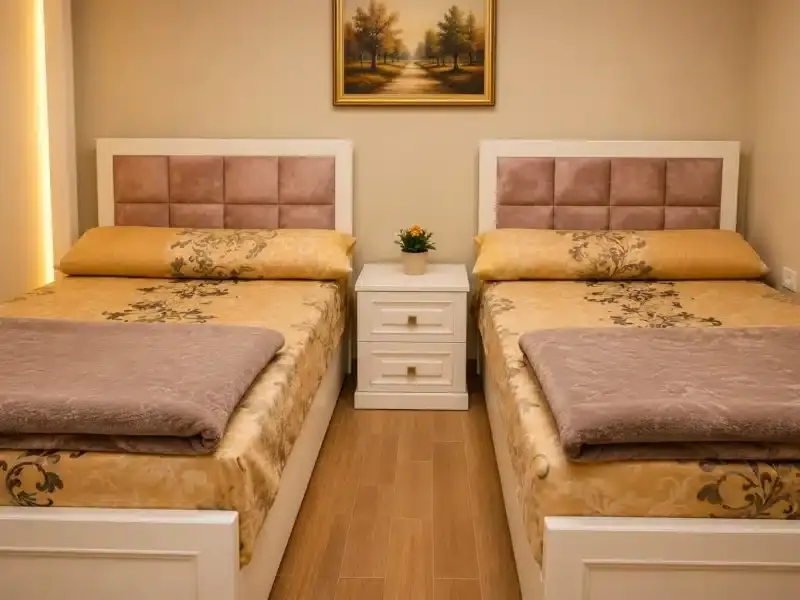
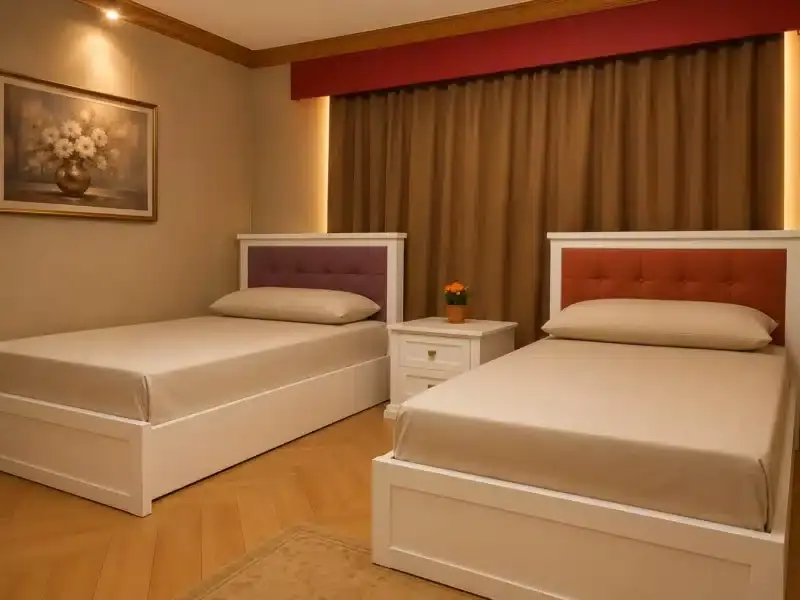
16 rooms: 3 single rooms, 5 double rooms and 8 triple rooms, with capacity for 37 beds depending on the room types. The rooms are quiet and are checked to be safe, and the room type is chosen according to the patient’s condition and stage of treatment.
For group sessions, support groups and educational talks, it is the heart of the daily treatment program.
A green space for time outdoors, walking and quiet, because getting away from four walls is part of recovery.
Because regular physical activity improves sleep and mood and helps the body recover after substance use.
A space for physical activity and outdoor relaxation, used according to a schedule and supervision set by the team.
Organized activities that restore the rhythm of a healthy day for the patient and help them discover new ways to spend time and express themselves.
Photos from inside Eradah Center
Real photos of the center in Sheikh Zayed. None of them shows a patient, to protect privacy. Click any photo to enlarge it.

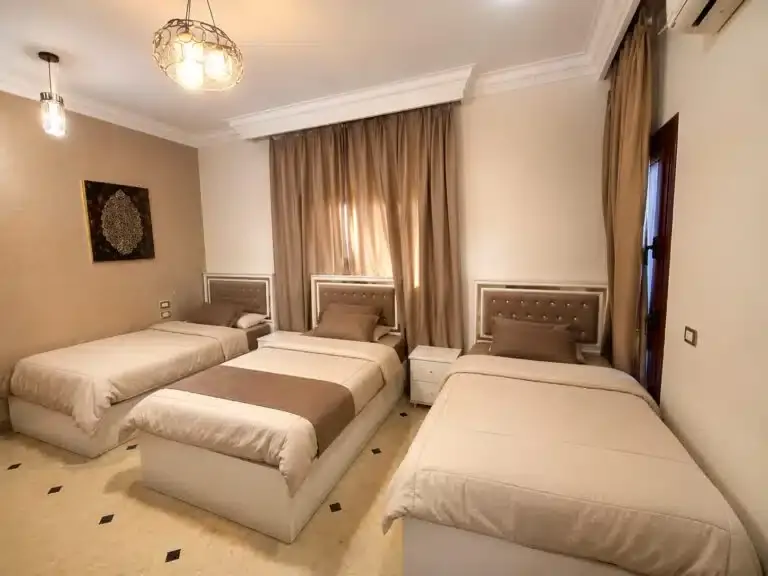

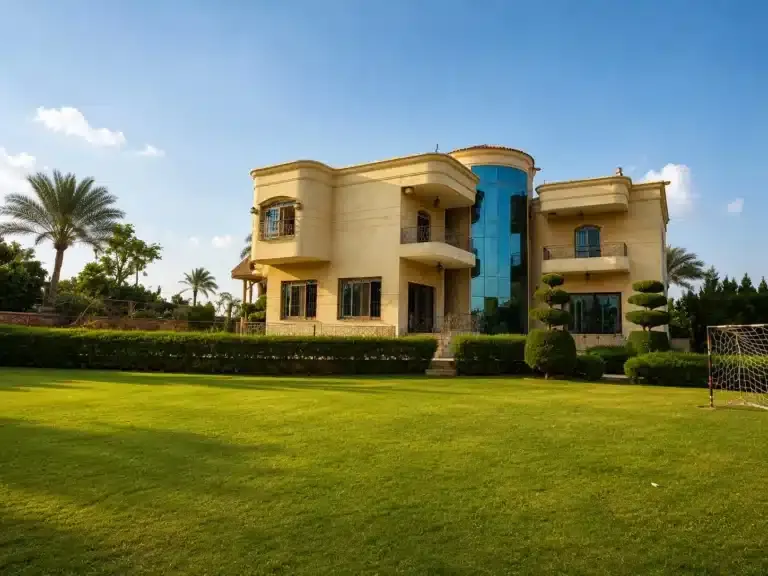

How does the center keep patients safe?
Safety in a psychiatric and addiction treatment center means two things together: protecting the patient from the complications of withdrawal and psychiatric crises, and protecting them from any treatment that harms their dignity. These are our commitments on both sides:
- A doctor and nursing staff at the center around the clock, with closer monitoring during the first days of detox.
- A doctor and nursing staff at the center around the clock. If a case needs hospital care, the patient is transferred by ambulance to the nearest suitable hospital, since the center is not part of a hospital and has no contract with any particular hospital.
- Regular checks of the environment to reduce any risks for people going through a psychiatric crisis.
- Belongings are checked on admission and during visits in a respectful way, to ensure a substance-free environment.
- Medications are stored and dispensed by nursing staff only, according to the doctor’s prescription.
- No violence, humiliation or physical punishment, and any exceptional measure to protect the patient is taken by medical decision and in accordance with the law.
On patient rights and exceptional measures, the center follows the provisions of Law No. 71 of 2009 on the Care of Mental Patients, which protects the rights of mental health patients and regulates admission and treatment. This is a general awareness overview and not legal advice.
Does staying at the center protect the patient’s privacy?
Privacy is one of the things families worry about most, and for us it is part of treatment, not an extra feature. We commit to the following:
- The patient’s presence at the center is not revealed to anyone who asks, except to those the patient or their family have designated.
- The medical file is seen only by the treating team, and is kept in accordance with the privacy policy.
- Patients are not photographed and their stories are not published anywhere, even under pseudonyms.
- Visits to the center are by prior appointment, to protect the privacy of patients and their families.
What is daily life like inside the center?
The day at the center is organized and predictable, because the routine itself helps restore a healthy rhythm after the chaos of substance use. The day is usually divided between individual and group sessions, sports and arts activities, regular meals, and time for rest and sleep at fixed hours, with space for privacy and reflection.
The day varies by stage of treatment: the first days of detox are quieter and dominated by medical care, then activity and psychological therapy gradually increase. You will find the detailed daily schedule and the residence rules on the residential treatment page.
What is the visiting policy at the center?
The family is a partner in treatment, and visiting is part of it, not a reward. So the team organizes visits in a way that supports the stage of treatment:
| Item | Details |
|---|---|
| Hours | It is set by the treating team according to the stage of treatment and the patient’s condition, and we explain it to the family in detail at the assessment. |
| The first days | The team may recommend postponing visits during the first days of detox, depending on the patient’s condition. |
| Who may visit? | People approved by the patient and the treating team. |
| What to bring | At the assessment, we explain to the family what can be brought for the patient and what is not allowed, in order to keep the environment safe. |
| Family sessions | Arranged at separate appointments as part of the family therapy program. |
Where is the center and how do you get there?
| Item | Details |
|---|---|
| Address | Sheikh Zayed City, Giza Governorate |
| Nearest landmark | Sphinx Airport Road |
| Route and map | The map link and directions are available when you contact us. |
| Accessibility | The facility is not currently equipped for wheelchairs. If the patient or one of the visitors uses a wheelchair, please call us first so we can explain the situation and advise you on what suits you. |
If the patient is in an emergency, such as loss of consciousness, difficulty breathing or seizures, do not wait to reach the center: call the ambulance on 123 immediately, and read what to do in an overdose.