What is alcohol?
The alcohol in drinks is ethanol, or ethyl alcohol, a liquid produced when yeasts convert the sugars in grains or fruit into alcohol and carbon dioxide. In Arab culture it is known as “khamr.”
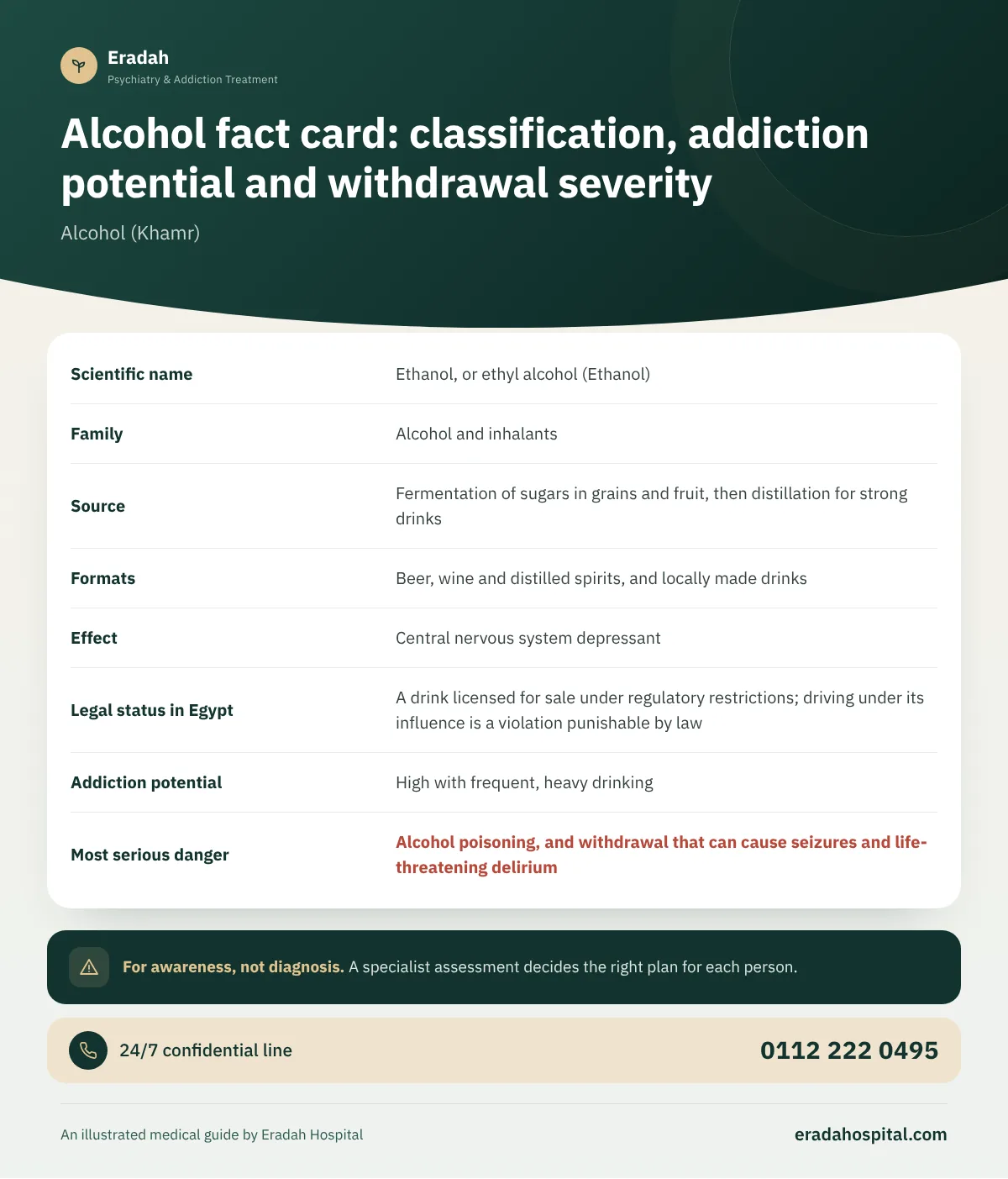
Although alcohol is legal in many countries, medically it is a psychoactive substance that changes brain chemistry and can cause physical dependence and addiction like other substances. That is why the World Health Organization and international medical classifications treat it as a substance around which a disorder requiring treatment can develop.
It is important to distinguish the ethanol in drinks from other types of alcohol, such as methanol (methyl alcohol), used in industry, and medical alcohol, used for external disinfection. These types are highly toxic if swallowed and can cause blindness or death.
Forms of alcohol and types of drinks
Alcoholic drinks differ in how they are made and how concentrated the alcohol is, but the active substance is the same in all of them, and its effect on the body depends on the actual amount of ethanol, not the type of drink:
Such as beer and wine, made by fermenting grains, grapes or fruit, with a relatively lower alcohol concentration.
Such as whisky and vodka, which are distilled after fermentation, so their alcohol concentration is much higher.
Drinks made locally without oversight, which may contain toxic methanol or dangerous impurities that are hard to detect.
How does alcohol affect the brain and body?
Alcohol is absorbed quickly from the stomach and intestines into the blood and reaches the brain within minutes. The liver then breaks it down gradually at a roughly constant rate that cannot be sped up by coffee, water or sleep. It affects the brain through several pathways:
- Strengthening calming signals: it boosts an inhibitory neurotransmitter called GABA, so the person feels relaxed, then drowsy, with slowed reactions.
- Suppressing stimulating signals: it reduces the activity of glutamate, which explains impaired memory, balance and speech.
- Reward circuits: it releases dopamine and endorphins, so the brain links drinking with feeling comfortable, which is the basis of the urge to repeat.
- With repetition: the brain adapts to the presence of alcohol by reducing its calming signals and increasing the stimulating ones, so tolerance forms and withdrawal appears when drinking stops.
The whole body is affected too: blood vessels widen, so the person feels warm even though their core temperature drops, judgment and self-control weaken, and urine output and dehydration increase. In the liver, alcohol is converted into a toxic substance called acetaldehyde, which is responsible for much of its harm to tissues.
The feeling of relaxation at the start of drinking is only the first face of a depressant; the brain that gets used to this artificial calm responds with tension and sleeplessness when it is absent.
When does drinking alcohol become addiction?
Not all drinking turns into addiction, but the risk rises with repetition and large amounts. Doctors use the term alcohol use disorder to describe a condition in which a person loses the ability to control their drinking despite harm to their health, family or work, and its severity ranges from mild to moderate to severe.
It is important to understand that addiction is not only a matter of morals or willpower; it is a real change in the brain circuits responsible for reward, impulse control and response to stress. That is why it needs treatment, like any chronic illness.
The legal status of alcohol in Egypt
Alcohol is not listed among the prohibited narcotic substances in Egypt; its production and sale are permitted in licensed outlets under regulatory restrictions. However, the law criminalizes driving under the influence of intoxicants, and rules restrict sale and drinking in public places. That alcohol is legal does not mean it is safe; legal status is one thing and medical effect is another.
The Fund for Drug Control and Treatment of Addiction offers free, confidential treatment for alcohol and other addictions through hotline 16023, alongside specialized centers.
This is general educational information and not legal advice.
How does alcohol differ from sedatives and stimulants?
Alcohol shares some mechanisms of action with other substances and differs from them in other ways. This is a simplified comparison for general understanding:
| Point of comparison | Alcohol | Sedatives (Xanax and Valium) | Cocaine |
|---|---|---|---|
| Type of effect | Nervous system depressant | Nervous system depressant | Nervous system stimulant |
| Medical use | Not used as a drink for any therapeutic purpose | Prescription medications for anxiety and seizures | No common therapeutic use |
| Withdrawal risk | May cause seizures and delirium | May also cause seizures | Depression, exhaustion and cravings |
| Mixing them | Very dangerous with sedatives | Very dangerous with alcohol | Increases the burden on the heart |
How should a family deal with someone who drinks alcohol?
In Egyptian society, talking about alcohol can be embarrassing or surrounded by stigma, so families tend toward silence or anger. But a calm, non-accusing approach is the most effective way to open the door to treatment:
- Choose a time when the person is not under the influence of drinking, and talk calmly and in private.
- Describe what you notice from specific situations instead of general accusations or insults.
- Express your concern for their health and your relationship, not a judgment of them.
- Do not encourage them to stop suddenly on their own if they have been drinking heavily for some time; direct them to a medical assessment instead.
- Ask for support for yourself too, because patients' families need guidance and support.
Common myths about alcohol
| The myth | The truth |
|---|---|
| “Alcohol energizes and cheers you up” | It is a depressant at root; the initial lift comes from weakened self-control and is often followed by a drop in mood. |
| “Coffee or a cold shower sobers up a drunk person” | Nothing speeds up the liver's clearing of alcohol, and these tricks may increase the risk. |
| “Beer is light and doesn't cause addiction” | All drinks contain the same ethanol, and addiction is about the amount and pattern, not the type of drink. |
| “Someone who can handle a lot isn't affected” | High tolerance is a sign the brain has adapted, and one of the first indicators of dependence. |
Alcohol guide: everything you need to know
We have gathered everything about alcohol into 8 pages, each answering one question in detail. Choose what you are looking for:
Harms of alcohol
From fatty liver to cirrhosis, pancreatitis, heart disease, several types of cancer, brain damage and thiamine deficiency, as well as accidents and its effect on the fetus.
Causes of alcohol addiction
Why does social drinking turn into addiction in some people? The role of genetics, anxiety, depression, trauma and starting to drink early.
Alcohol addiction symptoms
The physical and behavioral signs a family may notice, the diagnostic criteria for alcohol use disorder, and how to start the conversation.
Alcohol withdrawal symptoms
They begin within hours of the last drink and can progress to seizures and delirium tremens. The timeline, and why medical supervision is needed.
Alcohol addiction treatment
Safe detox under medical supervision with thiamine, then medications that help prevent relapse, psychological therapy, support groups and follow-up.
How long alcohol stays in the body
How long alcohol stays in the breath and blood, and what its by-products are, which can be detected in urine, blood and hair for longer periods.
Dealing with a person with alcohol addiction: a practical guide for families
Dealing with a person with alcohol addiction step by step: how to talk to them when they are not drinking, why confrontation fails, the danger of stopping suddenly, signs of intoxication that call for an ambulance, and protecting children.
Methanol poisoning (adulterated alcohol): how to save a life and eyesight?
Methanol poisoning from adulterated alcohol: why symptoms are delayed, the signs of blindness and danger, what to do immediately, how the hospital treats it, and why it cannot be detected by taste or smell.
Alcohol in numbers
Source: World Health Organization alcohol fact sheet.
Signs of alcohol poisoning and withdrawal danger: call the ambulance on 123 immediately
- Severe confusion, difficulty staying awake, or being unable to be roused
- Vomiting while semi-conscious, with a risk of choking
- Seizures, whether during drinking or in the first days after stopping
- Very slow or irregular breathing, or pauses between breaths
- Cold, bluish or pale skin, and a drop in body temperature
- Delirium, severe tremor and hallucinations days after stopping drinking
Call the ambulance on 123 and do not leave the person alone. If they lose consciousness, place them on their side so they do not choke on vomit, and do not give them coffee, put them under cold water or force them to walk; these are myths that do not stop the poisoning and may make it worse, because the alcohol in the stomach keeps reaching the blood.
Call the ambulance 123