What are sedatives and sleeping pills?
Sedatives and sleeping pills are a group of medicines that slow the activity of the central nervous system, easing anxiety, helping sleep, preventing seizures and relaxing muscles.
These medicines differ in their composition and in the reasons they are prescribed, but they share the fact that they are legitimate medicines with important medical uses, and that long or incorrect use can cause physical and psychological dependence. That is why they are dispensed in Egypt by prescription and their dispensing is controlled.
The best-known members of this family in Egypt are Xanax, Rivotril and Valium, from the benzodiazepine group, and pregabalin, known commercially as Lyrica, which is from a different group but has become one of the most misused medicines in recent years.
The problem is that many people do not see these tablets as “drugs” because they are sold in pharmacies. They use them without a doctor to sleep or to escape stress, or mix them with other substances, until they find themselves unable to stop.
How do sedatives affect the brain?
The brain works by balancing signals that excite nerve cells against signals that calm them. The main calming neurotransmitter is GABA. Benzodiazepines strengthen the effect of this neurotransmitter, so nerve excitability falls, anxiety eases, drowsiness comes, and seizures become less likely.
Pregabalin works differently: it binds to part of the calcium channels in nerve cells and reduces the release of excitatory neurotransmitters. The result is similar: a calming of the nervous system, along with the risk of excessive depression of function when misused or mixed.
Lower anxiety, easier sleep and muscle relaxation.
Poor concentration and memory, slow reactions, and a danger when driving.
With daily use for weeks the brain adapts, and withdrawal appears when use stops.
Its danger is limited with the medicine alone, but it multiplies with opioids and alcohol.
What are the types of sedatives and sleeping pills?
Doctors divide these medicines into groups according to how they work. Some of these groups do not have separate pages on our site, but knowing them helps you understand what the doctor writes in the prescription:
| Group | How they work | Examples | Note |
|---|---|---|---|
| Benzodiazepines | Strengthening the effect of the calming neurotransmitter GABA | Xanax, Rivotril, Valium | The most prescribed and the most misused |
| “Z-drug” sleeping medicines | Act on the same GABA receptors, but more selectively | Zolpidem and similar drugs | Prescribed for insomnia for short periods |
| Gabapentinoids | Reducing the release of excitatory neurotransmitters | Pregabalin, gabapentin | Their greatest danger is with opioids |
| Barbiturates | Strong depression of the nervous system | Older medicines | Rarely used today because of their danger |
Even within the benzodiazepines there is an important difference in duration of action: short-acting Xanax works quickly and wears off quickly, which is why it is linked to faster dependence and rebound anxiety between tablets, while Rivotril and Valium last longer, and Valium and its metabolites stay in the body for days and may accumulate with repeated use.
Types of sedatives and sleeping pills
Each medicine in this family has a complete guide and separate pages on its harms, withdrawal and treatment. Here is a brief profile of each:
Pregabalin
PregabalinAlso known as: Lyrica
A medication for nerve pain and epilepsy sold commercially as Lyrica, misused for its sedating and euphoric effect.
- Classification
- Nerve medication
- Medical use
- Nerve pain and epilepsy
- Addiction potential
High- Withdrawal
High
Main risk: respiratory depression with opioids
Xanax
AlprazolamAlso known as: alprazolam
A sedative from the benzodiazepine family prescribed for anxiety and panic attacks, which causes dependence quickly.
- Classification
- Short-acting benzodiazepine
- Medical use
- Anxiety and panic attacks
- Addiction potential
High- Withdrawal
Very high
Main risk: very dangerous with alcohol and opioids
Rivotril
ClonazepamAlso known as: clonazepam
A long-acting sedative used for epilepsy and panic attacks, and stopping it suddenly can cause seizures.
- Classification
- Long-acting benzodiazepine
- Medical use
- Epilepsy and panic attacks
- Addiction potential
High- Withdrawal
Very high
Main risk: seizures on sudden discontinuation
Valium
DiazepamAlso known as: diazepam
One of the oldest benzodiazepines, used for anxiety and muscle spasms and sometimes as part of medical alcohol detox.
- Classification
- Long-acting benzodiazepine
- Medical use
- Anxiety and muscle spasms
- Addiction potential
High- Withdrawal
Very high
Main risk: dangerous with alcohol and opioids
Gabapentin
GabapentinAlso known as: Neurontin
A medication for nerve pain and epilepsy from the same family as pregabalin, misused as a substitute for Lyrica after controls on it were tightened.
- Classification
- Nerve medication
- Medical use
- Nerve pain and epilepsy
- Addiction potential
Moderate- Withdrawal
Moderate
Main risk: respiratory depression with opioids and sedatives
Night Calm
EszopicloneAlso known as: eszopiclone, Lunesta
A Z-drug sleeping pill prescribed for short-term insomnia, which can cause dependence and complex behaviors during sleep.
- Classification
- Z-drug sleeping pill
- Medical use
- Short-term insomnia
- Addiction potential
Moderate- Withdrawal
Moderate
Main risk: behaviors during sleep, and danger with alcohol and opioids
Zolpidem
ZolpidemAlso known as: Stilnox, Ambien
A fast, short-acting Z-drug sleeping pill, linked to most cases of complex behaviors during sleep.
- Classification
- Z-drug sleeping pill
- Medical use
- Short-term insomnia
- Addiction potential
Moderate- Withdrawal
Moderate
Main risk: sleepwalking and sleep-driving, and mixing it with opioids
Lorazepam
LorazepamAlso known as: Ativan
An intermediate-acting benzodiazepine for anxiety and sedation, which causes dependence with daily use over weeks.
- Classification
- Intermediate-acting benzodiazepine
- Medical use
- Anxiety, sedation and seizures
- Addiction potential
High- Withdrawal
High
Main risk: very dangerous with opioids and alcohol
Roche pills
FlunitrazepamAlso known as: Rohypnol, flunitrazepam
A powerful benzodiazepine sleeping pill that temporarily erases memory, linked to assaults and to the danger of mixing with alcohol.
- Classification
- Powerful benzodiazepine sleeping pill
- Medical use
- Insomnia in some countries
- Addiction potential
High- Withdrawal
High
Main risk: memory loss and respiratory depression when mixed
Barbiturates
BarbituratesAlso known as: phenobarbital, Sominaleta
Older sedatives, best known being phenobarbital for epilepsy; their margin of safety is narrow and there is no direct antidote for an overdose.
- Classification
- Older nervous system depressants
- Medical use
- Epilepsy (phenobarbital)
- Addiction potential
High- Withdrawal
High
Main risk: overdose with no antidote, and dangerous withdrawal
GHB
Gamma-hydroxybutyrateAlso known as: liquid ecstasy, GBL
A depressant sold as a clear liquid, where a small difference in dose separates euphoria from coma, especially with alcohol.
- Classification
- Nervous system depressant
- Medical use
- Narcolepsy (as a medication)
- Addiction potential
High- Withdrawal
High
Main risk: sudden coma, especially with alcohol
Benzodiazepines
BenzodiazepinesAlso known as: Xanax, Rivotril, Valium, Lexotanil
A family of sedatives that strengthen the effect of GABA, prescribed for anxiety, epilepsy and insomnia, and causing dependence with daily use over weeks.
- Classification
- Family of sedatives
- Medical use
- Anxiety, epilepsy, insomnia and sedation
- Addiction potential
High- Withdrawal
High
Main risk: potentially fatal with opioids and alcohol, and withdrawal is dangerous
Lexotanil
BromazepamAlso known as: bromazepam, Lexotan
A benzodiazepine sedative prescribed for anxiety and severe tension, which causes dependence with long daily use.
- Classification
- Benzodiazepine sedative
- Medical use
- Anxiety, tension and irritability
- Addiction potential
Moderate- Withdrawal
High
Main risk: dangerous with tramadol and alcohol, and withdrawal can cause seizures
Comparison of the best-known sedatives
| Medicine | Group | Medical use | Duration of effect | Main risk |
|---|---|---|---|---|
| Xanax | Benzodiazepine | Anxiety and panic attacks | Short | Rapid dependence and rebound anxiety between tablets |
| Rivotril | Benzodiazepine | Epilepsy and panic attacks | Long | Seizures with sudden withdrawal |
| Valium | Benzodiazepine | Anxiety, spasms, and medical alcohol withdrawal | Very long | Accumulation in the body, especially in older adults |
| Pregabalin | Gabapentinoid | Nerve pain and epilepsy | Moderate | Respiratory depression with tramadol and opioids |
Despite these differences, all medicines in this family are dispensed in Egypt by prescription and are subject to control, and pregabalin was placed on the narcotics schedules in 2019 after its misuse became widespread. This is general educational material and not legal advice.
Why is mixing sedatives with opioids or alcohol deadly?
A sedative on its own rarely stops breathing in a healthy adult, but opioids and alcohol depress breathing in a different way, so when they are combined with it the effect multiplies. That is why the US Food and Drug Administration has issued strong warnings against combining benzodiazepines with opioids, and against combining pregabalin with opioids.
In Egypt it is common to mix pregabalin or Rivotril with tramadol to increase the effect, which is one of the most dangerous patterns bringing cases to the emergency room. Source: the US Centers for Disease Control report on benzodiazepine deaths.
Why does a sedative medicine turn into addiction?
- Continuing it for months when it is meant for a short time.
- Increasing the amount without going back to the doctor when the effect weakens.
- Using it to escape feelings or problems instead of treating them.
- Getting it from someone other than the treating doctor, or from more than one doctor.
- Mixing it with other substances to seek euphoria.
Common myths about sedatives and sleeping pills
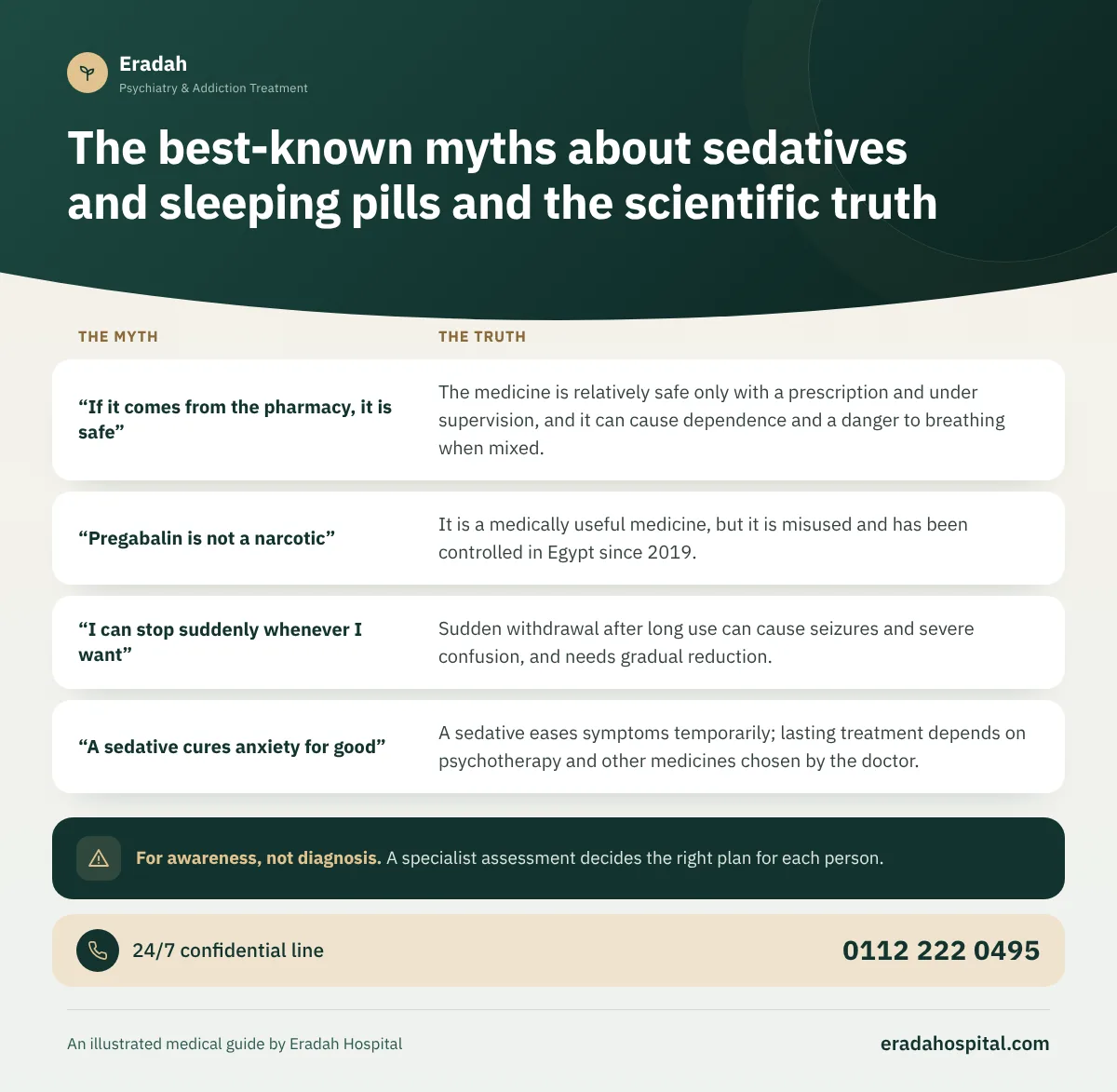
| The myth | The truth |
|---|---|
| “If it comes from the pharmacy, it is safe” | The medicine is relatively safe only with a prescription and under supervision, and it can cause dependence and a danger to breathing when mixed. |
| “Pregabalin is not a narcotic” | It is a medically useful medicine, but it is misused and has been controlled in Egypt since 2019. |
| “I can stop suddenly whenever I want” | Sudden withdrawal after long use can cause seizures and severe confusion, and needs gradual reduction. |
| “A sedative cures anxiety for good” | A sedative eases symptoms temporarily; lasting treatment depends on psychotherapy and other medicines chosen by the doctor. |
What dangers do sedatives share?
- Drowsiness, slow reactions, and car and workplace accidents.
- Poor memory and concentration, and blackouts for periods while under the effect.
- Falls, fractures and confusion, especially in older adults.
- Dependence and withdrawal, and rebound anxiety when the effect wears off.
- Respiratory depression when mixed with opioids or alcohol.
- Depression and loss of motivation, and family and work problems.
Details are in harms of Xanax, harms of pregabalin and harms of Valium.
Is sedative withdrawal dangerous?
Yes, and this is the most important point about this family. Benzodiazepine withdrawal after long use can cause severe anxiety, insomnia and tremor, and in severe cases seizures, hallucinations and confusion that can be life-threatening, like alcohol withdrawal. Stopping pregabalin suddenly can also cause withdrawal symptoms and seizures in people with epilepsy.
That is why the rule is firm: a sedative is not stopped suddenly after long use; it is reduced gradually under a plan set by the doctor that may extend over weeks or months. Details are in Xanax withdrawal, Rivotril withdrawal and pregabalin withdrawal.
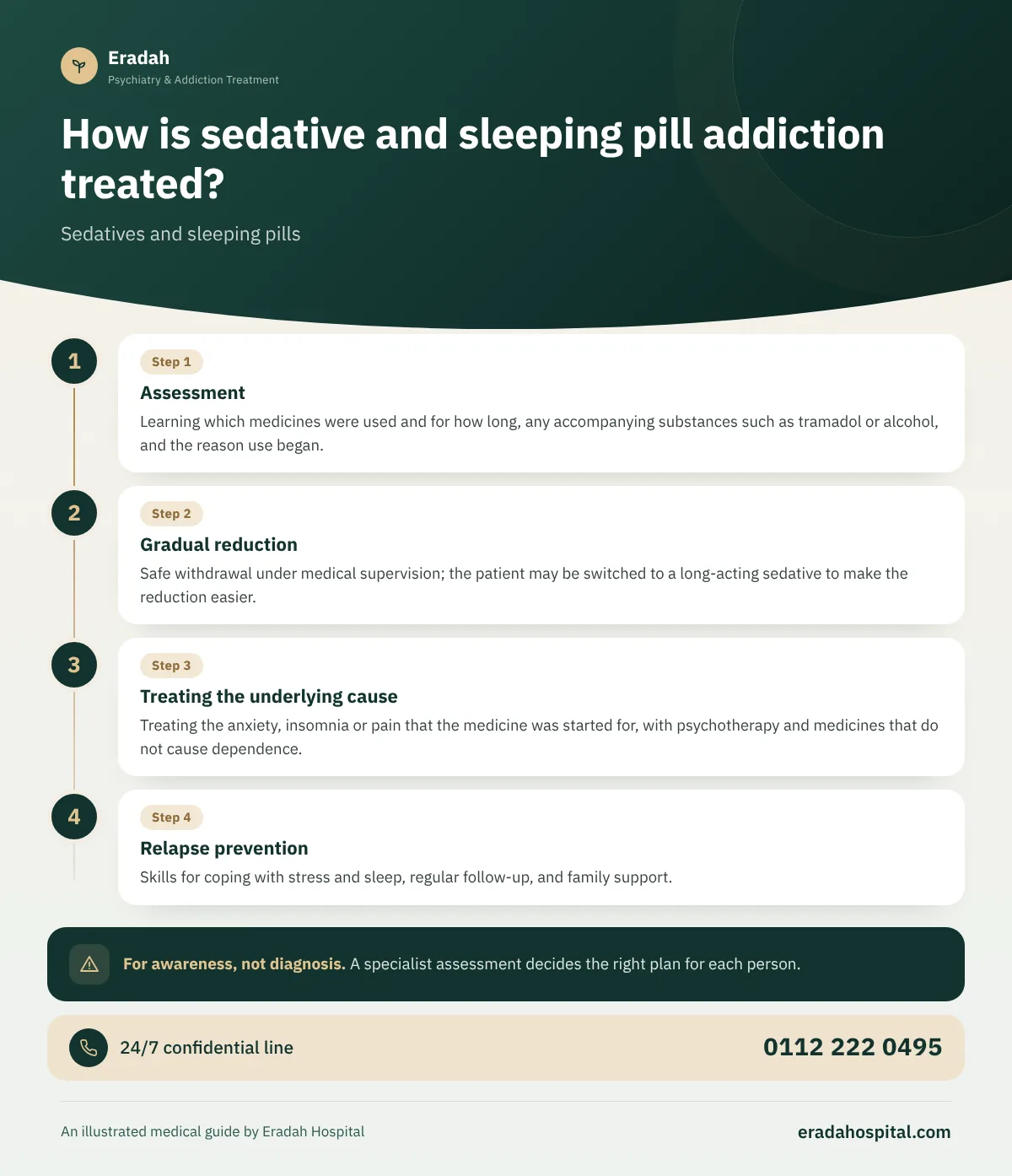
How is sedative and sleeping pill addiction treated?
- Step 1Assessment
Learning which medicines were used and for how long, any accompanying substances such as tramadol or alcohol, and the reason use began.
- Step 2Gradual reduction
Safe withdrawal under medical supervision; the patient may be switched to a long-acting sedative to make the reduction easier.
- Step 3Treating the underlying cause
Treating the anxiety, insomnia or pain that the medicine was started for, with psychotherapy and medicines that do not cause dependence.
- Step 4Relapse prevention
Skills for coping with stress and sleep, regular follow-up, and family support.
Read more in pregabalin addiction treatment, Xanax addiction treatment and Rivotril addiction treatment.
Do sedatives show up on a drug test?
Most benzodiazepines show up on rapid urine tests, but the sensitivity of these tests varies from one medicine to another, and some may not be detected well. Pregabalin is not usually part of routine tests and needs a special test. A positive result needs laboratory confirmation, and detection times are approximate and vary by laboratory. Details are in Valium testing and pregabalin testing.
How can the family deal with sedatives at home?
- Keep sedative medicines locked away, and watch for unexplained shortages.
- Pay attention to older adults taking sedatives; they are more prone to falls and confusion.
- Watch for constant drowsiness, slurred speech, poor memory and changes in behavior in your children.
- Never give anyone a sedative prescribed for someone else, even with the intention of helping.
- If stopping is not possible, seek specialist advice rather than trying to stop at home.
Danger signs with sedatives and sleeping pills: call ambulance (123) immediately
- Deep drowsiness, or great difficulty waking the person
- Slow, shallow or irregular breathing, especially if the medicine was mixed with opioids or alcohol
- Bluish lips and cold skin
- Severe slurred speech, loss of balance and confusion
- Seizures after suddenly stopping a sedative used for a long time
- Hallucinations or severe confusion within days of stopping
Call ambulance (123), place the person on their side in the recovery position, and do not leave them alone or give them anything by mouth. If seizures appear after stopping a sedative, do not try to give the medicine yourself; treatment is given in the hospital. A sedative used for a long time must never be stopped suddenly without a doctor.
Call the ambulance 123