What is shabu?
Shabu, or ice, is methamphetamine in crystalline form, a powerful synthetic stimulant of the central nervous system that belongs to the amphetamine family but is stronger than amphetamine, longer-lasting and faster to reach the brain.
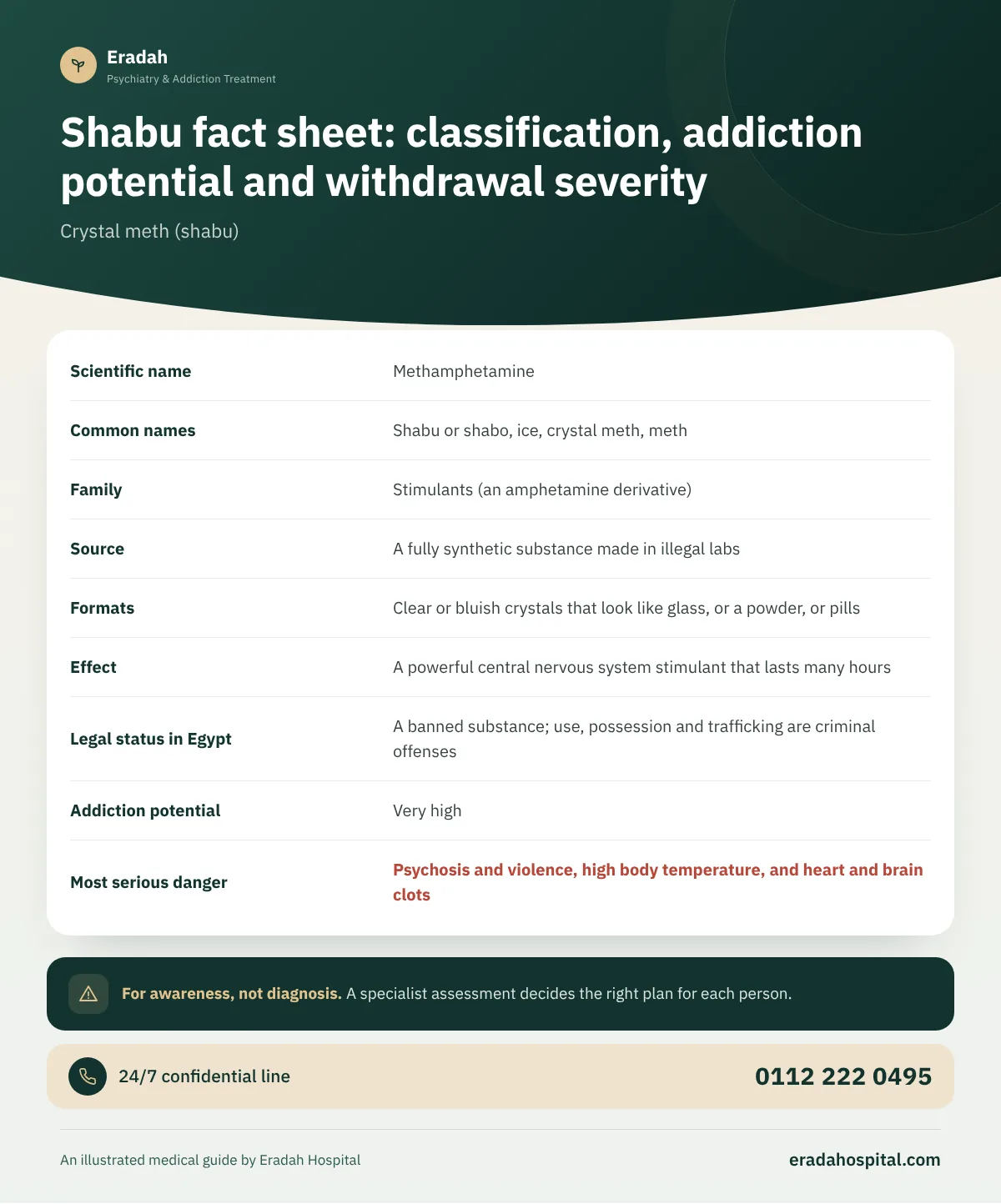
The name “shabu” spread in Egypt in recent years, and it is the same name by which the substance is known in a number of Asian countries. “Ice” and “crystal meth” are names taken from its appearance, which resembles pieces of ice or broken glass. All of them are names for one substance, although its purity differs from one source to another.
Unlike hashish or opium, shabu does not come from a plant. It is made entirely from chemicals in secret labs that are subject to no oversight. This means that the person using it does not know the strength of what is in their hand or what it has been mixed with, which is a basic danger every single time.
Street names for shabu: shabo, ice and crystal meth
Methamphetamine is known in Egypt and the Arab world by more than one name, and all of them refer to the same substance, even if its form or the way it is sold differs. Knowing these names helps families understand what they hear or read in their children’s messages:
- Shabu or shabo: the most widespread name in Egypt, written and pronounced both ways.
- Ice and crystal: a reference to its crystalline form that looks like pieces of glass or broken ice, the best-known form of methamphetamine on the illegal market.
- Crystal meth or meth: a short form of the English name, crystal methamphetamine.
- Methamphetamine: the scientific name of the substance, chemically close to amphetamine but with a stronger effect on the brain.
Captagon, on the other hand, is a different name for other stimulant pills, not a name for shabu, although some of their effects are similar.
Forms of shabu and its common names
Methamphetamine appears on illegal markets in more than one form, and the form affects how quickly it reaches the brain and how strong its effect is:
Clear or bluish-white pieces that look like glass or ice, the best-known form under the names shabu and crystal.
A white or yellowish powder, often adulterated with other substances.
Colored pills that may contain methamphetamine mixed with caffeine, and may be sold as other stimulant pills.
Because illegal stimulants look alike, a person may take pills they believe to be Captagon that actually contain methamphetamine, or the other way around. The true contents can never be known by looking.
How does shabu affect the brain and body?
Methamphetamine crosses the blood-brain barrier very quickly because it dissolves easily in fat. There it drives nerve cells to release huge amounts of three neurotransmitters, dopamine, norepinephrine and serotonin, and blocks their reuptake, so they stay elevated for a long time.
- In the reward circuits: dopamine rises to levels far above what any natural pleasure produces, so the user feels euphoria, excess confidence and a great deal of energy.
- In the sympathetic nervous system: heart rate, blood pressure and body temperature rise, the pupils widen, and appetite and the need for sleep decrease.
- In the areas of thinking and emotion: judgment declines and impulsiveness increases, and suspicion, anxiety and irritability may appear.
- With repetition: the brain adapts, so its response to ordinary pleasures fades, and the user needs the substance to feel “normal.” This is where the cycle of addiction begins.
Shabu differs from cocaine in that its effect lasts much longer, staying in the body for many hours before it is cleared. This is why a user may stay awake for a day or more without sleep or food, followed by a sharp “crash” in energy and mood.
The danger of shabu is that it does not merely change mood for a few hours; with repetition it changes how the brain itself works, and the brain may need many months to regain its balance after stopping.
Does methamphetamine have a medical use?
In a limited number of countries, including the United States, there is a licensed medication containing methamphetamine that is used very narrowly to treat attention-deficit/hyperactivity disorder (ADHD), and sometimes for short periods in the treatment of obesity. It is dispensed by restricted prescription and under close supervision.
But this has nothing to do with the shabu sold on the street, which is made by illegal methods and with unknown purity, and there is no “safe way” to use it outside medical supervision. ADHD medications available in Egypt, such as Ritalin, are different substances dispensed by prescription, and they must not be stopped or adjusted without consulting the treating doctor.
What is the difference between shabu, Captagon, cocaine and amphetamine?
All of these belong to the stimulant family, and they are alike in raising dopamine and causing sleeplessness and reduced appetite, but they differ in strength, duration and risks:
| Substance | Source | Duration of effect | Main risk |
|---|---|---|---|
| Crystal meth (methamphetamine) | Entirely synthetic | Very long (many hours) | Psychosis, violence, and damage to the heart and brain |
| Amphetamine | Synthetic, and the origin of the family | Long | Dependence, insomnia and heart damage |
| Captagon | Illicit tablets, mostly amphetamine and caffeine | Long | Adulterated contents, dependence and anxiety |
| Cocaine | Extracted from the coca plant | Relatively short | Sudden heart attacks and repeated use |
Methamphetamine is stronger than amphetamine on the nervous system and reaches the brain faster, which is why it is more strongly linked to psychosis and addiction. You can read more in the guide to amphetamine and the guide to cocaine.
Common myths about shabu and the facts
| The myth | The truth |
|---|---|
| Shabu improves concentration and productivity | It gives temporary alertness, but staying awake and the crash that follows impair memory and performance with repeated use. |
| It can be controlled if you do not use it daily | The pattern of intermittent binges is itself one of the quickest routes to addiction. |
| Shabu is cleaner than other drugs because it is clear crystals | Its appearance says nothing about its purity, and it may be mixed with dangerous substances that cannot be seen. |
| Hallucinations mean the person has gone “mad” for good | Shabu psychosis is a treatable medical condition, and it usually improves with stopping and psychological treatment. |
The legal status of shabu in Egypt
Shabu is a banned substance in Egypt. Law No. 182 of 1960 on drug control, and its amendments, criminalizes its use, possession and trafficking, with harsher penalties for trafficking. At the same time, the law and health institutions encourage seeking treatment, and the Fund for Drug Control and Treatment of Addiction offers free, confidential treatment through hotline 16023, alongside licensed specialized centers.
This is general educational information and not legal advice.
What should a family do if they suspect their son is using shabu?
Suspicion alone is painful, but how you act in the first days makes a big difference. The aim is to open a door to treatment that he can walk through, not to catch him in the act:
- Choose a time when he is calm and not under the influence to talk with him, and begin with concern for him, not accusation.
- Avoid confronting him as a group, shouting or threatening, especially if he shows paranoia or irritability, as this may increase tension and violence.
- Talk about specific behaviors you have noticed rather than general judgments, and listen more than you speak.
- If possible, consult an addiction specialist before the conversation; they can help you plan a safe discussion.
- Do not deal alone with an episode of agitation or hallucinations: the priority is everyone’s safety, and call an ambulance if there is danger.
Remember that addiction is an illness that changes brain chemistry, not proof of poor upbringing or weak character. A family that supports treatment is one of the strongest factors in its success.
Shabu guide: everything you need to know
We have gathered everything about shabu into 9 pages, each answering one question in detail. Choose what you are looking for:
Harms of shabu
Its effects extend from the heart, blood vessels, teeth and skin to the brain and mental health, most notably psychosis, violence, high body temperature and clots.
Causes of crystal meth addiction
Why is shabu so quickly addictive? The role of the substance’s strength and the pattern of continuous binges, along with genetics, psychiatric disorders and environment.
Symptoms of shabu addiction
The physical, behavioral and psychological signs a family may notice, the criteria for diagnosing addiction, and how to talk with the person using.
Shabu withdrawal symptoms
Mainly psychological withdrawal: a crash, fatigue, long sleep, depression and cravings, and it needs monitoring because of the risk of severe depression.
Shabu (crystal meth) addiction treatment
Cognitive behavioral therapy and incentive-based programs are the cornerstone, along with treatment of accompanying psychosis and depression and a relapse prevention plan.
How long shabu stays in the body
How long shabu remains in urine, blood, saliva and hair, and what affects test results.
Dealing with a person addicted to shabu (ice): safety before conversation
Dealing with a person addicted to shabu or ice: how to respond to paranoia and hallucinations without arguing, a safety plan for violence, the crash days after staying awake, and when to call the ambulance (123) or the police (122).
Shabu and sex: the truth behind the “endless energy”
Shabu and sex without myths: why it seems stimulating at first and then reduces desire and erections, the risk of infection, violence and pathological jealousy, and whether ability returns after treatment.
The difference between Captagon and shabu: which is more dangerous and why?
The difference between Captagon and shabu in detail: what is in each, why shabu is faster and more dangerous, the differences in psychosis, withdrawal and testing, and whether their treatment differs.
Shabu in numbers
Sources: StatPearls — Methamphetamine Toxicity, and the U.S. National Institute on Drug Abuse (NIDA).
Signs of acute shabu poisoning: call an ambulance (123) immediately
- Chest pain or pressure, or severe, irregular palpitations
- Very high body temperature with hot, flushed skin and heavy sweating or sudden dryness
- Seizures, an epileptic fit or loss of consciousness
- Severe agitation, or hallucinations and paranoia that make the person a danger to themselves or others
- Signs of a stroke: weakness or numbness on one side, sudden difficulty speaking, or a sudden severe headache
Call an ambulance on 123 immediately, move the person to a quiet, cool place, loosen their clothing and cool their body with damp cloths, and speak to them calmly without confrontation. Do not restrain them by force, because resisting raises their temperature and strains the heart. If they lose consciousness or have seizures, move hard objects away, place them on their side and stay with them until help arrives.
Call the ambulance 123