Why does a person in recovery need follow-up after discharge?
The day of leaving the program is a happy day, but it is also one of the riskiest days of the journey. The patient returns to the same streets, friends and pressures in which they used, with a brain that is still healing and without the protection the program provided. That is why we do not consider treatment finished on discharge day.
The US National Institute on Drug Abuse (NIDA) describes addiction as a chronic, relapsing disease, and estimates that relapse rates in substance use disorders are roughly 40 to 60%, which is close to the rates at which symptoms return in other chronic diseases such as high blood pressure and asthma. Just as someone with high blood pressure does not stop follow-up once their readings are under control, a person in recovery needs follow-up once they stop using.
NIDA's principles also state that staying in treatment long enough is critical, that most patients need at least three months of treatment across its different levels, and that recovery often takes more than one course of treatment. Follow-up is what turns these principles into reality.
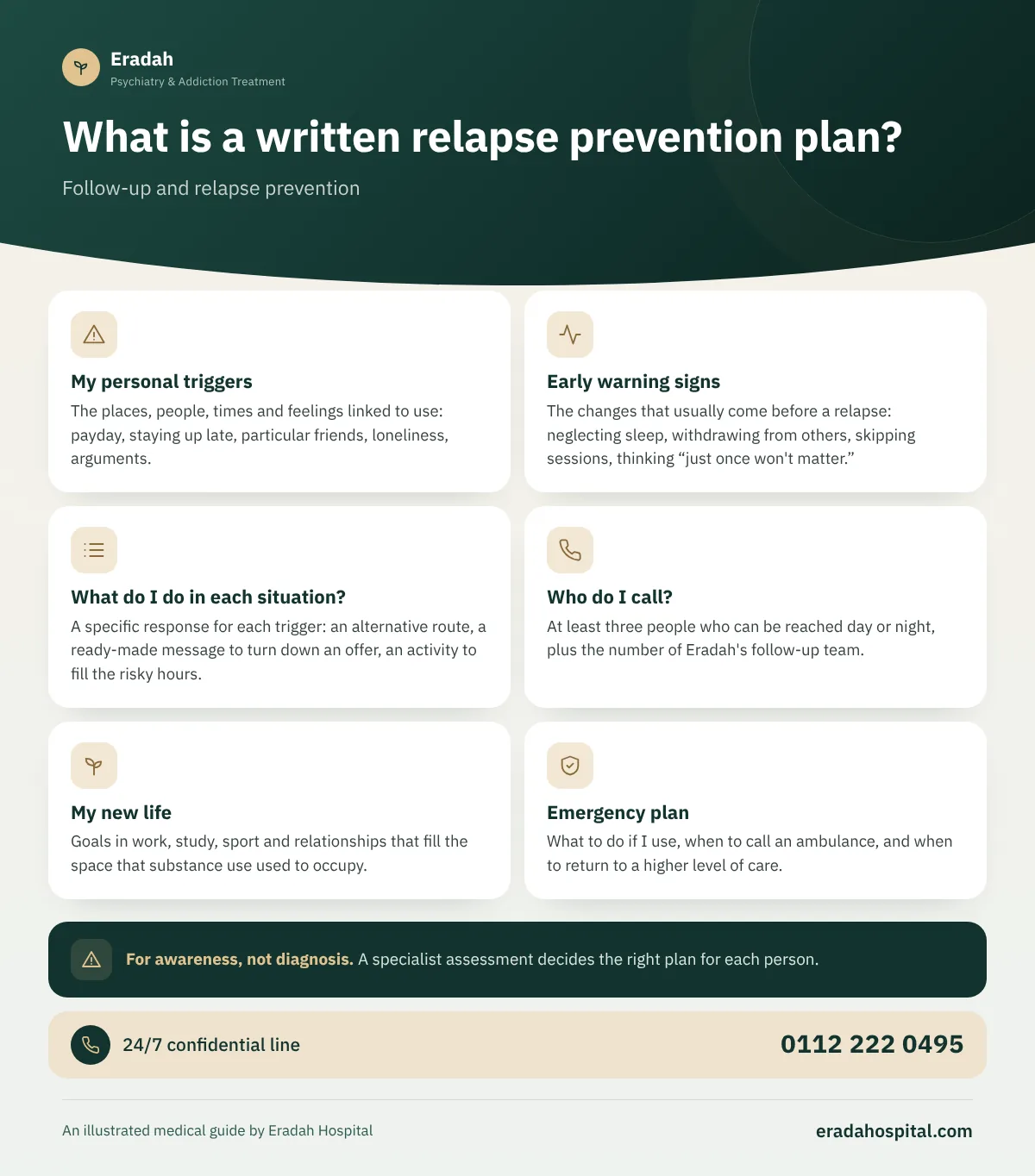
What is a written relapse prevention plan?
Some weeks before discharge, the patient writes a detailed personal plan with their therapist. They keep it on paper and on their phone, and the most important parts are known to the family members they choose. The plan usually consists of:
The places, people, times and feelings linked to use: payday, staying up late, particular friends, loneliness, arguments.
The changes that usually come before a relapse: neglecting sleep, withdrawing from others, skipping sessions, thinking “just once won't matter.”
A specific response for each trigger: an alternative route, a ready-made message to turn down an offer, an activity to fill the risky hours.
At least three people who can be reached day or night, plus the number of Eradah's follow-up team.
Goals in work, study, sport and relationships that fill the space that substance use used to occupy.
What to do if I use, when to call an ambulance, and when to return to a higher level of care.
How do follow-up visits change over time?
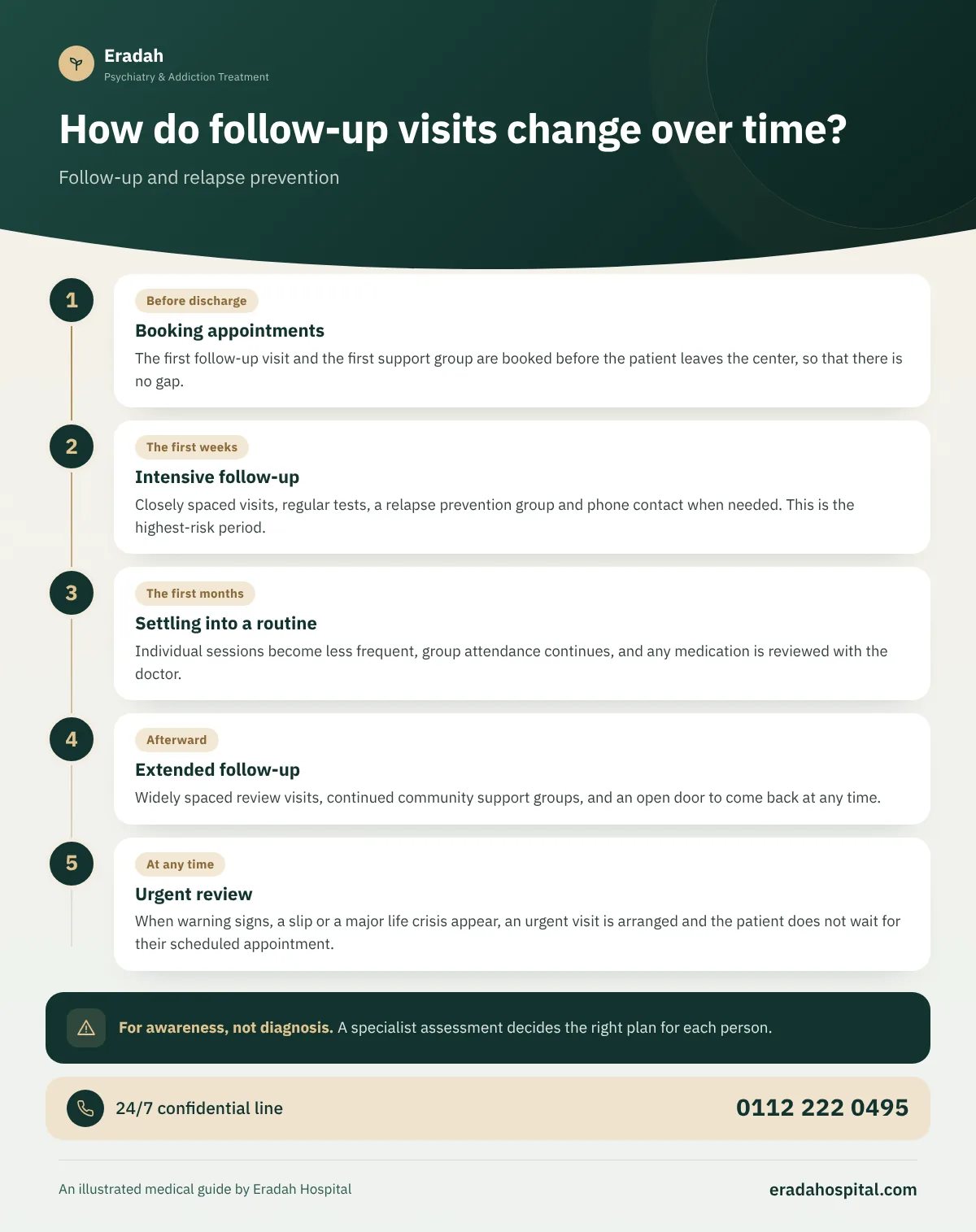
Follow-up starts out intensive and then becomes less frequent as the patient stabilizes. This is an approximate model, and the actual appointments are set in your individual plan:
- Before dischargeBooking appointments
The first follow-up visit and the first support group are booked before the patient leaves the center, so that there is no gap.
- The first weeksIntensive follow-up
Closely spaced visits, regular tests, a relapse prevention group and phone contact when needed. This is the highest-risk period.
- The first monthsSettling into a routine
Individual sessions become less frequent, group attendance continues, and any medication is reviewed with the doctor.
- AfterwardExtended follow-up
Widely spaced review visits, continued community support groups, and an open door to come back at any time.
- At any timeUrgent review
When warning signs, a slip or a major life crisis appear, an urgent visit is arranged and the patient does not wait for their scheduled appointment.
What does the aftercare program include?
- Individual sessions to review the plan and deal with new pressures and the feelings that surface after stopping.
- A relapse prevention group at Eradah for people at different stages of recovery, where newcomers learn from those further along.
- Medical and psychological follow-up for any ongoing medication, for sleep and mood, and for any co-occurring mental disorder within the dual diagnosis program.
- Regular tests that are agreed in advance, which help the patient stay committed and rebuild trust with their family when they agree to share the results.
- Community support groups such as Narcotics Anonymous. NICE guidance states that patients should be told about mutual-help groups and encouraged to attend them.
- Occasional family sessions as part of the family treatment program.
How do you deal with triggers and cravings after discharge?
Craving after stopping is normal and expected, and it does not mean treatment has failed. It comes in waves: it rises, then usually falls within minutes if the person does not give in to it. Among the most important things a patient practices in follow-up are:
- Delaying the decision: “I'll wait twenty minutes before I do anything.” The wave usually fades.
- Changing place immediately: leaving the situation that triggered the urge.
- Calling one of the people in your plan before using, not after.
- Remembering the whole outcome: not just the first moment, but the night and the week that follow.
- Taking care of the basics: sleep, food, and not letting yourself go hungry, angry, lonely or tired for long periods.
- Staying away from “tests”: visiting old friends to prove your strength is not a good idea in the first months.
Stress hormones play an important role in craving, which is why we pay special attention to stress management. Our guide to cortisol explains this relationship.
What should you do if you use once after recovery?
You should know the answer to this question before you need it. A slip, meaning using once or a few times after a period of abstinence, is common during recovery. The most dangerous part is the thinking that follows more than the use itself: “That's it, I've ruined everything, there's no point.” This is what turns a slip into a full return to use. We explain the stages of relapse and its early signs in detail in our guide to relapse in addiction.
- Stop now: one time does not commit you to a second, and it does not erase weeks or months of recovery.
- Look after your safety first: after stopping, tolerance drops, so the amount you used to take may now be dangerous, especially with opioids, sedatives and alcohol. Do not use alone, and know the signs of an overdose.
- Call the follow-up team the same day on Eradah's number 01122220495, available around the clock, or call one of the people in your plan. Being honest early protects you.
- Analyze what happened with your therapist: What was the trigger? Which warning signs did you miss? What will you do differently?
- Adjust the plan: sessions may increase for a while, or you may return to a day program, or to residential treatment for a short period if use is repeated.
Has someone gone back to using after a period of abstinence and shown these signs? Call an ambulance (123)
- Extreme drowsiness, and they do not respond to being called or shaken
- Very slow breathing, unusual snoring or stopped breathing
- Bluish lips or limbs and cold skin
- Seizures or loss of consciousness
- Chest pain, or severe agitation and a high temperature after stimulants
- Talk of wanting to die after a relapse
Call an ambulance (123) immediately. If the person is unconscious but breathing, place them on their side. Do not leave them alone, and do not try to wake them with cold water or other substances. After a period of abstinence the body's tolerance drops, so the amount previously used becomes dangerous. If suicidal thoughts appear, call the mental health support line 16328.
Ambulance 123 Mental health support line 16328