“I kept hiding it from everyone, lying to his family and mine, and I don’t know whether I’m protecting him or hurting him.” This feeling of confusion and loneliness is common among the wives of people with addiction. This guide to dealing with an addicted husband does not judge you or him; it helps you take clear steps that protect you and open the door to treatment for him.
My husband is addicted: where do I start?
Start with three facts. First, you are not the cause; addiction arises from many genetic, psychological and environmental factors, and a line like “you’re the one who makes me angry” is not an explanation of the illness. Second, you cannot treat him alone, but your approach can raise or lower the chances that he accepts treatment. Third, your safety is the priority; if there is violence or threats, safety comes before every other step. And if you are not yet sure, review the signs of drug use before confronting him.
Dealing with an addicted husband: practical steps
- Choose your timing: talk when he is sober and in a quiet place, not while he is under the influence or at the height of withdrawal.
- Speak about yourself: “I’m worried about you and the kids when I see you like this” works better than “You’re an addict and a failure.”
- Describe exactly what happened: one clear incident and its effect on you and the home, without reopening old grievances.
- Link the conversation to treatment: propose a specific step, such as a first consultation, instead of general promises to stop.
- Reward positive steps: an honest day, or agreeing to a consultation, deserves appreciation.
- Let natural consequences happen: do not lie to his employer, and do not pay off debts from substance use.
These steps are the core of the “Community Reinforcement and Family Training” approach, CRAFT. In a systematic review published in 2010 covering four randomized trials, this approach got about two-thirds of patients who refused treatment to begin it, usually after 4 to 6 sessions with the family, and it was clearly more successful than traditional confrontation approaches. The page on persuading a person with addiction to accept treatment explains this approach in practical terms.
Common mistakes in dealing with an addicted husband
- Covering for him in front of his employer or his family.
- Giving him money or paying his debts without knowing where it goes.
- Arguing or threatening while he is under the influence of a substance.
- Threatening divorce or scandal with no real intention of following through.
- Hiding the substance or getting rid of it in a way that provokes him and puts you at risk.
- Neglecting yourself, your health and your relationships until you collapse.
Does a person with addiction love his wife?
A painful question many wives ask, and the honest answer is: love may truly be there, but addiction changes the order of priorities in the brain. Over time the substance, or avoiding its withdrawal symptoms, becomes the strongest need, so the person lies, breaks promises and hurts the people he loves, and then regrets it sincerely. So do not measure his love by his words or his promises after each crisis, but by concrete steps toward treatment. At the same time, his love for you does not oblige you to put up with insults or violence; love does not justify harm.
How do you protect yourself and your children?
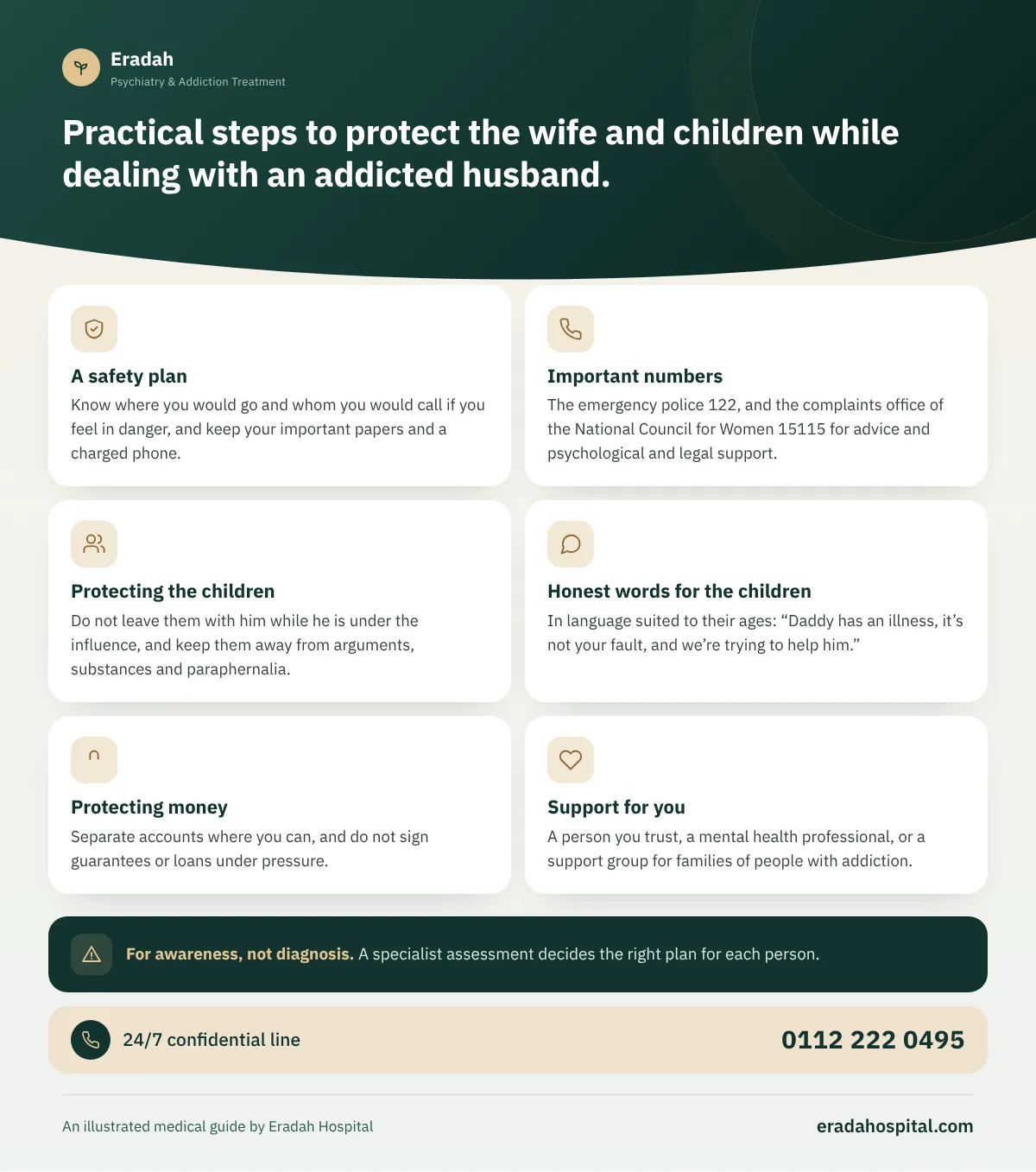
Know where you would go and whom you would call if you feel in danger, and keep your important papers and a charged phone.
The emergency police 122, and the complaints office of the National Council for Women 15115 for advice and psychological and legal support.
Do not leave them with him while he is under the influence, and keep them away from arguments, substances and paraphernalia.
In language suited to their ages: “Daddy has an illness, it’s not your fault, and we’re trying to help him.”
Separate accounts where you can, and do not sign guarantees or loans under pressure.
A person you trust, a mental health professional, or a support group for families of people with addiction.
Your role in treatment: does couples therapy help?
Yes, when the relationship is safe and the husband accepts treatment. In an analysis of 12 randomized trials published in 2008, involving the wife in behavioral couples therapy was better than individual treatment alone at reducing substance use and its consequences and improving relationship satisfaction, especially at follow-up after treatment ended. A review of this method points to improved family relationships, reduced partner violence and better outcomes for children. But this does not make you responsible for his recovery; your role is support, and his is commitment.
Should I stay or separate?
This decision is yours alone, and it should not be made in the middle of a crisis or under anyone’s pressure. Ask yourself: Are my children and I safe? Is he taking real steps toward treatment? Can I carry on without losing my health? It may help to set clear limits and stick to them, such as: “We will not live together if you refuse treatment.” Consulting a mental health professional, and a lawyer if necessary, helps you reach a calm decision.
When is the situation an emergency, and where does treatment begin?
Call an ambulance (123) immediately if he loses consciousness, breathes slowly or has a seizure, and see the guide to overdose. If he talks about suicide or hurting himself, do not leave him alone and ask for help through the mental health support line 16328. Treatment begins with a medical assessment that determines whether he needs detox followed by residential treatment or whether outpatient treatment is enough. Eradah’s family program offers sessions for the wife and family, and the first consultation is free and confidential.