“I’ve been clean for a month, when will my body come back?” Almost everyone in recovery asks this, often after noticing that sleep has started to return and food has a taste again. The good news is that body recovery after quitting drugs begins very early, but the full picture needs a look at each organ, because some organs repair themselves and some need help.
When does body recovery after quitting drugs begin?
The body begins to clear the substance as soon as you stop, then goes through a period of withdrawal that can be exhausting. After that the real repair phase begins, lasting weeks and months. The US National Institute on Drug Abuse notes that long-term drug use may be linked to lung and heart disease, strokes, cancer and mental health problems, and that tests can reveal its effects in the body, which is why a checkup after stopping is an essential step.
Body recovery after quitting drugs, organ by organ
| Organ | What improves | What needs follow-up or treatment |
|---|---|---|
| Brain | Reward chemistry, sleep and mood improve gradually with abstinence | Memory and concentration may lag, and recurrent psychosis needs a psychiatrist |
| Liver | Alcohol-related fatty liver often recovers with stopping | Hepatitis needs treatment, and cirrhosis is not usually cured |
| Heart | The strain on the heart and blood pressure eases after stopping stimulants and alcohol | Any chest pain or palpitations need an examination |
| Lungs | Coughing and irritation lessen after stopping smoking of every kind | Persistent shortness of breath needs assessment |
| Digestive system | Appetite and regular bowel habits return after withdrawal | Chronic constipation from opioids may need time and treatment |
| Immune system | Infections become less frequent as nutrition and sleep improve and injecting ends | Hepatitis C and HIV need testing and treatment |
| Hormones | Natural production of male hormones improves after stopping steroids in many cases | Persistent low fertility or desire needs a doctor |
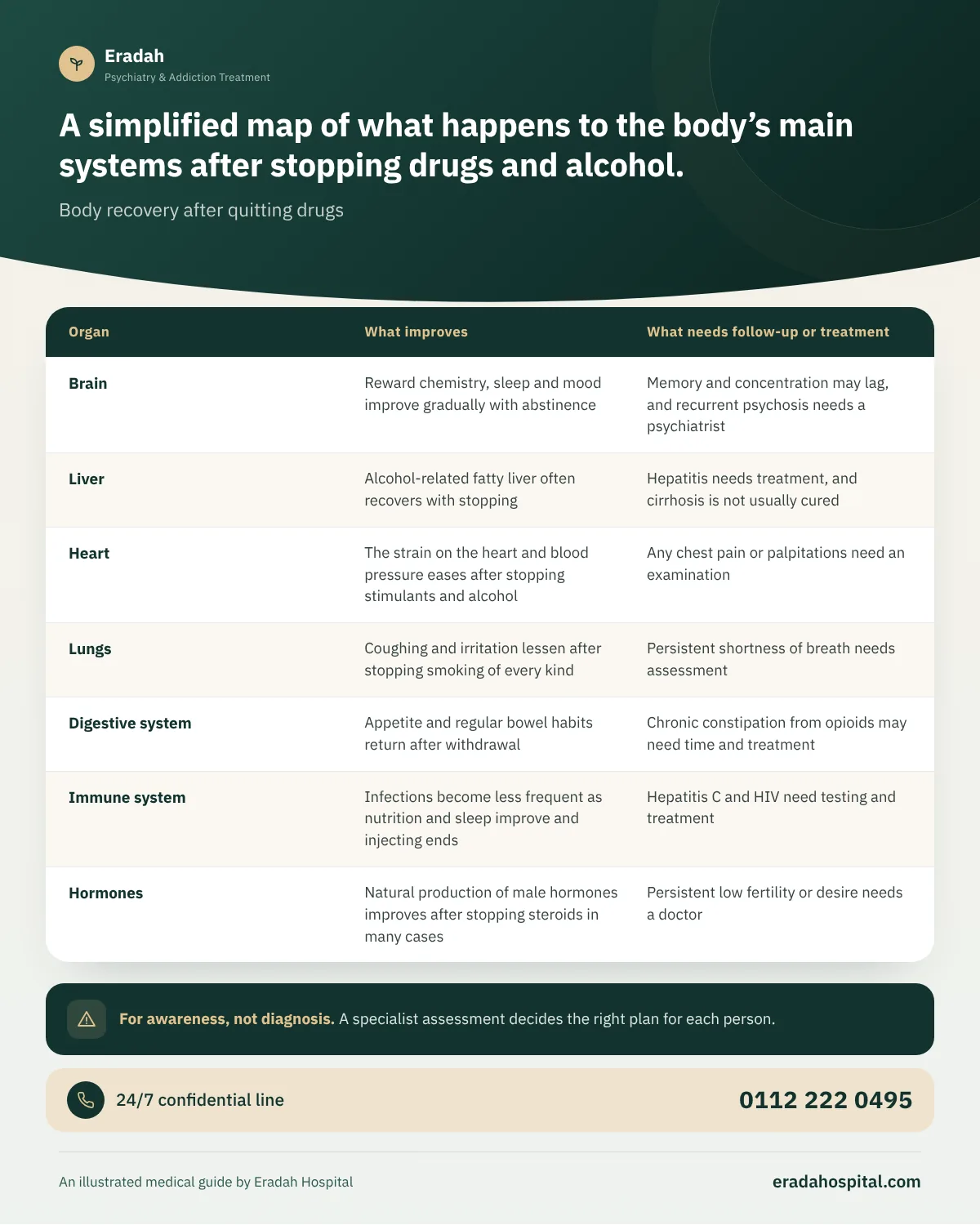
The table is a rough summary, and recovery varies with the substance, length of use, age and co-occurring illnesses.
Brain recovery after quitting drugs
In a study published in the Journal of Neuroscience in 2001, dopamine transporters in people recovering from methamphetamine rose after long abstinence by 19% and 16% in two regions of the brain, while some cognitive functions improved less. The message is two-sided: the brain really does recover, but slowly, which is why recovery needs patience and follow-up.
The liver after quitting alcohol and drugs
The UK’s National Health Service divides alcohol-related liver disease into three stages: fatty liver, in which the liver usually recovers if the person stops drinking; then alcoholic hepatitis, in which the liver may recover from part of the damage; then cirrhosis, which is scarring that is not usually reversible. The NHS stresses that stopping matters at every stage, because it prevents the damage from progressing.
For someone who used by injection, the priority is to be tested for hepatitis viruses. The World Health Organization says that sharing needles among people who use drugs is one of the main routes of hepatitis C transmission, and that modern medicines cure more than 95% of those infected, although there is still no vaccine.
Sleep, appetite and weight
Sleep is one of the first things to be disrupted in withdrawal and sometimes the last to settle. After stopping stimulants, long sleep and exhaustion may come, and after stopping sedatives, opioids and hashish, insomnia may last for weeks. Appetite usually returns, and weight may rise after stopping stimulants or opioids, which is managed with food and movement, not by going back to the substance.
Hormones and sexual function after stopping
Many substances affect hormones, desire and sexual function, and these usually improve gradually after stopping. The National Institute on Drug Abuse notes, for example, that low sperm count and testicular shrinkage linked to steroids are among the harms that can go away, while breast enlargement and baldness may last. If a problem continues after some months, it is better to consult a doctor than to worry in silence.
What tests do you need after quitting drugs?
- A complete blood count and liver and kidney function tests.
- Testing for hepatitis B and C viruses and HIV, especially with injecting or sharing equipment.
- Blood pressure and an ECG, especially after stimulants or hormones.
- A dental and gum examination, because some substances such as methamphetamine are linked to severe dental problems, according to the National Institute on Drug Abuse.
- A psychological assessment of sleep, mood and anxiety.
How can you help your body recover after quitting drugs?
- Drink enough water and eat regular balanced meals, since many people begin recovery malnourished.
- Keep fixed sleep and wake times, even on hard days.
- Start light physical activity such as walking, and increase it gradually.
- Do not buy “cleansing drinks” or mixtures. The liver and kidneys do the job, as the guide to cleansing the body of drugs explains.
- Stick to medical and psychological follow-up, because recovery of the body and the mind go together.
At Eradah, physical recovery begins with medically supervised detox and comprehensive tests, and then your health is followed throughout the residential program.