“For the first three days I felt like my bones were breaking, and I couldn’t sleep or eat.” Fear of drug withdrawal symptoms in these days is what makes many people put off the decision to stop. Knowing exactly what happens, when it is normal and when it becomes dangerous, is the first thing that reassures the patient and the family.
What are drug withdrawal symptoms?
Withdrawal symptoms are a group of physical and psychological changes that appear when a person stops or reduces a substance after regular use. A StatPearls review describes them as the hallmark of “physical dependence,” ranging from distressing symptoms, as in opioid or caffeine withdrawal, to life-threatening ones, as in stopping alcohol or benzodiazepines. Withdrawal symptoms alone do not mean addiction, since they can also occur with prescribed medications, but they are often the reason a person goes back to using.
Why do withdrawal symptoms happen?
When a substance enters the body every day, the brain adapts to it to keep its balance. If the substance is a depressant, such as alcohol or sedatives, the brain raises its own activity to make up for the calming effect; if it is a stimulant, the brain turns down its response. When the substance is suddenly absent, this adaptation remains with nothing to balance it, and symptoms appear that are the opposite of the substance’s effect: sedatives are followed by tension, tremors and insomnia, stimulants by lethargy and depression, and opioid painkillers by pain and heightened sensitivity.
Drug withdrawal symptoms by type
| Category | Main symptoms | Level of danger |
|---|---|---|
| Opioidsherointramadolmorphinecodeinemethadonefentanyltapentadolopium | Muscle aches, runny nose and tearing, yawning, sweating, insomnia, anxiety, cramps, diarrhea and vomiting, dilated pupils, chills | Very uncomfortable and rarely life-threatening directly, but dehydration and relapse after tolerance has dropped are dangerous |
| Alcohol: alcohol withdrawal | Tremors, sweating, anxiety, insomnia, nausea, rapid heartbeat, and in severe cases hallucinations, seizures and delirium tremens | Can be dangerous and needs medical supervision |
| SedativesXanaxRivotrilValium | Severe anxiety, insomnia, tremors, sweating, palpitations, sensitivity to light and sound, and seizures may occur | Can be dangerous; stopping should be gradual and supervised |
| Pregabalin and gabapentin | Insomnia, anxiety, nausea, headache, sweating, diarrhea, irritability | Often moderate, though seizures may occur with sudden discontinuation |
| Stimulantsshabu (crystal meth)amphetaminecocaineecstasy | Crash, exhaustion and long sleep, hunger, depression, loss of enjoyment, cravings | Less physically dangerous, but severe depression and suicidal thoughts are a real risk |
| CannabishashishStrox (synthetic cannabinoids) | Irritability, anxiety, insomnia and disturbing dreams, loss of appetite, mood swings | Often mild to moderate, though Strox can be more severe |
Opioid and painkiller withdrawal symptoms
The MedlinePlus encyclopedia divides opioid withdrawal symptoms into early ones such as anxiety, agitation, muscle aches, tearing, insomnia, runny nose, sweating and yawning, and late ones such as abdominal cramps, diarrhea, dilated pupils, chills, nausea and vomiting. They usually begin within 12 hours of the last dose of heroin, and within 30 hours of the last dose of methadone because it lasts longer. They are very distressing but are not usually life-threatening. The real danger is going back to the substance at the old dose after tolerance has dropped, a common cause of overdose.
Alcohol and sedative withdrawal: the most medically dangerous
According to MedlinePlus, alcohol withdrawal symptoms usually begin within 8 hours of the last drink, may be delayed by days, peak between 24 and 72 hours, and can last for weeks. The most severe is “delirium tremens,” with sudden confusion, fever, hallucinations and seizures. A similar danger applies to benzodiazepines: the US Food and Drug Administration has warned that physical dependence on them can develop after days to weeks of regular use, even when prescribed, and that abrupt discontinuation or rapid dose reduction can cause withdrawal reactions, including seizures that may be life-threatening.
Stimulant and cannabis withdrawal: mostly psychological symptoms
After stopping stimulants comes the “crash”: exhaustion, long sleep, hunger, depression, loss of enjoyment and cravings. Although the physical risk is lower, the depression can be deep, and some patients have thoughts about death. If these thoughts appear, it is an emergency that needs help right away through the mental health support line 16328 or an ambulance (123). Cannabis withdrawal is described by a scientific review published in 2017 as mostly mild to moderate mood and behavioral symptoms that can usually be treated without a hospital stay, and its duration is linked to the brain’s cannabinoid receptors returning to normal function within about 4 weeks of abstinence.
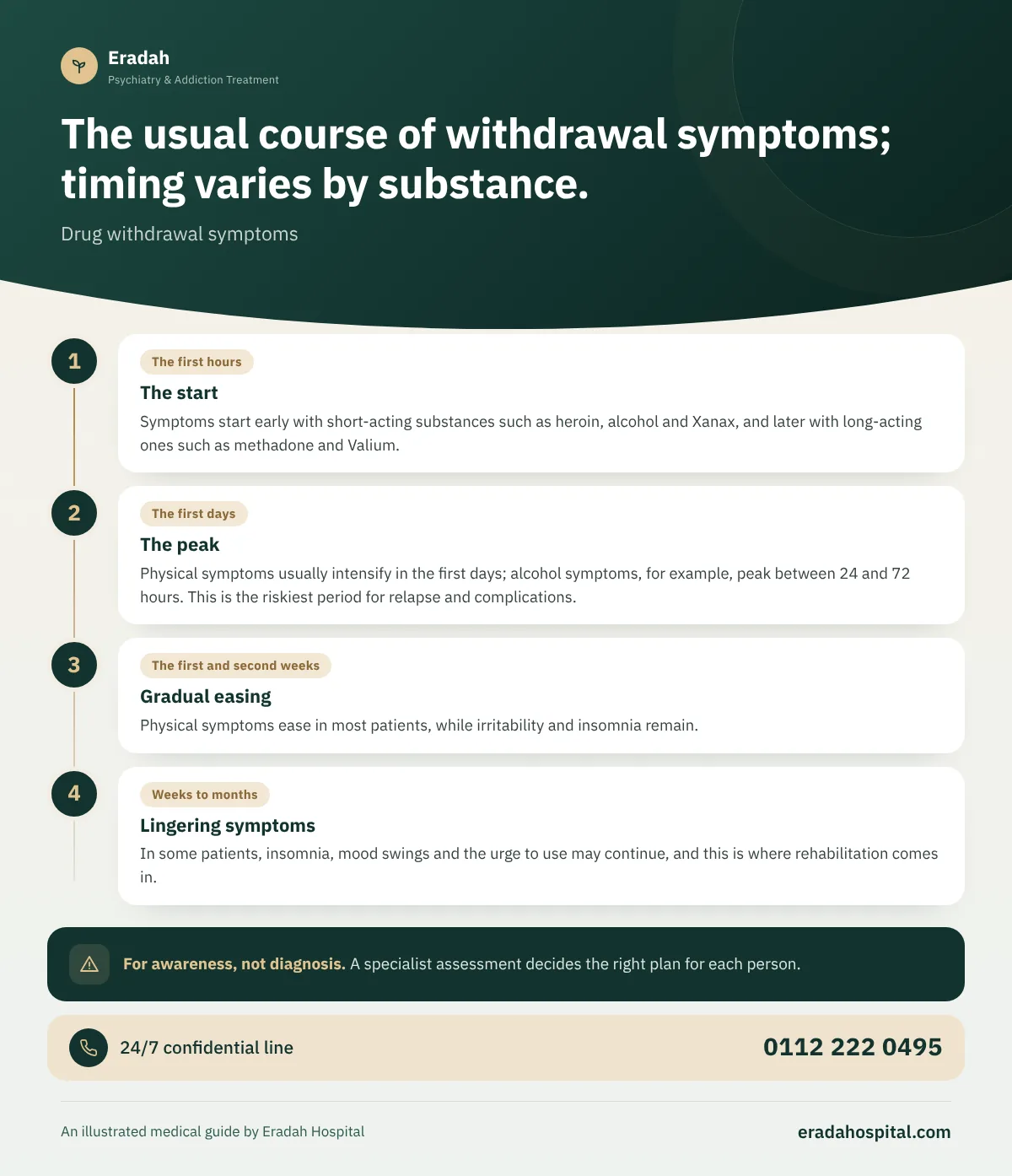
How long do drug withdrawal symptoms last?
- The first hoursThe start
Symptoms start early with short-acting substances such as heroin, alcohol and Xanax, and later with long-acting ones such as methadone and Valium.
- The first daysThe peak
Physical symptoms usually intensify in the first days; alcohol symptoms, for example, peak between 24 and 72 hours. This is the riskiest period for relapse and complications.
- The first and second weeksGradual easing
Physical symptoms ease in most patients, while irritability and insomnia remain.
- Weeks to monthsLingering symptoms
In some patients, insomnia, mood swings and the urge to use may continue, and this is where rehabilitation comes in.
When are withdrawal symptoms dangerous?
- A seizure or loss of consciousness, even for a few seconds.
- Sudden confusion, not knowing where or when you are, or hallucinations.
- High fever with severe tremors and heavy sweating.
- Vomiting or diarrhea that will not stop, with signs of dehydration.
- Chest pain or a severe racing heartbeat.
- Thoughts of self-harm or suicide.
How are withdrawal symptoms treated safely?
The goal is for the body to get through withdrawal without complications and without needless pain. This is done through medically supervised detox: assessing the substance, the amount and any coexisting illnesses, then giving medicines that ease symptoms or gradually reducing the substance itself when needed, while monitoring vital signs, sleep and nutrition. The page on treating addiction at home explains when home is an option and when it becomes dangerous. Remember that detox is the beginning of treatment, not the end: it is followed by rehabilitation, which addresses the causes of substance use and protects against relapse.