"Hashish is just psychological addiction, not like heroin." A common phrase said to play things down, as if "psychological" were lighter. The truth is that dividing addiction into physical and psychological is useful for understanding symptoms, but misleading if used to rank substances from "dangerous" to "harmless."
What is physical addiction (physical dependence)?
The MedlinePlus encyclopedia explains physical dependence on opioids as the person needing the substance to prevent withdrawal symptoms and, over time, needing a larger amount for the same effect, which is called tolerance. The time this takes varies from person to person. When the substance stops, the body needs time to recover, and withdrawal symptoms appear.
Physical dependence alone is not proof of addiction. The US Food and Drug Administration states that physical dependence on benzodiazepines can occur when they are taken regularly for days or weeks, even at the prescribed dose, and it lists addiction and misuse as separate risks. A person with epilepsy whose body depends on his medication is not a person with addiction as long as he takes it as prescribed.
What is psychological addiction?
The psychological side is the heart of addiction: an urgent desire for the substance, preoccupation with it, loss of control over the amount and timing, and continued use despite harm. The US National Institute on Drug Abuse explains that the dopamine surges caused by drugs "teach" the brain to link the substance with everything around it, so places, people, and feelings can trigger an uncontrollable craving that can last for years.
So "psychological" here does not mean "imagined"; it is a real change in the brain's circuits of reward, learning, and decision-making. Our guide to what addiction is explains these changes in detail.
The difference between physical and psychological addiction
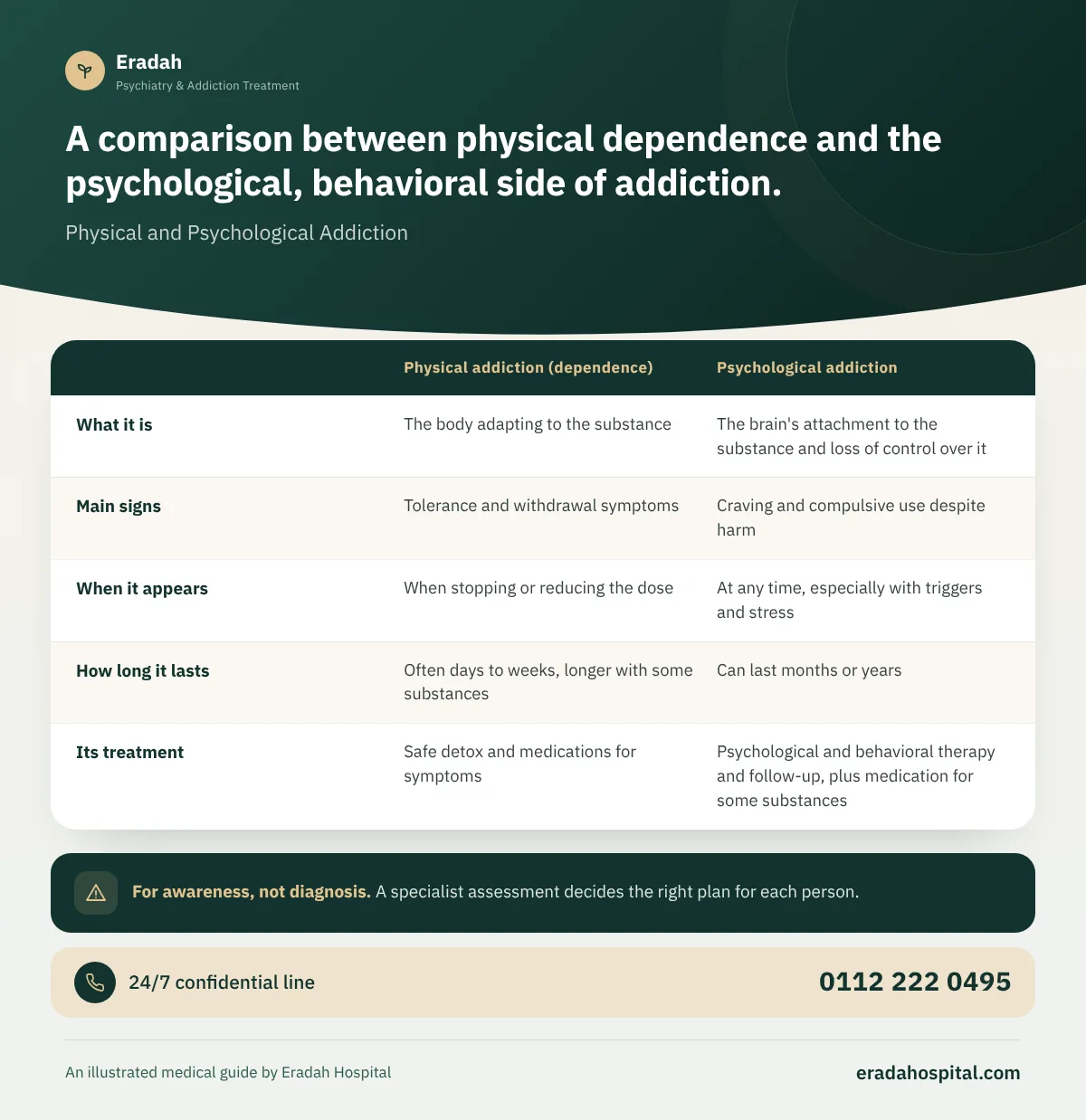
| Physical addiction (dependence) | Psychological addiction | |
|---|---|---|
| What it is | The body adapting to the substance | The brain's attachment to the substance and loss of control over it |
| Main signs | Tolerance and withdrawal symptoms | Craving and compulsive use despite harm |
| When it appears | When stopping or reducing the dose | At any time, especially with triggers and stress |
| How long it lasts | Often days to weeks, longer with some substances | Can last months or years |
| Its treatment | Safe detox and medications for symptoms | Psychological and behavioral therapy and follow-up, plus medication for some substances |
Why does medicine no longer separate them?
In a paper published in the American Journal of Psychiatry in 2013, the substance-related disorders work group for the fifth edition of the American diagnostic manual explained that it had merged the diagnoses of "abuse" and "dependence" into a single disorder, substance use disorder, based on consistent findings from more than 200,000 study participants, and added craving to the diagnostic criteria.
The practical meaning is that the doctor does not ask "is your addiction physical or psychological?" but measures the severity of the whole disorder: tolerance, withdrawal, craving, loss of control, and harms, together.
Which drugs cause physical addiction?
- Clear physical withdrawal: opioids such as tramadol and heroin, alcohol, sedatives such as Xanax and Rivotril, and pregabalin.
- Withdrawal that is mostly psychological: stimulants such as shabu and Captagon, with exhaustion, long sleep, depression, and craving.
- Cannabis: It used to be described as "psychological only," but the fifth edition of the diagnostic manual formally added a cannabis withdrawal syndrome, according to a 2013 paper by Hasin and colleagues.
Our guide to drug withdrawal symptoms explains the symptoms of each type and how long they last. The important rule: that withdrawal from a substance is "psychological" does not mean its addiction is easier.
Which is harder: physical or psychological addiction?
Physical withdrawal is the most painful in the first days, and some of it, such as alcohol and sedative withdrawal, can be medically dangerous. But it is limited in duration and is managed well in medically supervised detox. The psychological side lasts longer, and it is the leading cause of relapse after the body has fully recovered.
How is addiction treated on both sides?
- An assessment that identifies the substances, the severity of physical dependence, and any co-occurring mental illness.
- Safe detox, which deals with the physical side.
- Psychological and behavioral therapy, which deals with craving, triggers, and ways of thinking.
- Medications that reduce craving for some substances, such as opioids and alcohol.
- Long follow-up and relapse prevention, as in the follow-up program.