"He was doing so well... why did he go back?" This is one of the hardest moments for the person in recovery and his family. The truth, which should be said calmly: relapse is a well-known part of the nature of addiction, and understanding it early is what keeps it a short slip instead of a full return to the beginning.
What is relapse?
Relapse is a person's return to the old pattern of substance use, or something close to it, after a period of abstinence. Specialists distinguish it from a slip, which is a single or brief episode of use followed by a quick return to the recovery plan. The difference between them is determined not only by what happened but by what happens next: does the person admit it and ask for help, or hide it and say "that's it, I've ruined everything" and carry on?
US research institutes on drug abuse indicate that relapse rates in addiction fall in a range of roughly 40 to 60%, which is close to the rates at which symptoms return in other chronic illnesses such as hypertension and asthma when a patient stops his plan. This is why relapse is seen as a signal to adjust treatment, not as proof that it is useless.
The three stages of relapse
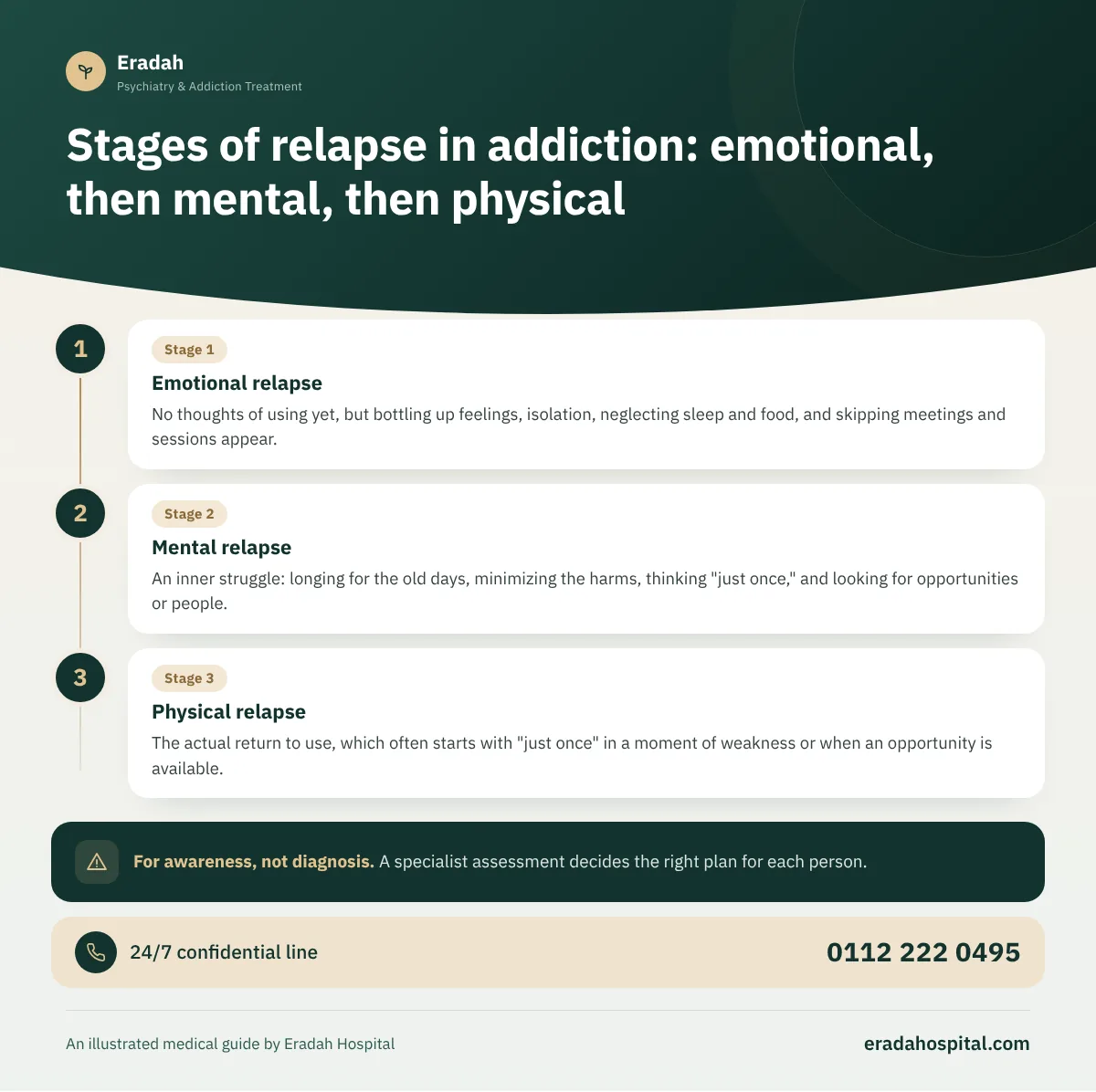
Many therapists describe relapse as a process that passes through three successive stages, with actual use being the last, not the first:
- Stage 1Emotional relapse
No thoughts of using yet, but bottling up feelings, isolation, neglecting sleep and food, and skipping meetings and sessions appear.
- Stage 2Mental relapse
An inner struggle: longing for the old days, minimizing the harms, thinking "just once," and looking for opportunities or people.
- Stage 3Physical relapse
The actual return to use, which often starts with "just once" in a moment of weakness or when an opportunity is available.
Early signs of relapse in a person with addiction
These are signs that the person in recovery notices in himself or that the family notices, and having several of them together is worth stopping and talking about:
- Withdrawing from follow-up sessions or support groups, and making excuses for not attending.
- Unusual irritability and tension, or prolonged sadness and flatness.
- Disturbed sleep, or staying up late again.
- Going back, "by chance," to friends or places linked to substance use.
- Repeatedly talking about the old days with nostalgia, or downplaying what happened.
- New secrets about money, the phone, or whereabouts.
- Overconfidence: "I'm cured now and don't need anyone."
- Overdoing a substitute such as alcohol or sleeping pills, or even work and late nights.
Why does relapse happen?
The reward and craving circuits stay sensitive to triggers for months after stopping, even with strong willpower.
Places, people, smells, and situations linked to substance use suddenly ignite craving.
Sadness, anger, boredom, and loneliness without alternative skills to cope with them.
Depression, anxiety, and hyperactivity push a person back to the substance as self-medication.
Leaving the intensive program without enough follow-up is among the most common causes.
Painkillers or sedatives dispensed without the doctor knowing the history of addiction.
Therapists use a helpful acronym for moments of weakness: Hungry, Angry, Lonely, Tired. When two or more of these come together, craving is at its highest, and the right move is to deal with the cause: eating, resting, or contacting a supportive person, before any decision.
What do you do if relapse happens?
- Stop immediately and don't carry on under the excuse of "I've ruined it anyway"; one time is far easier to recover from than a week.
- Contact your therapist, your doctor, or a supportive person the same day; honesty matters more than pride here.
- If the substance is an opioid or a sedative, avoid using alone and avoid the old dose completely because of the overdose risk.
- Analyze what happened: What was the situation? What was the feeling? What could have been done differently?
- Adjust the plan with the treatment team: more sessions, an adjunct medication, or a short stay if needed.
- Return to your routine quickly: sleep, food, exercise, and the support group.
Treatment after relapse: how to return to treatment
Treatment after relapse is not a repeat of the previous program as it was; if the old plan stopped protecting, what is needed is to understand where it broke and change it. So returning to treatment begins with a full reassessment, in which the patient and the team answer frankly questions such as:
| Question | Why does it matter? |
|---|---|
| When did the relapse really begin? | It often begins psychologically and behaviorally weeks before the first use, and knowing the beginning reveals the weak link. |
| Did follow-up stop before it? | Dropping out of sessions or groups is among the most common precursors, and it means the plan needs longer or closer follow-up. |
| Is there untreated depression, anxiety, or insomnia? | Untreated mental illness pushes a person to "self-medicate" with the substance. |
| Did he return to the same substance or a new one? | Switching to a "lighter" or different substance calls for a different plan, and may change the type of detox. |
| Does he need detox now? | With opioids, sedatives, and alcohol, physical dependence can return quickly and needs medical supervision. |
| What has changed at home or at work? | New pressures, places, and old acquaintances call for a practical plan, not general advice. |
Based on the answers, the right level is determined: a brief slip caught early may need only more sessions in outpatient treatment; a full relapse with physical dependence needs detox followed by rehabilitation; and repeated relapses often need a longer stay, an assessment for dual diagnosis, and follow-up after discharge for longer than last time. The doctor may also add medications that reduce craving or prevent relapse in opioid or alcohol addiction.
If the person who relapsed refuses to return, our guide to persuading a person with addiction to accept treatment helps the family start without confrontation, and the family program supports relatives throughout the journey.
How should the family deal with relapse?
The family's reaction in the first hours can determine whether it will be a brief slip or the start of a long road. Shouting, threats, and exposing him push the person in recovery to lie and hide, while calm firmness opens a door back. Say clearly that you are worried, and that you expect him to contact the treatment team today, without long lectures or talk about "everything we spent." You will find more details in the guide to after leaving a treatment center.
How do you prevent relapse?
- A written plan for personal triggers and moments of weakness: whom to call, where to go, and what to do.
- Staying in the follow-up program for months after discharge, even if everything seems fine.
- Treating depression, anxiety, and insomnia in safe ways, and telling any doctor about the history of addiction before medications are prescribed.
- A fixed daily routine for sleep, food, and activity, and activities that fill free time.
- New supportive relationships, and a firm break from the places and people linked to substance use.
- Celebrating small achievements; recovery is built day by day.
And if relapse happens despite all this, returning to treatment quickly is the wisest decision. At Eradah, we welcome people in recovery who come back without blame, and we reassess the case to learn what did not work and change it.