“I started hating to come home, and I never know what state my father will be in today.” If you are reading this because your father has an addiction, you were right to look for help, and you are not betraying him by talking about it. This guide is written for you, not for your father: to help you understand what is happening, protect yourself and your siblings, and know what you can do and what is not your responsibility.
My Father Is Addicted: Am I the Only One?
No. According to a report from the US Substance Abuse and Mental Health Services Administration (SAMHSA), about 8.7 million children in the United States lived each year with at least one parent with a substance use disorder, or about 12.3% of children, nearly one child in eight. There are no comparable published Egyptian figures, but the silence around the subject here makes every child think he is the only one.
The same report explains that children of parents with a substance use disorder are more likely to develop substance use problems later. This is not destiny; it is information that helps you protect yourself, and we explain the risk factors on the page Causes of Addiction.
Facts About a Father with Addiction That Protect You from Blaming Yourself
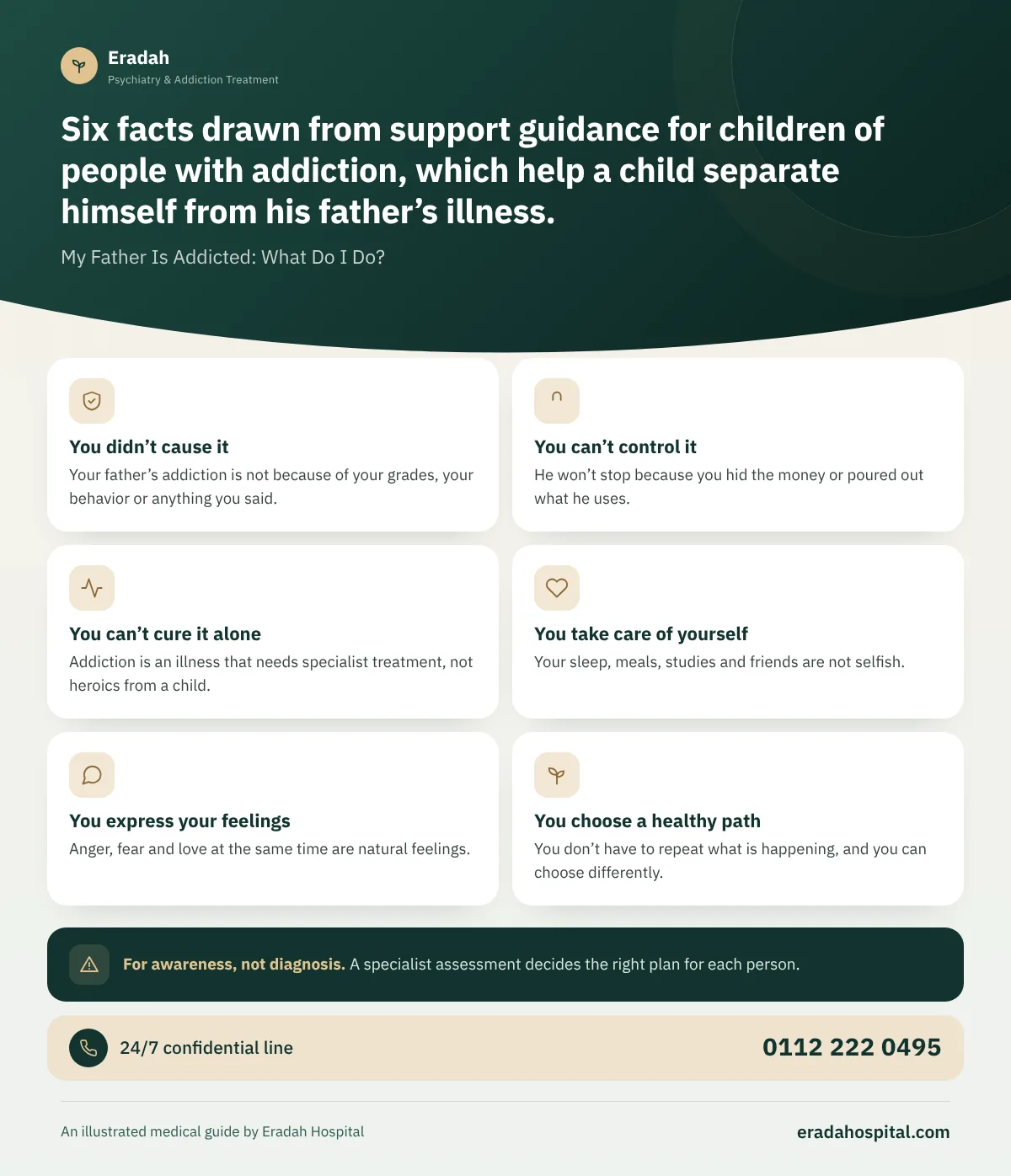
The US National Association for Children of Addiction (NACoA) uses a simple rule called the “Seven Cs” in English, which includes these facts:
Your father’s addiction is not because of your grades, your behavior or anything you said.
He won’t stop because you hid the money or poured out what he uses.
Addiction is an illness that needs specialist treatment, not heroics from a child.
Your sleep, meals, studies and friends are not selfish.
Anger, fear and love at the same time are natural feelings.
You don’t have to repeat what is happening, and you can choose differently.
Why Do I Feel Anger, Guilt and Shame All at Once?
Because a father with addiction may be loving one day and harsh the next, so you live in anticipation and anxiety. Many children become “guardians” of the home: they hide it from relatives, calm their mother, look after younger siblings and keep their feelings inside. This early burden shows up later as anxiety, sadness or difficulty trusting people. Notice yourself: Are you sleeping well? Do you still enjoy things you love? If sadness lasts or anxiety grows heavy, that is a signal to ask for support, and read about depression to learn its signs.
How Do I Talk to My Father Who Has an Addiction?
- Talk to him only when he is sober and calm, not while he is under the influence or after an argument.
- Speak about your own feelings: “I get scared when you come home late and you’re not yourself,” not about his faults.
- Don’t expect him to admit it the first time, because denial is a common part of the illness.
- Don’t bargain with him over money or cover for him in front of others.
- If talking to him is not safe, talk to your mother, uncle or another adult you trust.
Persuading a father to accept treatment is mainly the job of the adults in the family, and we explain their methods in the guide How to Convince a Person with Addiction to Get Treatment. As for you, it is enough to tell him that you love him and hope he gets treatment.
How Do I Protect Myself and My Siblings at Home?
- Agree with your siblings on a room or safe place to go when there is a fight.
- Save emergency numbers and the numbers of relatives you trust in your phone.
- Don’t get in a car he is driving under the influence of alcohol or drugs.
- Don’t touch medications or substances you may find at home, and don’t try them “to see what it does.”
- Keep up your school, your friends and an activity you love, because they are part of your protection.
Where Can I Find Support as the Child of a Parent with Addiction?
Abroad there are groups dedicated to children of people with addiction, such as Alateen, part of the Al-Anon groups, where teenagers living the same experience meet. In Egypt, the Child Helpline 16000 offers free psychological and legal counseling, according to the National Council for Childhood and Motherhood. You can also talk to the school or university psychologist or social worker.
If you are an adult child, you can book a consultation for yourself at Eradah, free and confidential the first time, to understand how to deal with your father and how to protect your boundaries. The family program helps children and mothers cope with the illness, and we offer your father residential treatment for men when he decides to begin.
Will I Become Addicted Like My Father?
Not necessarily. It is true that genetics and environment raise the risk, but many children of people with addiction never develop it. What protects you: delaying any experimenting with smoking, alcohol or drugs as long as possible, treating anxiety or depression if it appears, friends who do not use, and an adult you can confide in. The drug prevention guide gathers what research has shown on this.
If My Father Gets Treatment: What Should I Expect?
Recovery takes time, and trust returns gradually. You may feel joy and doubt together, and that is normal. Do not make yourself responsible for watching him after treatment, because that is the responsibility of the treatment team and the adults. We explain the family’s role in the first months in the guide After Leaving Rehab.