“Ever since he got sick, we don’t know how to talk to him. If we stay quiet we feel we’re failing him, and if we talk he gets angry.” This is the confusion of thousands of families in Egypt. This guide does not cover one particular illness. It brings together what works at home with most severe mental disorders, from depression and mania to psychosis.
Where do you start in caring for a family member with mental illness?
The World Health Organization estimates that about 1 in 7 people worldwide, or 1.2 billion, were living with a mental disorder in 2023, that most do not receive effective care, and that many face stigma and discrimination. So what your family is going through is neither unusual nor shameful. The first step is to understand the illness: ask the doctor to explain the diagnosis and what to expect, and read about the condition in reliable sources, such as our guide to mental illnesses. Much behavior that looks like stubbornness, laziness, or “bad manners” is a symptom of the illness.
How do you talk to a person with mental illness without conflict?
The NHS advises anyone supporting a person in a mental health crisis to tell them they are worried about them, treat them normally so they do not feel isolated, and listen with open questions that start with “how” and “what,” without forcing them to talk or accept treatment. In practice:
- Choose a calm time, not a moment of anger or right after an argument.
- Talk about your own feelings and one specific behavior: “I got worried when you didn’t sleep for 3 nights,” not “You’ve gone crazy.”
- Listen more than you talk, and do not interrupt to correct what they say.
- Do not argue with strange ideas or agree with them; talk instead about the fear or distress they feel.
- Avoid preaching, blaming, and comparing them with others.
Daily life: routine and responsibilities without taking over
A calm, orderly home protects the person from relapse. Keep fixed times for sleep and meals, reduce noise and quarrels, and give them small responsibilities they can manage, such as buying bread or tidying their room, since these restore their sense of worth. At the same time, avoid overprotection that treats them like a child, and repeated criticism that raises tension and pushes them to withdraw. You will find more detail on living with a person with schizophrenia in our schizophrenia guide.
Medication at home: support, not policing
- Help them link taking medication to a daily habit, and use a weekly pill organizer.
- Encourage them to tell the doctor about any side effects instead of stopping on their own.
- Do not secretly put medication in their food, change the dose, or start or stop any medication without a doctor.
- Keep large quantities of medication in a safe place if they go through a period of despair or thoughts about death.
- Keep an up-to-date list of all their medications and what has been tried before.
Many people ask whether these medicines cause addiction, and you will find the answer for each type of medication on the page Do psychiatric medications cause addiction?.
The crisis plan: write it while everyone is calm
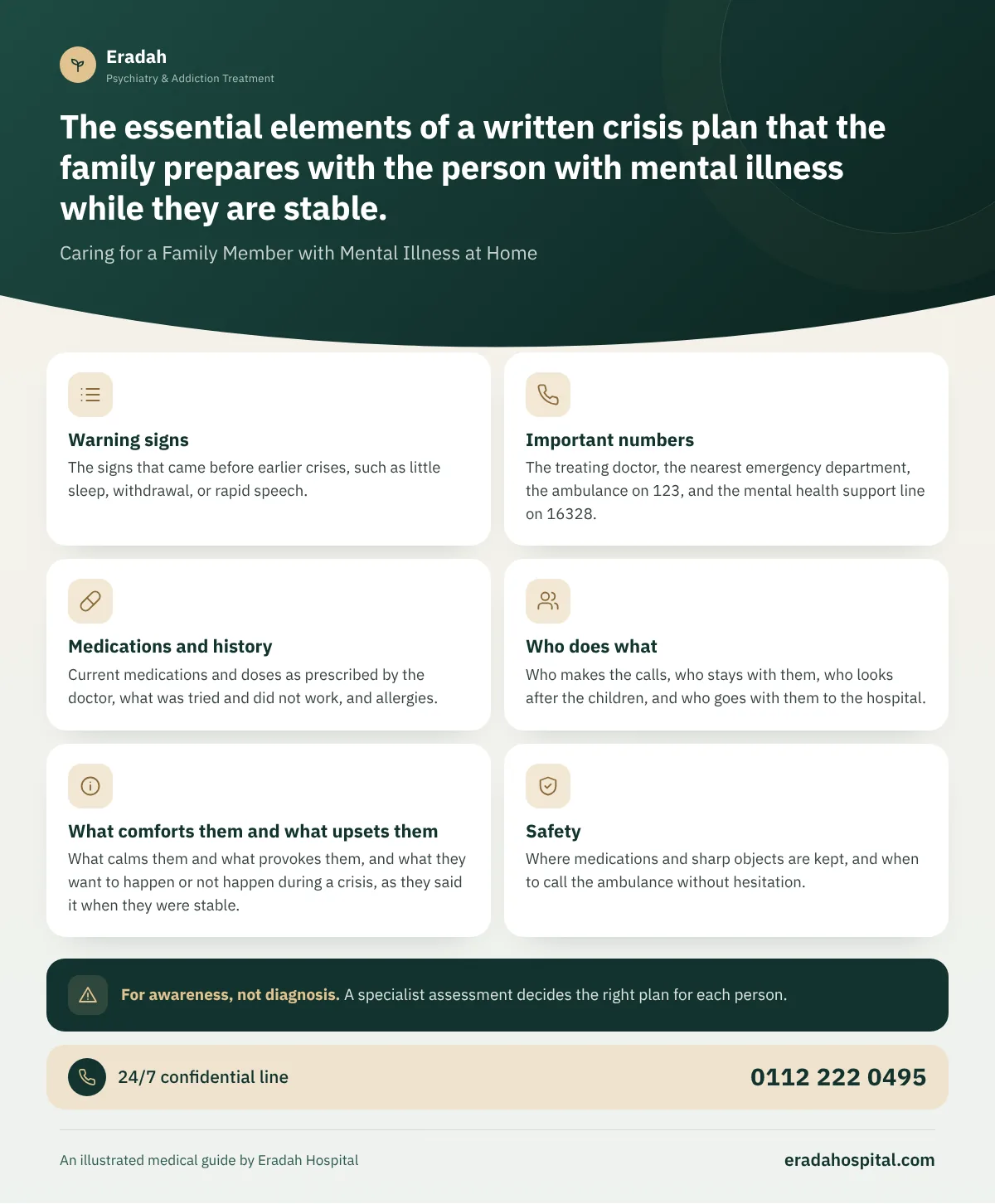
The guide to handling mental health crises from the US National Alliance on Mental Illness (NAMI) presents templates for three documents that a family prepares in advance: a portable treatment record, a crisis plan, and a relapse plan, so that during an emergency the family focuses on the patient rather than searching for information. The most important things the plan includes:
The signs that came before earlier crises, such as little sleep, withdrawal, or rapid speech.
The treating doctor, the nearest emergency department, the ambulance on 123, and the mental health support line on 16328.
Current medications and doses as prescribed by the doctor, what was tried and did not work, and allergies.
Who makes the calls, who stays with them, who looks after the children, and who goes with them to the hospital.
What calms them and what provokes them, and what they want to happen or not happen during a crisis, as they said it when they were stable.
Where medications and sharp objects are kept, and when to call the ambulance without hesitation.
If the person with mental illness refuses treatment
Refusal is common, and sometimes it is part of the illness itself, when the person does not see that they are ill. Start by looking for something they admit bothers them, such as insomnia or tension, and suggest the doctor to help with that. The family can also visit the doctor alone first, and you will find practical methods in our guide on how to persuade them to get treatment. Do not trick them by taking them “for a drive” to the hospital, because deception destroys the trust you will need later.
When do you need emergency care or hospital admission?
As for a stay in a psychiatric hospital, the doctor decides it after an assessment, when outpatient follow-up is not enough or there is a risk to safety. When refusal combines with serious danger, the law regulates involuntary admission by medical decision and with safeguards. At Eradah the first consultation is free and confidential, and residential treatment is for men only, with outpatient treatment available depending on the assessment.
Rights of the person with mental illness under Egyptian law
Article 36 of the Mental Health Patient Care Law No. 71 of 2009 sets out rights for patients treated in psychiatric facilities, including:
- Receiving care in a safe, clean environment, and a ban on restricting their freedom except as the law provides.
- Knowing their diagnosis and treatment plan, and receiving treatment according to recognized medical standards.
- Protection of the confidentiality of their information and medical file, except in specific cases set out in the law.
- Protection from exploitation, physical and psychological abuse, and degrading treatment.
- The right to file a grievance about any procedure, to meet their lawyer, and to refuse treatment in cases of voluntary treatment, after being informed of the effect of refusing.
This is general educational information and not legal advice.
Stigma and what people say: how do you protect the patient and the family?
Many families hide the illness for fear of scandal or of its effect on siblings’ marriage prospects, and treatment is delayed for years. Protect their privacy by choosing together with them who knows and what they know, without letting the secrecy become a barrier to treatment. Avoid hurtful words at home such as “crazy” or “possessed,” and explain to children in simple language that their father or brother is ill and is being treated like any other patient.
Protect yourself from burnout
The US National Alliance on Mental Illness (NAMI) compares self-care to the oxygen mask on an airplane: you put it on yourself first so that you can help others. It notes that people who look after their physical and mental health are better able to cope with the ups and downs of the illness of the person they care for. Watch for signs of strain such as headaches, insomnia, muscle pain, and stomach upset, which may be the start of burnout. Share the responsibility, take breaks, and seek support for yourselves in the family program or from a psychotherapist.