“I don't want to take a psychiatric drug so I don't get hooked on it.” Doctors hear this sentence every day, and it is often the reason someone suffers for years from depression or anxiety that could have been treated. The truth is that the answer differs from one drug to another, and this guide sets it out.
Addiction, dependence and withdrawal symptoms: what is the difference?
The confusion arises because three different phenomena are all called “addiction” in everyday speech:
| Concept | Meaning | Example |
|---|---|---|
| Addiction | Compulsive craving for the substance, loss of control over it, and continued use despite harm, often increasing the dose to get its effect | Misusing sedatives at doses higher than prescribed |
| Physical dependence | The body adapts to the drug, so symptoms appear when it is stopped suddenly, even with correct use | Blood pressure medications, cortisone and some psychiatric drugs |
| Withdrawal symptoms | Temporary symptoms on sudden stopping, which fade gradually or after days to weeks | Dizziness and electric-shock sensations after stopping some antidepressants |
So having symptoms on stopping does not mean the person is “addicted,” just as a person with high blood pressure is not addicted to their medication. Addiction is compulsive behavior driven by the wish for the drug's effect, which is not what happens with most psychiatric medications.
Addiction risk, drug by drug
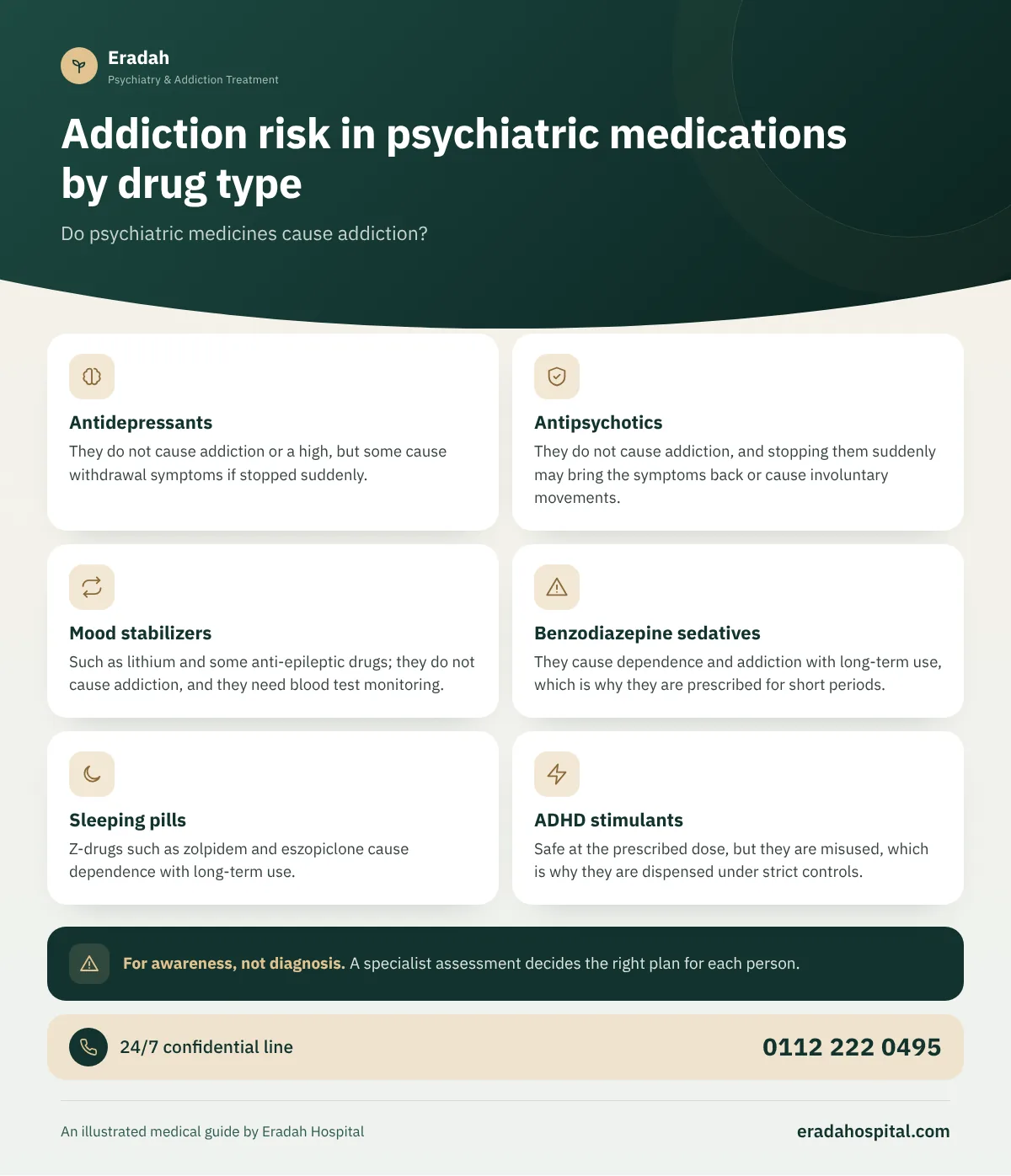
They do not cause addiction or a high, but some cause withdrawal symptoms if stopped suddenly.
They do not cause addiction, and stopping them suddenly may bring the symptoms back or cause involuntary movements.
Such as lithium and some anti-epileptic drugs; they do not cause addiction, and they need blood test monitoring.
They cause dependence and addiction with long-term use, which is why they are prescribed for short periods.
Z-drugs such as zolpidem and eszopiclone cause dependence with long-term use.
Safe at the prescribed dose, but they are misused, which is why they are dispensed under strict controls.
Are antidepressants addictive?
No. Antidepressants such as selective serotonin reuptake inhibitors do not give a feeling of euphoria, the patient does not need to raise the dose to feel the effect, and they are not linked with compulsive drug-seeking. But stopping them suddenly after a month or more of use can cause discontinuation syndrome: dizziness, nausea, sensations like mild electric shocks in the head, insomnia and mood swings. Severity varies from drug to drug; it is clearer with short-acting drugs such as paroxetine and venlafaxine, and less with fluoxetine. A gradual plan usually avoids it.
Psychiatric drugs that carry a real risk of addiction
- Benzodiazepines: such as Xanax, Rivotril and Valium. Very effective for acute anxiety, but tolerance and dependence appear within weeks, and stopping them suddenly after long use can cause seizures.
- Z-drug sleeping pills: such as zolpidem and Night Calm; their risk is lower than benzodiazepines but it exists with long daily use.
- Pregabalin and gabapentin: prescribed for anxiety and nerve pain, and pregabalin in particular is misused at high doses, with greater risk in people with a history of opioid use.
- ADHD stimulants: such as Ritalin, safe and effective at the prescribed dose, but misused to stay up, study or lose weight.
- Anticholinergics: such as Parkinol, which is prescribed alongside antipsychotics, and is misused at high doses as a hallucinogen.
Common myths about psychiatric medications
| The myth | The truth |
|---|---|
| All psychiatric drugs are sedatives that cause addiction | Sedatives are a small part of psychiatric medications, and most drugs do not cause addiction |
| A psychiatric drug changes your personality | The right drug returns a person to who they were before the illness, and does not change their personality |
| Whoever starts a psychiatric drug will be on it for life | Most people use it for a set period and then taper it gradually with the doctor |
| You can stop the drug once you improve | Improvement means the drug is working, and stopping early is one of the most common causes of relapse |
| A psychiatric drug is a sign of weakness | Mental illness is an illness like any other, and treating it is a courageous decision |
How do you use a psychiatric medication safely?
- Tell your doctor about any history of addiction, alcohol or sedatives, because this changes the choices.
- Stick to the prescribed dose, and don't raise it because “the effect has worn off.”
- Don't take someone else's medication, and don't give yours to anyone.
- Don't combine sedatives or sleeping pills with alcohol or opioid painkillers.
- Ask at the start: how long is treatment expected to last? And how will we stop it?
- Don't stop any psychiatric drug suddenly, and agree a gradual tapering plan with the doctor.
When should you worry about how you are using a medication?
- You take a larger dose than prescribed, or before it is due.
- You buy the drug without a prescription or from more than one doctor.
- You take it to get a certain feeling, not to treat symptoms.
- You think about the drug a lot and worry about running out.
- You mix it with alcohol or other substances to strengthen its effect.
- People close to you notice a change in your behavior or that you hide your use.
If these signs apply to you, talking openly with the doctor is the first step; it will not be a judgment on you but the start of a safe plan. When a mental illness comes together with misuse of a drug or substance, dual diagnosis treatment is the most suitable path.