“I tried more than one medicine for the OCD and nothing helped, and the doctor said let’s try Anafranil.” This is how many people reach this medicine: after a journey through newer medicines that were not enough. Anafranil is an effective medicine, but it needs closer monitoring, and this guide explains why.
What is Anafranil?
Anafranil is the original brand name of clomipramine, sold in Egypt as Anafronil, and there are local generics, the best known brand names being Anapramine and Supranil. It belongs to the tricyclic antidepressants, a group older than the selective serotonin reuptake inhibitors, but it differs from the rest of its group in that its strongest effect is on serotonin, which explains its effectiveness in OCD.
Uses of Anafranil
- Obsessive-compulsive disorder: the use approved by the US Food and Drug Administration, for adults and children from 10 years of age, according to StatPearls.
- Depression and anxiety: sometimes used off-label when other medicines do not work.
- Insomnia and chronic pain: other off-label uses decided by the doctor.
Anafranil and OCD: when is it used?
The UK’s National Institute for Health and Care Excellence (NICE) recommends considering clomipramine for OCD in adults after an adequate trial of at least one SSRI that was not effective or was not tolerated by the patient, or if the patient prefers it or has responded to it before. The medicine works best when combined with exposure and response prevention therapy, because the medicine eases the intensity of anxiety, while behavioral therapy teaches the brain not to respond to the obsession.
The medicine needs patience: the US National Library of Medicine’s MedlinePlus notes that feeling its full benefit may take several weeks or more, and that continuing is needed even after improvement.
Side effects of Anafranil
According to MedlinePlus, the most common effects:
- Drowsiness.
- Dry mouth.
- Nausea or vomiting.
- Constipation or diarrhea.
- Nervousness.
- Sexual dysfunction.
- Poor memory or concentration.
- Headache and stuffy nose.
- Changes in appetite and weight.
These effects explain what a network meta-analysis in The Lancet found in 2018: clomipramine was the only one among 21 antidepressants that patients stopped taking more often than placebo. So the chances of staying on it improve when the doctor raises the dose slowly and monitors for effects early.
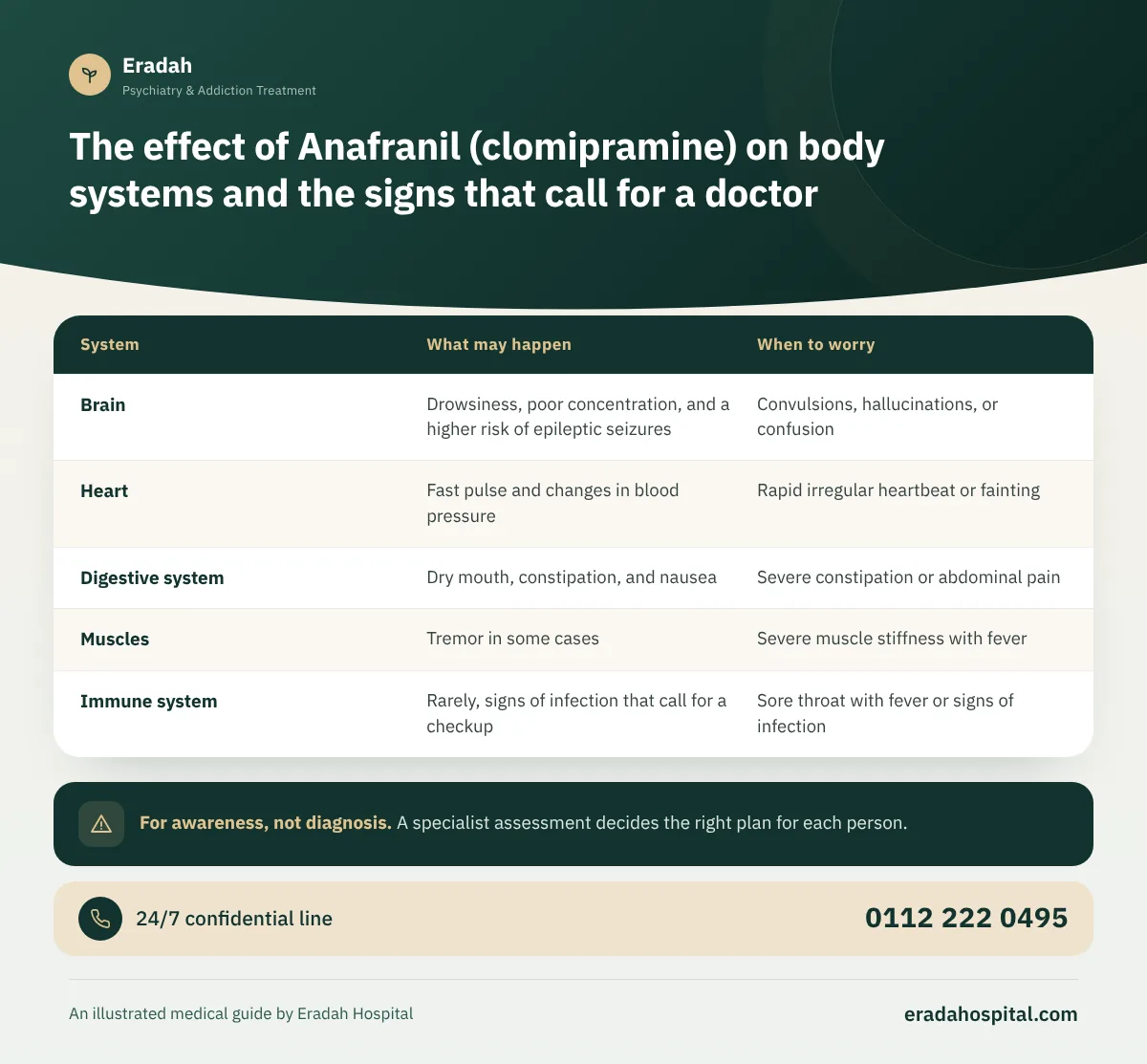
The effect of Anafranil on body systems
| System | What may happen | When to worry |
|---|---|---|
| Brain | Drowsiness, poor concentration, and a higher risk of epileptic seizures | Convulsions, hallucinations, or confusion |
| Heart | Fast pulse and changes in blood pressure | Rapid irregular heartbeat or fainting |
| Digestive system | Dry mouth, constipation, and nausea | Severe constipation or abdominal pain |
| Muscles | Tremor in some cases | Severe muscle stiffness with fever |
| Immune system | Rarely, signs of infection that call for a checkup | Sore throat with fever or signs of infection |
Who should not take Anafranil? And the key interactions
- People who have recently had a heart attack, and those with a heart rhythm disorder or heart, liver, or kidney disease.
- People with a history of epileptic seizures or brain injury, or who are receiving brain stimulation treatments.
- People with prostate problems or difficulty urinating, or closed-angle glaucoma.
- Older adults over 65, as MedlinePlus advises that it is often not the safest choice for them.
- People who drink alcohol heavily, because alcohol doubles the drowsiness.
Important interactions include: MAOI-type antidepressants and similar medicines within two weeks, the stomach medicine cimetidine, and any medicine that raises serotonin such as tramadol. MedlinePlus also notes that smoking may reduce the effectiveness of clomipramine. In pregnancy and breastfeeding, the doctor should be consulted before use or continuing.
Does Anafranil cause addiction? And how is it stopped?
Anafranil does not cause euphoria or addiction, but stopping it suddenly can cause discontinuation symptoms that MedlinePlus lists, including: dizziness, nausea and vomiting, headache, weakness, sleep disturbance, fever, and irritability. That is why the doctor lowers the dose gradually. And if the patient misuses sedatives or alcohol alongside the medicine, this raises the risks and needs a specialist assessment.
When to seek help, and Eradah’s role
Seek urgent help if suicidal thoughts, palpitations and fainting, or convulsions appear. For severe OCD that has not responded to treatment, the psychiatry department at Eradah offers an assessment of the medication plan and behavioral therapy together, with the option of residential treatment when the obsessions disrupt daily life, and dual diagnosis treatment if substance use accompanies it.