If you are in danger right now
If you are reading this page because you are tired enough to think about an ending, thank you for still being here and searching. What you feel now is real and painful, but it is not the whole truth. This page was written for you, and for those who love you and fear for you.
- Call now the mental health support line 16328, or ambulance (123), or go to the nearest emergency department.
- Do not stay alone: call a friend or relative and ask them to come over or stay with you on the phone.
- Move away from anything that could hurt you, and ask someone to keep it away from you.
- Stay away from alcohol and drugs tonight, because they make decisions more impulsive.
- Postpone any decision: suicidal thoughts intensify and then calm down, and what you feel now will change.
What are suicidal thoughts?
Suicidal thoughts range from passing thoughts such as “I wish I wouldn’t wake up” or “everyone would be relieved without me,” to more specific thoughts about ending one’s life. They are a sign of psychological pain that has exceeded the person’s ability to bear it at that moment, and they have nothing to do with weakness, lack of faith or wanting attention. The World Health Organization estimates that suicide is one of the leading causes of death among young people worldwide, and that prevention is possible when a person finds someone who listens and connects them to help.
Warning signs to watch for
The US National Institute of Mental Health lists signs that deserve immediate action, especially if they are new or increasing:
- Talking about wanting to die or being a burden to others.
- Talking about feeling hopeless or having no reason to live.
- Talking about unbearable pain or feeling trapped.
- Looking for ways to harm oneself.
- Increased use of alcohol or drugs.
- Withdrawing from people, saying goodbye, or giving away treasured belongings.
- Extreme mood swings, or sudden calm after a period of severe depression.
- Sleeping far too much or too little, and acting recklessly.
What increases the risk?
There is no single cause, but the risk rises with depression, bipolar disorder and severe anxiety, with alcohol and drug use, with trauma and violence, with loss and acute financial or emotional crises, with isolation, with chronic illness, and with a previous attempt or suicides in the family or surroundings. Several factors combined with a sudden crisis is the most dangerous moment.
How do you help someone you are worried about?
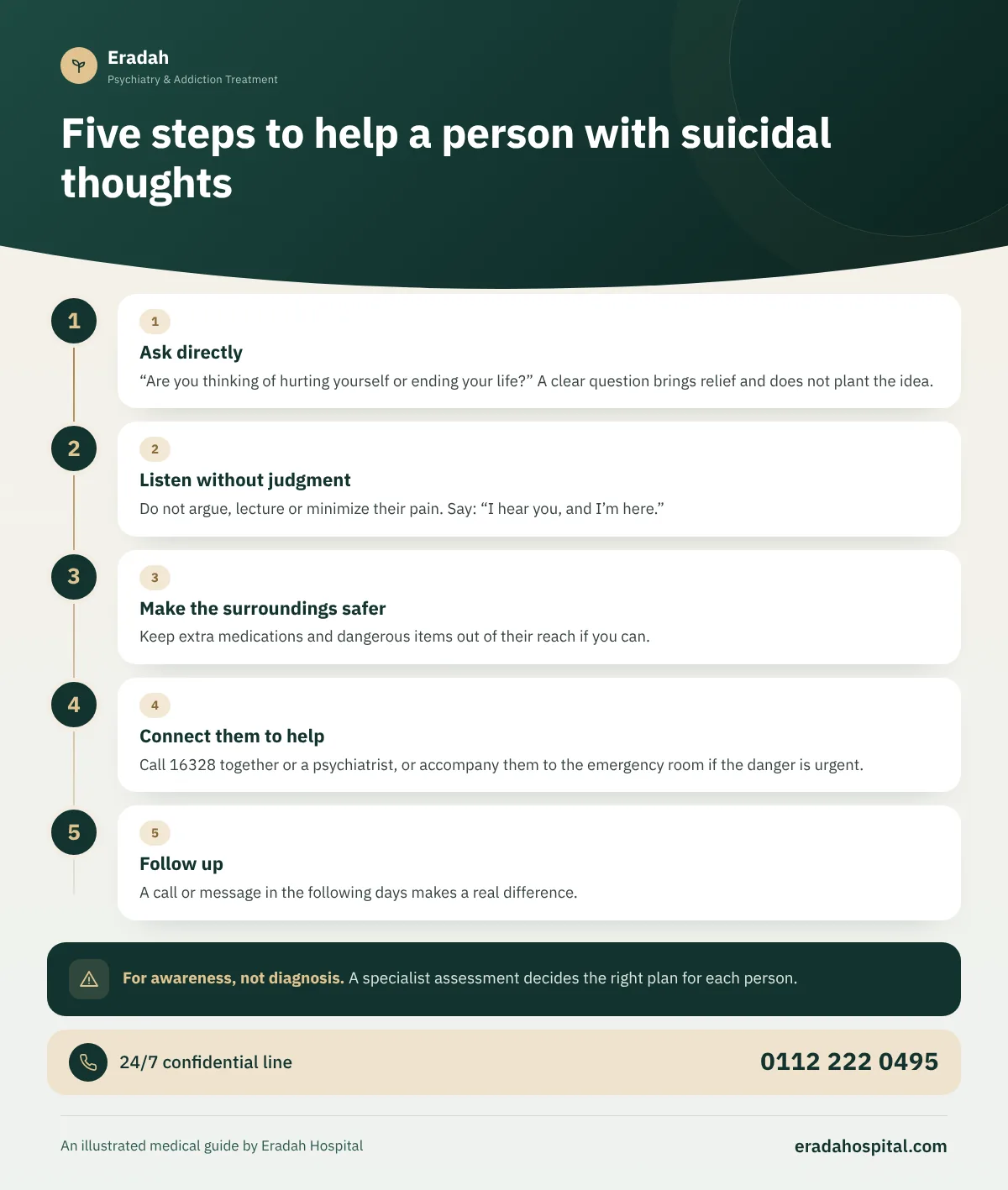
- 1Ask directly
“Are you thinking of hurting yourself or ending your life?” A clear question brings relief and does not plant the idea.
- 2Listen without judgment
Do not argue, lecture or minimize their pain. Say: “I hear you, and I’m here.”
- 3Make the surroundings safer
Keep extra medications and dangerous items out of their reach if you can.
- 4Connect them to help
Call 16328 together or a psychiatrist, or accompany them to the emergency room if the danger is urgent.
- 5Follow up
A call or message in the following days makes a real difference.
A study published in the journal Psychiatry reviewed the available evidence and found that asking people about suicide does not increase suicidal thoughts, and may even reduce them in some. So do not be afraid to ask.
Safety plan: for yourself, before a crisis
A safety plan is a short sheet you write at a calmer time, with a therapist’s help if possible, and keep on your phone:
- My warning signs: the thoughts and situations that come before a crisis for me.
- What calms me on my own: walking, a shower, prayer, music, writing.
- Places and people that distract me.
- Who I call when I need help: three names and their numbers.
- Emergency numbers: 16328, 123, and my doctor.
- How I make my surroundings safer in hard times.
- At least one reason for me to keep going.
Treatment works
Treating the underlying cause, such as depression, a mood disorder, trauma or addiction, clearly eases suicidal thoughts. Treatments that have proven helpful include suicide-focused cognitive behavioral therapy, dialectical behavior therapy, appropriate medication for the accompanying disorder, and close follow-up after any crisis. In severe cases a person may need a short stay in a psychiatric hospital that keeps them safe until the crisis settles and treatment begins.
Suicidal thoughts or danger to self? Get help now
- Talking about wanting to die or being a burden on others
- Severe hopelessness and a sense of being trapped with no way out
- Saying goodbye to loved ones or suddenly giving away treasured things
- Unexplained sudden calm after a period of severe depression
- Increased drinking or substance use, or reckless behavior that puts their life at risk
Do not leave the person alone. Calmly and clearly ask whether they are thinking of ending their life, and listen without arguing, blaming or lecturing; asking directly does not plant the idea, it eases it and opens the door to help. Do not promise secrecy if their life is in danger. Call the 24-hour mental health support line 16328 together, or call an ambulance on 123 or take them to the nearest emergency room if the danger is urgent, and keep medications and anything they could use to hurt themselves away from them.
Ambulance 123 Mental health support line 16328