“I took the medicine for a week, saw no difference, and stopped.” This is one of the most common reasons depression treatment fails, and the cause is that no one explained to the patient how these medications work or when to expect results. This guide answers the questions many people are too embarrassed to ask their doctor.
How do antidepressants work?
Antidepressants act on neurotransmitters, chiefly serotonin and norepinephrine, increasing their availability in the spaces between nerve cells. But the rise in the neurotransmitter happens within hours, while improvement takes weeks. Scientists explain this by suggesting that the real benefit comes from slower changes: adaptation of receptors and improved flexibility of the neural circuits responsible for mood and for coping with stress. This is why a medication should not be judged before enough time has passed.
Types of antidepressants
| Group | Examples (active ingredient) | Notes |
|---|---|---|
| Selective serotonin reuptake inhibitors (SSRIs) | Escitalopram, sertraline, fluoxetine, paroxetine, fluvoxamine | Often the first choice; side effects are milder |
| Serotonin-norepinephrine reuptake inhibitors (SNRIs) | Venlafaxine, duloxetine | Also helpful for some nerve pain and anxiety |
| Tricyclic antidepressants | Amitriptyline, clomipramine, imipramine | Effective, but with more side effects, and dangerous in overdose |
| Atypical antidepressants | Mirtazapine, bupropion, trazodone, vortioxetine | Each has its own advantage, such as improving sleep or causing fewer sexual side effects |
| Monoamine oxidase inhibitors (MAOIs) | Rarely used today | Require strict dietary and medication restrictions |
There is no single “strongest antidepressant” in absolute terms. The choice depends on the predominant symptoms, co-existing conditions, other medications, previous experiences, and the side effects the patient most wants to avoid. Sometimes finding the right medication means trying more than one.
Why are antidepressants prescribed?
Despite their name, these medications are used for many conditions besides depression, including generalized anxiety disorder, panic disorder, obsessive-compulsive disorder, post-traumatic stress disorder, social anxiety disorder, and some cases of chronic pain and migraine. So being prescribed an antidepressant does not mean your doctor thinks you are “depressed.”
When do antidepressants start working?
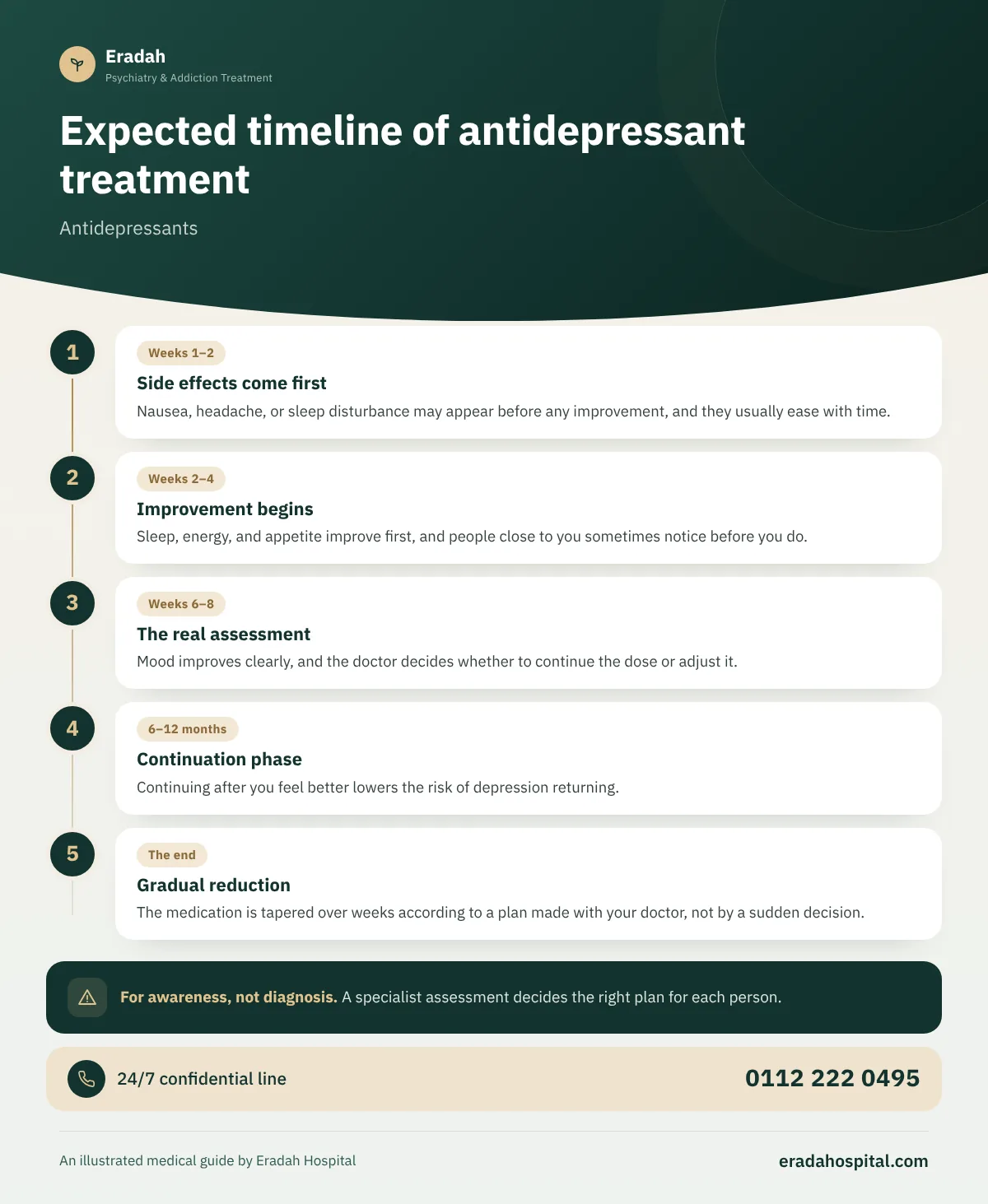
- Weeks 1–2Side effects come first
Nausea, headache, or sleep disturbance may appear before any improvement, and they usually ease with time.
- Weeks 2–4Improvement begins
Sleep, energy, and appetite improve first, and people close to you sometimes notice before you do.
- Weeks 6–8The real assessment
Mood improves clearly, and the doctor decides whether to continue the dose or adjust it.
- 6–12 monthsContinuation phase
Continuing after you feel better lowers the risk of depression returning.
- The endGradual reduction
The medication is tapered over weeks according to a plan made with your doctor, not by a sudden decision.
Side effects of antidepressants
Effects differ from one medication to another, but the most common ones with the newer groups are:
- Nausea and stomach upset in the first few days.
- Mild headache.
- Insomnia or drowsiness, depending on the medication.
- Temporary increase in tension or anxiety at the beginning.
- Changes in sexual desire or performance.
- Excess sweating.
- Weight changes with some medications.
- Dry mouth and constipation, especially with tricyclics.
Many of these effects can be managed: take the medication after food to reduce nausea, move the dose to the morning if it causes insomnia or to the evening if it causes drowsiness, or adjust the dose or switch the medication. The key is to tell your doctor rather than stopping the medication on your own.
Dangerous interactions you should know about
The most dangerous interaction is serotonin syndrome, which occurs when an antidepressant is combined with other substances that raise serotonin, such as tramadol, some migraine medications, other antidepressants, or ecstasy. Its symptoms are agitation, sweating, high temperature, muscle twitching, diarrhea, and a fast heartbeat, and it is an emergency. Caution is also needed when combining antidepressants with alcohol and sedatives, and with blood thinners, because some antidepressants increase the risk of bleeding.
Stopping antidepressants
Antidepressants do not cause addiction in the usual sense, and the details are in the guide Do psychiatric medications cause addiction? However, stopping them suddenly can cause discontinuation symptoms such as dizziness, nausea, mild electric-shock sensations, and insomnia. One of the best-known reasons depression comes back is stopping the medication too early, before the continuation period is complete. This is why the timing and method of stopping are agreed with your doctor.
Antidepressants for people recovering from addiction
Many people in recovery have depression or anxiety, sometimes present before substance use and sometimes resulting from it. Antidepressants are relatively safe in this situation because they do not cause euphoria or addiction, and they may reduce the risk of relapse when depression is one of its triggers. But the doctor must know the full history of substance use in order to avoid interactions, and because some withdrawal symptoms resemble depression and go away on their own. This is what a dual diagnosis program provides.