“Whatever I tell him, he does the opposite; if I shout he shouts more, and he deliberately annoys his siblings and says it's their fault.” When the home becomes a daily battlefield, parents ask: is this spoiling? Bad parenting? Or does the child have oppositional defiant disorder?
What is oppositional defiant disorder?
Cleveland Clinic describes it as a mental health condition involving persistent patterns of anger, irritability and resistance to rules and authority figures such as parents and teachers. It usually begins in childhood, typically in the preschool years, and may continue into adulthood. The World Health Organization places it, together with conduct disorder, among the “disruptive behavior and dissocial disorders.” The Arabic name is translated in different ways, all of which refer to the same diagnosis.
AACAP stresses that all children are stubborn at times, especially when they are tired, hungry or upset, and that stubbornness is a normal part of development at ages two to three and at the start of adolescence. It becomes a problem when it is so frequent and persistent that it stands out compared with children of the same age, and affects the child's social, family and school life.
Symptoms of oppositional defiant disorder
According to the DSM-5-TR diagnostic manual as summarized by StatPearls, the disorder is diagnosed when there are at least four symptoms from three groups, shown with people other than siblings:
Often loses their temper, is easily annoyed and touchy, and is angry and resentful most of the time.
Constantly argues with adults, refuses requests and rules, and deliberately annoys others.
Blames others for their own mistakes and misbehavior.
Spiteful or vindictive behavior at least twice within six months.
The manual requires the behavior to recur on most days for six months in children under 5, and at least once a week for six months in older children, to cause clear distress or impairment, and not to occur only during another disorder such as depression or substance use. Severity is rated by the number of settings in which it appears: mild in one setting, moderate in two, and severe in three or more.
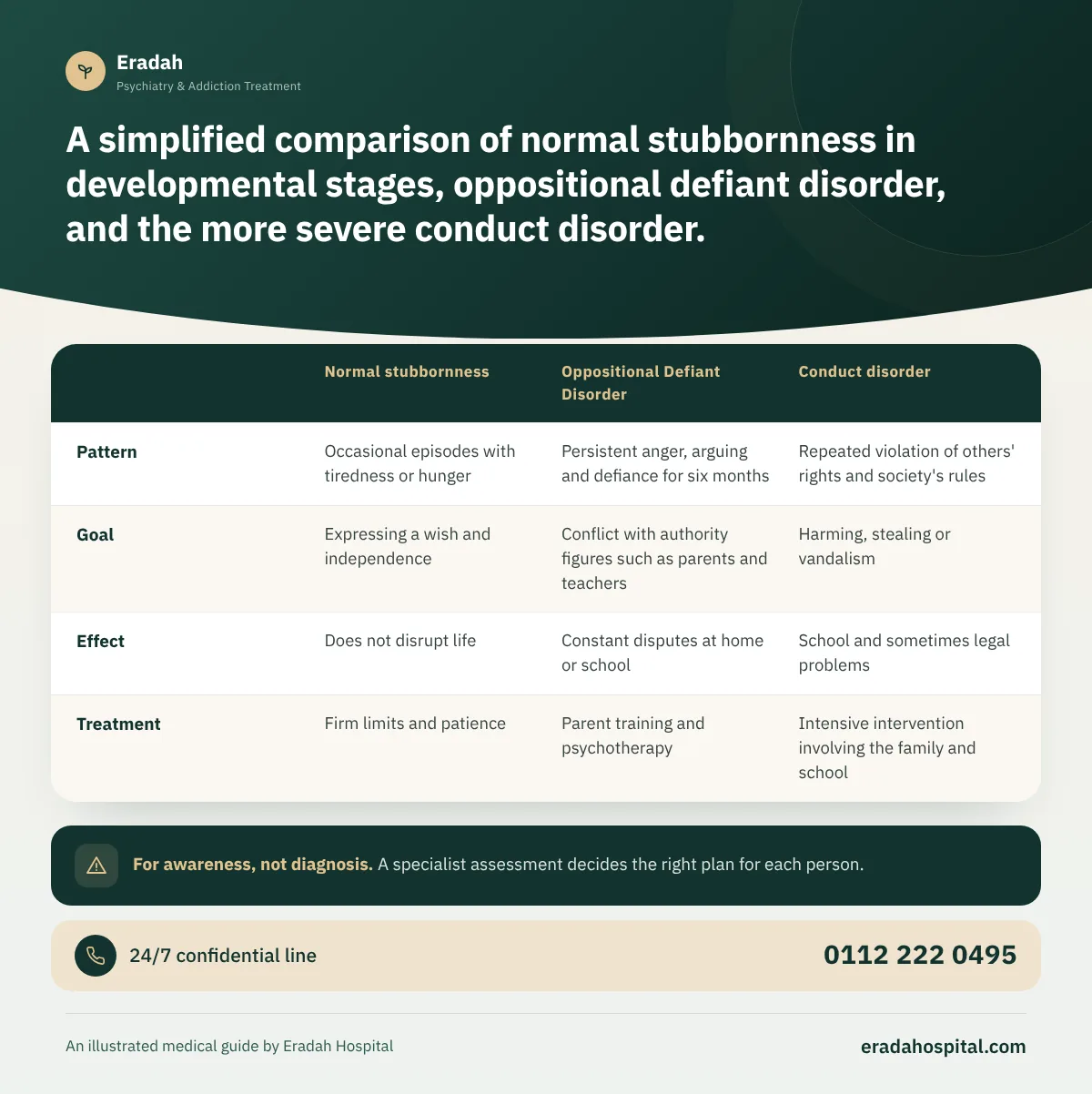
The difference between normal stubbornness, oppositional defiant disorder and conduct disorder
| Normal stubbornness | Oppositional Defiant Disorder | Conduct disorder | |
|---|---|---|---|
| Pattern | Occasional episodes with tiredness or hunger | Persistent anger, arguing and defiance for six months | Repeated violation of others' rights and society's rules |
| Goal | Expressing a wish and independence | Conflict with authority figures such as parents and teachers | Harming, stealing or vandalism |
| Effect | Does not disrupt life | Constant disputes at home or school | School and sometimes legal problems |
| Treatment | Firm limits and patience | Parent training and psychotherapy | Intensive intervention involving the family and school |
Cleveland Clinic notes that some children with ODD go on to develop the more severe conduct disorder, but most do not, although they remain more prone to anxiety and depression. The World Health Organization estimates that 39 million children and adolescents were living with conduct disorder in 2023.
Causes of oppositional defiant disorder
There is no single cause, and Cleveland Clinic explains that it usually results from an interplay of genetics, how the brain regions responsible for regulating emotion and behavior work, and the environment. Risk factors it lists include:
- Exposure to abuse, neglect or violence at home or in the community.
- A parent with a mood disorder or addiction.
- Family instability such as divorce, or frequent moves and school changes.
- Inconsistent discipline or poor adult supervision, and ongoing financial stress.
- Friends who break rules or use substances, and smoking during pregnancy.
Disorders that often accompany stubbornness
AACAP warns that co-occurring disorders must be looked for, because improvement in the defiance may be hard without treating them. They include ADHD, learning difficulties, depression, bipolar disorder and anxiety disorders. A child who cannot concentrate on homework may look “stubborn” when in fact they are unable to pay attention.
Treatment of oppositional defiant disorder
Cleveland Clinic says that parent training (parent management training) is the main treatment, that the goal is building skills, not punishment, and that many families notice improvement within the first months. Treatment also includes:
- Individual therapy for the child that teaches anger control, problem-solving and understanding the effect of their actions on others.
- Family therapy that unifies the rules, improves communication and reduces conflict.
- School support with a clear behavior plan, in cooperation with teachers.
- Medication, which is not the first choice, though the doctor may use it to treat a co-occurring condition such as ADHD, anxiety or a mood disorder.
How should parents deal with a stubborn child?
From AACAP's advice to parents:
- Build on the positives, and praise the child as soon as they show flexibility or cooperation.
- Take a short break if you are about to escalate the conflict; this is a good model for the child.
- Choose your battles, and prioritize what you ask of them.
- Set reasonable limits that suit their age, and consequences you can apply consistently.
- Keep other interests in your life, seek support from teachers and your spouse, and look after your own stress.
When should you worry and see a doctor?
Ask for an assessment by a child psychiatrist if the stubbornness and anger last for months and affect schoolwork or relationships, or are accompanied by violence, vandalism or stealing, or signs of sadness or substance use appear. The earlier treatment starts, the easier it is. For older teenagers and young adults in whom stubbornness occurs together with substance use, dual diagnosis treatment may be suitable, and Eradah receives children and adolescents for assessment, parent training and follow-up, with a free, confidential first consultation.