“In the morning I'm fine and laughing, and two hours later I flip for no reason and shout at whoever is in front of me.” Doctors hear this sentence often, and it worries the person and their family. The truth is that mood swings may be completely passing, or they may be a message from the body or mind that deserves to be heard.
What are mood swings?
The Cleveland Clinic describes mood swings as sudden changes in emotion at a given moment, linked to changes in the levels of neurotransmitters in the brain, which are affected by many everyday things, from skipping a meal to walking outdoors. It stresses that everyone goes through mood swings, but if they happen very often or negatively affect life, you should talk to a professional. A mood swing is a symptom, not a diagnosis, and the important question is always: what is behind it?
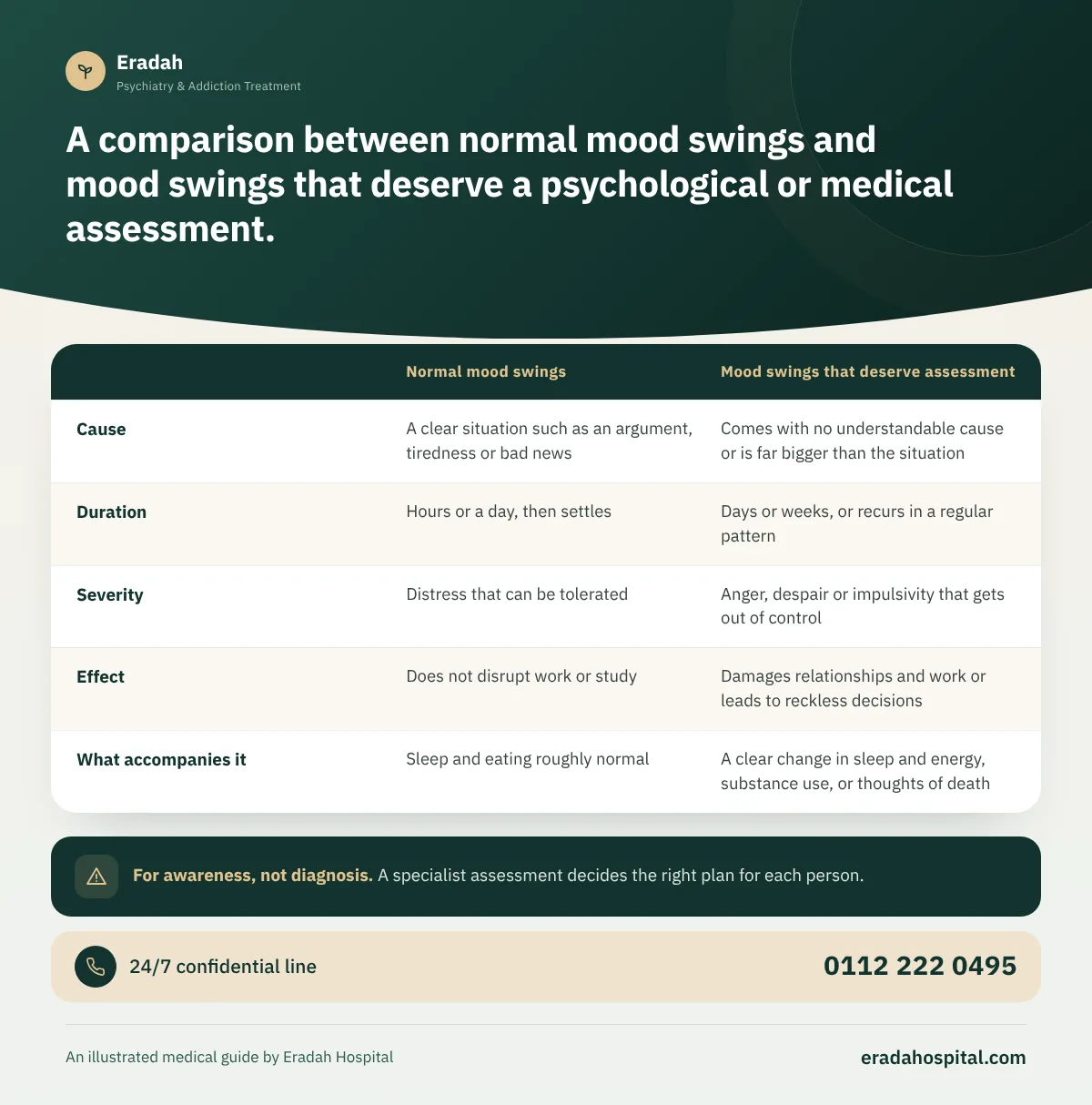
Normal and problematic mood swings: how to tell them apart
| Normal mood swings | Mood swings that deserve assessment | |
|---|---|---|
| Cause | A clear situation such as an argument, tiredness or bad news | Comes with no understandable cause or is far bigger than the situation |
| Duration | Hours or a day, then settles | Days or weeks, or recurs in a regular pattern |
| Severity | Distress that can be tolerated | Anger, despair or impulsivity that gets out of control |
| Effect | Does not disrupt work or study | Damages relationships and work or leads to reckless decisions |
| What accompanies it | Sleep and eating roughly normal | A clear change in sleep and energy, substance use, or thoughts of death |
Everyday causes of mood swings: sleep, stress and hunger
The Cleveland Clinic notes that too little or broken sleep makes it harder to process emotions, leading to mood swings and irritability. Add to that chronic stress, skipped meals and low blood sugar, and too much caffeine. These are causes you can notice and change before thinking about any diagnosis, and you will find the details on sleep on the chronic insomnia page.
Mood swings, hormones and physical illness
- The thyroid: The NHS lists mood swings, irritability, anxiety and trouble sleeping among the symptoms of an overactive thyroid, which is why a doctor may order a test for it.
- In men: The NHS notes that some men in their late 40s and early 50s experience mood swings and irritability along with low desire and energy, which may sometimes be linked to lower testosterone, and often to life stress or depression.
- In women: According to the Cleveland Clinic, mood swings are common before periods, during pregnancy and after birth, and with menopause.
- Adolescence: The physical and emotional changes of puberty make mood swings common, and they usually ease with maturity.
- Other illnesses: such as blood sugar disorders, migraine in the hours before an attack, and brain injuries and diseases.
Mental disorders in which mood swings appear
Manic or hypomanic episodes and depressive episodes lasting days or weeks, not hours.
Milder swings between highs and lows, lasting at least two years in adults, according to the NHS.
Intense emotions that shift within hours, often triggered by relationships and fear of abandonment.
Persistent sadness and loss of pleasure, which may show up as irritability and quick distress.
Quick irritability and difficulty regulating emotions in some people with the condition.
Constant tension, being easily provoked, and bouts of anger or crying.
The NHS describes cyclothymia as a mild form of bipolar disorder, in which the person goes no more than two months without a mood swing, and says it often goes undiagnosed because the high periods seem enjoyable to the person. Even so, people with it are at risk of the condition developing into full bipolar disorder, which is why chronic mood swings deserve early assessment.
Mood swings in bipolar disorder and borderline personality disorder: what is the difference?
| Point of comparison | Bipolar disorder | Borderline personality disorder |
|---|---|---|
| Length of the swings | Episodes lasting days or weeks | Shifts within hours, according to the NHS |
| What triggers them | May come without a clear trigger | Often situations in relationships or a sense of rejection |
| Between episodes | Long periods of stability may pass | More constant emotional instability |
| Sleep | Reduced need for sleep during mania | Not linked to a distinctive sleep pattern |
| Main treatment | Mood stabilizers with psychotherapy | Psychotherapy such as dialectical behavior therapy |
Telling them apart takes a psychiatrist, because the treatment is completely different, and both disorders may occur in the same person. Details on borderline personality are on the borderline personality disorder page.
Drugs, alcohol and medications: a cause many people overlook
The Cleveland Clinic notes that alcohol, cannabis and tobacco change hormones, disrupt sleep and increase anxiety, and that stopping them can in turn cause mood swings for a while. It adds that some medications can cause mood swings as side effects, including cortisone, anabolic steroids and some antidepressants. Well-known patterns include sharp mood swings with hashish, the nervous and depressive “crash” after stimulants such as crystal meth (shabu), and severe irritability during tramadol withdrawal.
How can you ease mood swings?
- Keep your bedtime and wake time steady as far as possible, even on days off.
- Do not skip meals, and cut back on stimulants in the evening.
- Move every day; physical activity improves mood and sleep, as the Cleveland Clinic notes.
- Record your mood, sleep and what happened in your day for two weeks, to discover the triggers.
- Stay away from alcohol and drugs; they increase the swings even if they give you a few moments of relief.
- Talk to someone you trust instead of bottling up anger or sadness.
When should you see a doctor about mood swings?
Ask for an assessment if the swings are frequent, severe or lasting for weeks, if they affect your work and relationships, if they come with periods of little sleep without tiredness along with impulsivity and excessive spending, or if they began with substance use. The doctor usually starts with the medical history and any necessary tests such as a thyroid test, then treats the cause, and treatment may include medication, cognitive behavioral therapy or dialectical behavior therapy. At Eradah you can start with a free, confidential consultation, and when mood swings occur together with substance use, dual diagnosis treatment is the most suitable path.