“I’ve been clean for 8 months, and suddenly, walking down my old street, I felt I needed it right now.” This is what doctors call a drug craving, and what the street sometimes calls “kharman.” It is one of the things that frightens people in recovery most, because it comes without asking and at times they do not expect.
What is a drug craving?
Craving is a strong desire to use the substance, often accompanied by repeated thoughts about it, tension in the body, and sometimes symptoms resembling withdrawal. The committee for the fifth edition of the US diagnostic manual recommended, in a paper published by Deborah Hasin and colleagues in 2013, adding craving to the diagnostic criteria for substance use disorders, recognizing its place in the illness.
Craving differs from withdrawal symptoms: withdrawal occurs in the first days or weeks after stopping and then eases, while craving can return after months and years when the person meets an old trigger.
Why do drug cravings happen?
The US National Institute on Drug Abuse explains that drugs cause large surges of dopamine that strengthen the link between using the substance, pleasure, and all the outside cues tied to the experience. These surges “teach” the brain to demand the substance at the expense of other, healthier goals.
It adds that cues in the daily routine or in the environment that were linked to use can trigger an uncontrollable craving whenever the person is exposed to them, even if the substance is not available, and that this “learned reflex” can last a long time, even in people who have not used for years. The Institute’s principles note that stress and cues can trigger intense craving without the person even noticing what set it off.
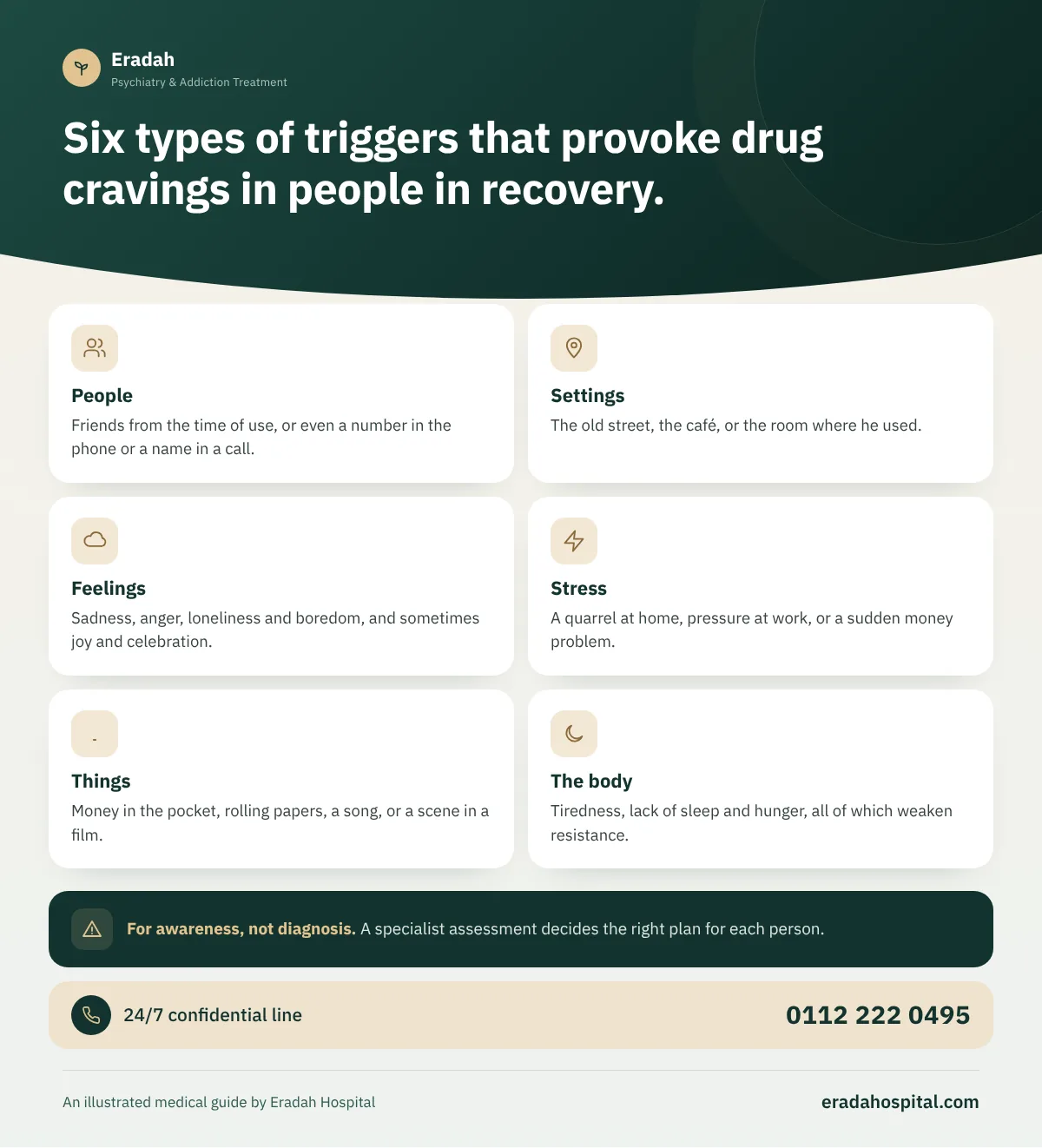
What triggers cravings for drugs?
Friends from the time of use, or even a number in the phone or a name in a call.
The old street, the café, or the room where he used.
Sadness, anger, loneliness and boredom, and sometimes joy and celebration.
A quarrel at home, pressure at work, or a sudden money problem.
Money in the pocket, rolling papers, a song, or a scene in a film.
Tiredness, lack of sleep and hunger, all of which weaken resistance.
How long does craving last?
Therapists describe craving as coming in a wave: it starts, rises, peaks and then falls, especially if the person does not act on it and does not keep feeding it with thinking. The duration varies from person to person and from situation to situation. In the long term its intensity and frequency decrease with continued abstinence and learned skills, but it may return in moments of weakness after years, and that does not mean recovery has collapsed.
How do you deal with a drug craving?
- Name it: tell yourself, “This is a craving, and it will pass.” Naming creates distance between you and the thought.
- Delay: do not decide now. Give yourself a set amount of time before any action, and often the wave falls before it ends.
- Leave the place: change location or activity right away, since the trigger is in the place itself.
- Call: a person in your recovery plan, your therapist, or a peer in the support group.
- Breathe and observe: notice the sensation in your body without fighting it or obeying it, like someone watching a wave.
- Remember the ending: do not remember only the first hour of using, but the next day and what comes after.
These methods have a scientific basis. In a randomized trial published in JAMA Psychiatry in 2014, both a cognitive behavioral relapse prevention program and a mindfulness-based relapse prevention program reduced the risk of returning to drug use and heavy drinking compared with usual care, and the mindfulness program was better at reducing days of use after 12 months. The researchers believe these practices strengthen the ability to observe the discomfort that comes with craving and handle it skillfully.
Are there medications that reduce craving?
For some substances, yes. Medications for opioid addiction such as methadone and buprenorphine reduce craving and withdrawal, and naltrexone is used for alcohol and opioids. For stimulants and hashish there is as yet no approved medication, according to the National Institute on Drug Abuse, and treatment relies on behavioral therapy. Only the doctor decides the right medication, and you will find the details in addiction treatment medications.
When does craving become a warning sign?
The page on relapse explains the stages of relapse and its early signs, while the follow-up and relapse prevention plan helps you prepare for triggers before they happen.
How can the family help someone in recovery who is going through cravings?
- Do not treat his talk about craving as a confession of guilt, but as a sign of trust that deserves appreciation.
- Help him avoid places and people linked to use in the first months.
- Do not watch him like a suspect. Ask him instead: what helps you right now?
- Encourage him to attend follow-up and support groups.