“They told me one pill beforehand would make a difference, and it really did the first few times. After that I couldn’t do it without it, and then I couldn’t at all.” This story is repeated often in addiction treatment clinics, and it sums up how the drugs-and-sex illusion begins and how it ends.
Why do people link drugs and sex?
A scientific review published in 2001 says the common belief is that psychoactive substances “free” a person from inhibitions and increase sexual activity, but the research shows that chronic use of alcohol and drugs has clear harmful effects on sexual function in many people. The illusion is fed by three things: temporary relief from shyness and anxiety, a distorted sense of time that makes the person think the encounter lasted longer, and advice from friends that spreads faster than facts.
How do drugs affect sexual function?
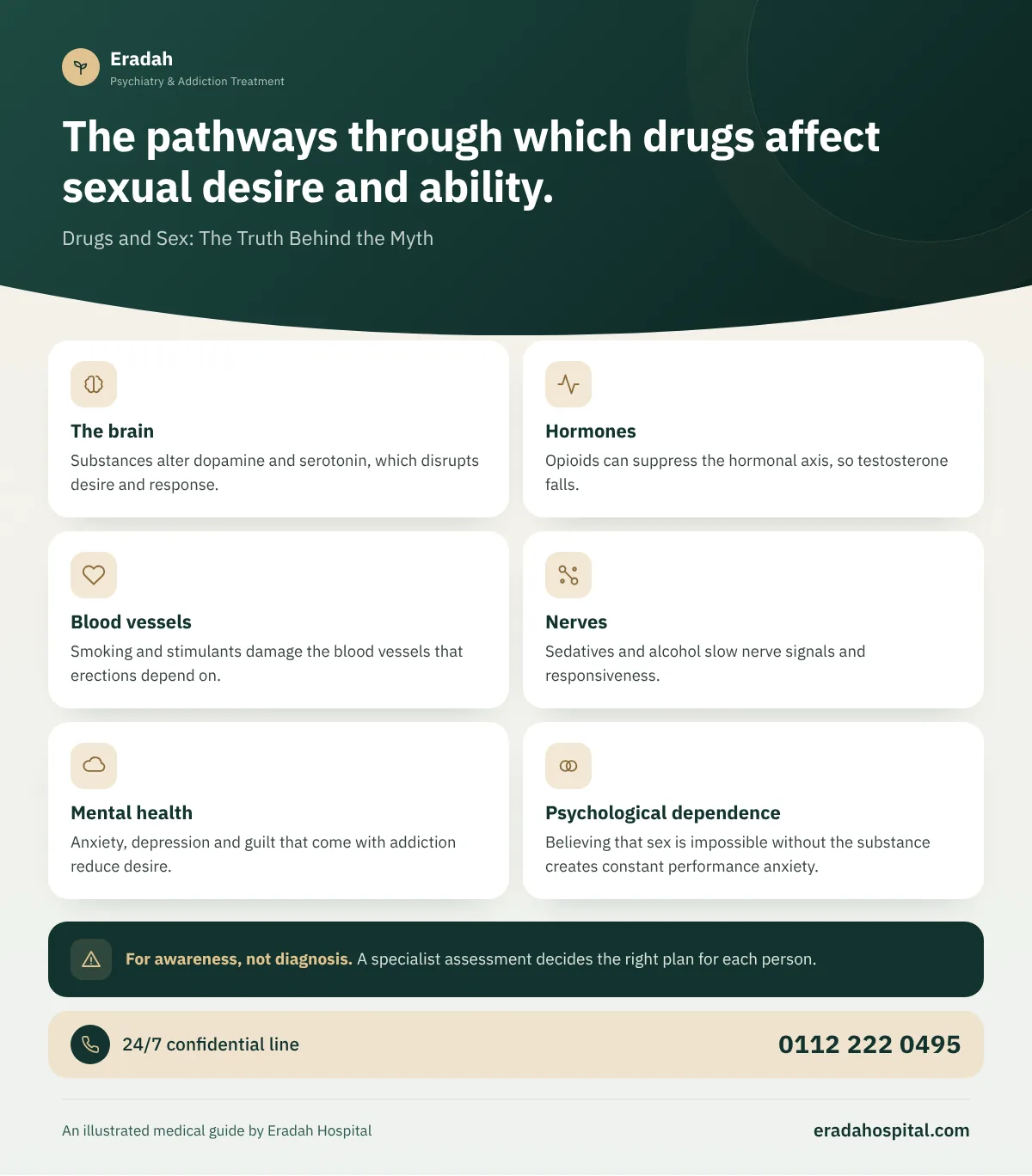
Substances alter dopamine and serotonin, which disrupts desire and response.
Opioids can suppress the hormonal axis, so testosterone falls.
Smoking and stimulants damage the blood vessels that erections depend on.
Sedatives and alcohol slow nerve signals and responsiveness.
Anxiety, depression and guilt that come with addiction reduce desire.
Believing that sex is impossible without the substance creates constant performance anxiety.
The effect of each drug on sex
| Substance | The common illusion | What happens with continued use |
|---|---|---|
| Tramadol | Makes sex last longer | May delay ejaculation temporarily, then reduces desire and erections like other opioids, with a risk of addiction and seizures |
| Hashish | Increases pleasure | Distorts the sense of time, and has been linked in several studies to a higher rate of erectile dysfunction |
| Captagon and amphetamine | Energy and boldness | A temporary surge, then exhaustion and poorer performance with continued use |
| Crystal meth (shabu) | Strong desire | Impulsiveness and risky behavior that raise the risk of infection, followed by dysfunction and problems in the relationship |
| Cocaine | Greater arousal | Difficulty with erections and reaching orgasm with repeated use |
| Alcohol | Removes shyness | Increases desire but impairs ability, and with chronic heavy use it weakens erections |
| Heroin and opioids | — | Loss of desire, erectile dysfunction and lower testosterone |
| Pregabalin | Calms and prolongs | Reduced desire, erectile dysfunction and difficulty reaching orgasm are among the effects listed in its prescribing information |
| Sedatives such as Xanax | Relieve tension | Slow the nervous system, and may reduce desire and response |
In an analysis that pooled five studies covering more than 3,300 men and was published in 2019, the rate of erectile dysfunction among hashish users was about 69%, compared with about 35% among non-users. The researchers cautioned, however, that the studies varied widely and that long-term research is needed. As for pregabalin, its approved prescribing information in the United States lists reduced desire, sexual dysfunction and inability to reach orgasm among its common side effects.
Tramadol and premature ejaculation: why does the fix end in a bigger problem?
Tramadol became popular among young men because it can delay ejaculation at first. The problem is that a person starts with a pill “for special occasions,” then needs a larger dose for the same effect, then ends up taking it daily to avoid withdrawal symptoms. With long-term opioid use, doctors see what they call “opioid-induced androgen deficiency”: these substances suppress the hormonal axis in the brain and the production of testosterone in the testicles, so desire and erections decline. You will find its other effects in the harms of tramadol.
Drugs and women’s sexual health
Research on women is more limited, but it suggests that chronic use reduces desire and response in women as well. Pregabalin and some sedatives can also cause difficulty reaching orgasm, and opioids can disturb hormones. Substance use also raises the risk of unsafe relationships and exploitation, because the substance impairs judgment and the ability to say no.
Drugs and unsafe sex: risky behavior and infection
One of the most dangerous aspects of the link between drugs and sex is that the substance weakens judgment, so impulsiveness and unprotected sex increase, and with them the risk of sexually transmitted infections, HIV and hepatitis. The risk multiplies with injecting and sharing equipment. Mixing stimulants with sedatives or alcohol can also strain the heart or depress breathing, as explained on the overdose page.
Does sexual ability return after stopping drugs?
In many cases yes, but not immediately. In the first weeks after stopping, things may seem worse because of withdrawal symptoms, anxiety and poor sleep, and then they improve gradually as brain chemistry and hormones regain their balance. Some patients may need hormone testing or treatment for accompanying anxiety and depression. What matters is that fear of the “weak period” does not become a reason to return to the substance; it should be discussed openly with the doctor as part of a relapse prevention plan.
When should you see a doctor, and where does treatment begin?
See a doctor if erectile dysfunction or low desire persists, because it may be a sign of a heart problem, diabetes or a hormonal problem. If you cannot have sex without a substance, or your dose has increased over time, these are signs of dependence that deserve assessment. Treatment can begin with outpatient treatment or may need residential treatment, depending on the case, along with treatment of dual diagnosis if anxiety or depression is present. At Eradah, the journey begins with a first consultation that is free and completely confidential.