“People say you can tell an addict by his face, but my son looks completely normal.” This sentence sums up a common myth. The image of the thin person with sunken eyes mostly belongs to advanced stages, while many people look normal for months or years. Even so, there are visible signs that a family should know about, as long as they are read as part of the whole picture.
Is There a Single Look for a Person with Addiction?
No. How a person with addiction looks varies with the type of substance, the amount, the length and method of use, and with general health and nutrition. Someone who uses small amounts or has used for a short time may show no signs at all. That is why the US National Institute on Drug Abuse (NIDA) lists among the common signs lack of attention to appearance and changes in eating and sleeping habits, along with changes in friends and declining school performance, meaning appearance is part of a wider pattern. You will find the behavioral and financial signs in the guide Signs of Drug Use.
What a Person’s Eyes Look Like in Addiction: What Do They Reveal?
The eyes are among the things families notice most, because some substances directly affect the pupil and blood vessels:
- Red eyes: a common effect of using hashish, according to the US medical encyclopedia MedlinePlus, along with dry mouth and slowed reactions.
- Very small pupils: with opioids, and in a heroin overdose reaching very small “pinpoint” pupils, according to MedlinePlus.
- Dilated pupils: a symptom of late opioid withdrawal, along with runny nose, yawning and chills.
- A heavy gaze and half-closed eyelids: with sedatives and opioids.
What a Person with Addiction Looks Like by Type of Substance
| Stimulants (shabu and Captagon) | Opioids (heroin and tramadol) | Hashish | |
|---|---|---|---|
| Eyes | Dilated pupils and a tense gaze | Small pupils during the effect, dilated during withdrawal | Redness and heavy eyelids |
| Weight and appetite | Loss of appetite and clear weight loss | Weight loss with neglect and long-term use | Often increased appetite |
| Mouth and teeth | Tooth decay and tooth loss over time | Dry mouth and constipation | Dry mouth |
| Sleep and energy | Days without sleep, then collapse and lethargy | Drowsiness and frequent dozing off | Lethargy and slowness |
| Skin | Scratch wounds and slow healing | Injection marks with needle use | Often no distinctive signs |
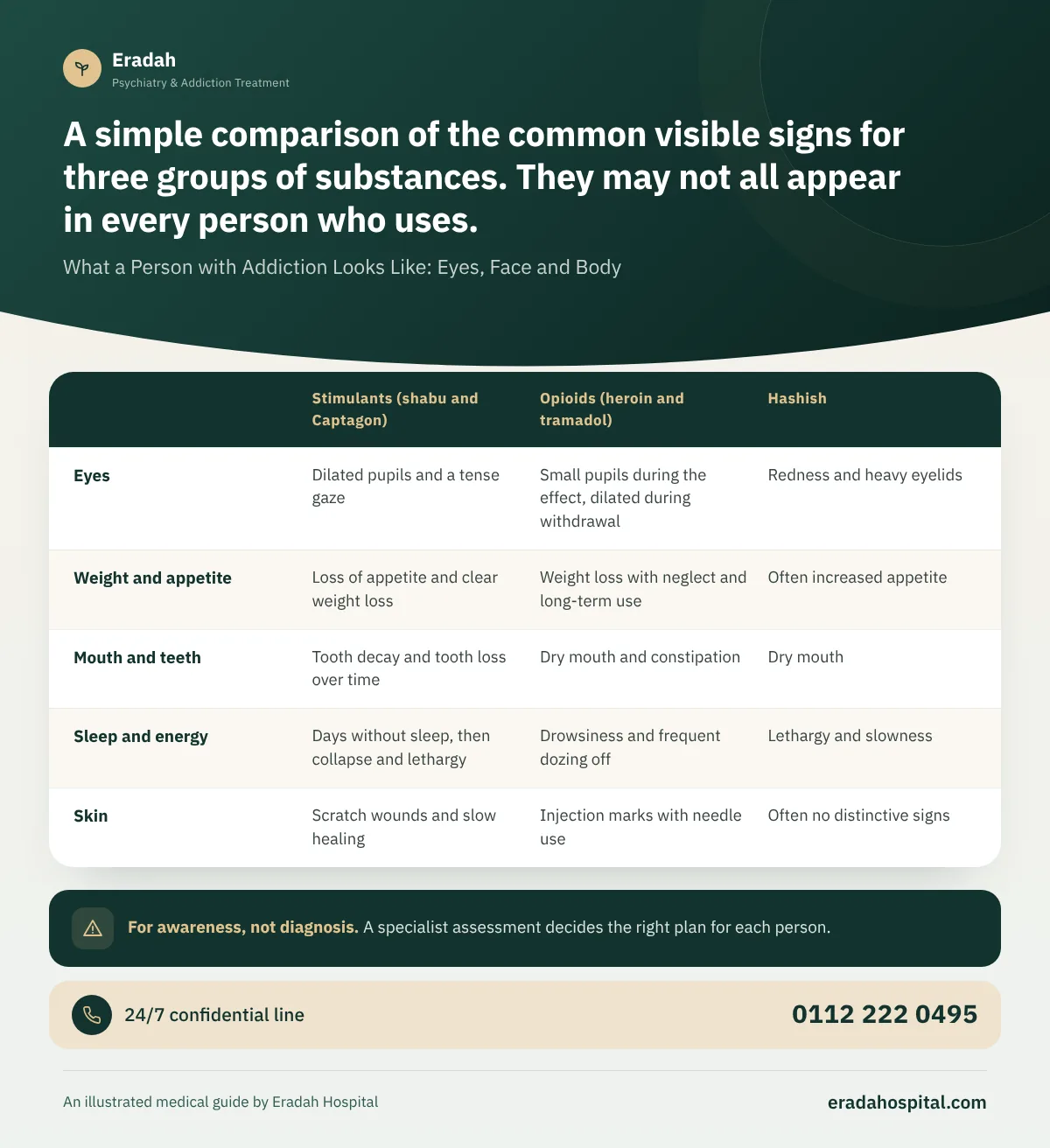
NIDA affirms that tooth decay and tooth loss, known as “meth mouth,” are long-term effects of using methamphetamine, known in Egypt as shabu. You will find each substance’s features in detail in the guides to heroin, tramadol and Captagon.
The Face and Skin of a Person with Addiction After Long-Term Use
Over time, more general changes appear that are not specific to any one substance: pale or yellowish skin from poor nutrition and lack of sleep, dark circles, pimples or slow-healing sores, and neglect of shaving, clothing and hygiene. With injection use, a person may wear long sleeves even in the heat to hide needle marks. Many of these changes improve after stopping, with nutrition and sleep.
Why Do Some People with Addiction Look Completely Normal?
Because the use may be at an early stage, in amounts the body tolerates after getting used to them, or at times when the family does not see him. Some people who use stimulants or tramadol seem more energetic and productive at first, which reassures their parents. So the more important question is not “does he look like an addict?” but “have his behavior, sleep, money, studies or work changed?”
When Is Appearance a Sign of Immediate Danger?
You Noticed Signs in His Appearance: What Do You Do?
Do not begin by accusing him based on appearance. Record the changes you noticed and their dates, and talk to him at a calm time about your worry and about specific facts. If physical signs come together with behavioral ones, ask for a specialist assessment. At Eradah the first consultation is free and confidential, and the family can begin it alone, after which the team decides whether detox and residential treatment for men, or outpatient follow-up, is the better fit.