“My back is breaking, my nose is running, and I can’t sleep.” This is how many people describe the second day after stopping tramadol or heroin. The same description repeats almost word for word with every opioid, because they all act on the same receptors in the brain, so here we cover opioid withdrawal symptoms as one family and point you to the detailed page for each substance.
What are opioid withdrawal symptoms and why do they happen?
Opioids act on receptors called “opioid receptors” in the brain, spinal cord and gut. With regular use, as MedlinePlus explains, physical dependence develops: the body needs the substance to prevent withdrawal symptoms, and needs a larger amount for the same effect, which is called tolerance. The time it takes for dependence to develop varies from person to person.
When the substance is suddenly stopped or reduced, the body needs time to regain its balance, and the symptoms appear during this period. Withdrawal can happen any time long-term use is stopped or cut back, whether the use was of a prescribed painkiller or an illicit drug.
Early and late opioid withdrawal symptoms
| Stage | Physical symptoms | Psychological symptoms |
|---|---|---|
| Early | Muscle aches, tearing, runny nose, sweating, yawning | Anxiety, irritability and insomnia |
| Late | Abdominal cramps, diarrhea, nausea and vomiting, dilated pupils, goose bumps | Severe restlessness and strong craving for the substance |
| May also occur | Back and joint pain, weakness, loss of appetite, and raised blood pressure, pulse and breathing rate | Nervousness and mood swings |
The first two stages are from MedlinePlus, and the last row is from the official US FDA label for tramadol.
Doctors use a scale called COWS to gauge the severity of withdrawal; according to its developers’ 2003 paper it measures 11 common signs and symptoms, and it helps the doctor choose the right time to start some treatment medications.
Stages of opioid withdrawal
- The first hoursThe start
Anxiety, yawning, tearing, runny nose and sweating. It begins within about 12 hours with heroin, and later with long-acting drugs.
- The first daysThe peak
Cramps, diarrhea, vomiting, bone pain, goose bumps and severe insomnia. The hardest stage, and the one that most often drives a return to use.
- After the peakEasing
Physical symptoms ease gradually, while exhaustion and disturbed sleep remain.
- The following weeksLingering symptoms
Anxiety, depression, cravings and disturbed sleep that may last weeks or months in some people.
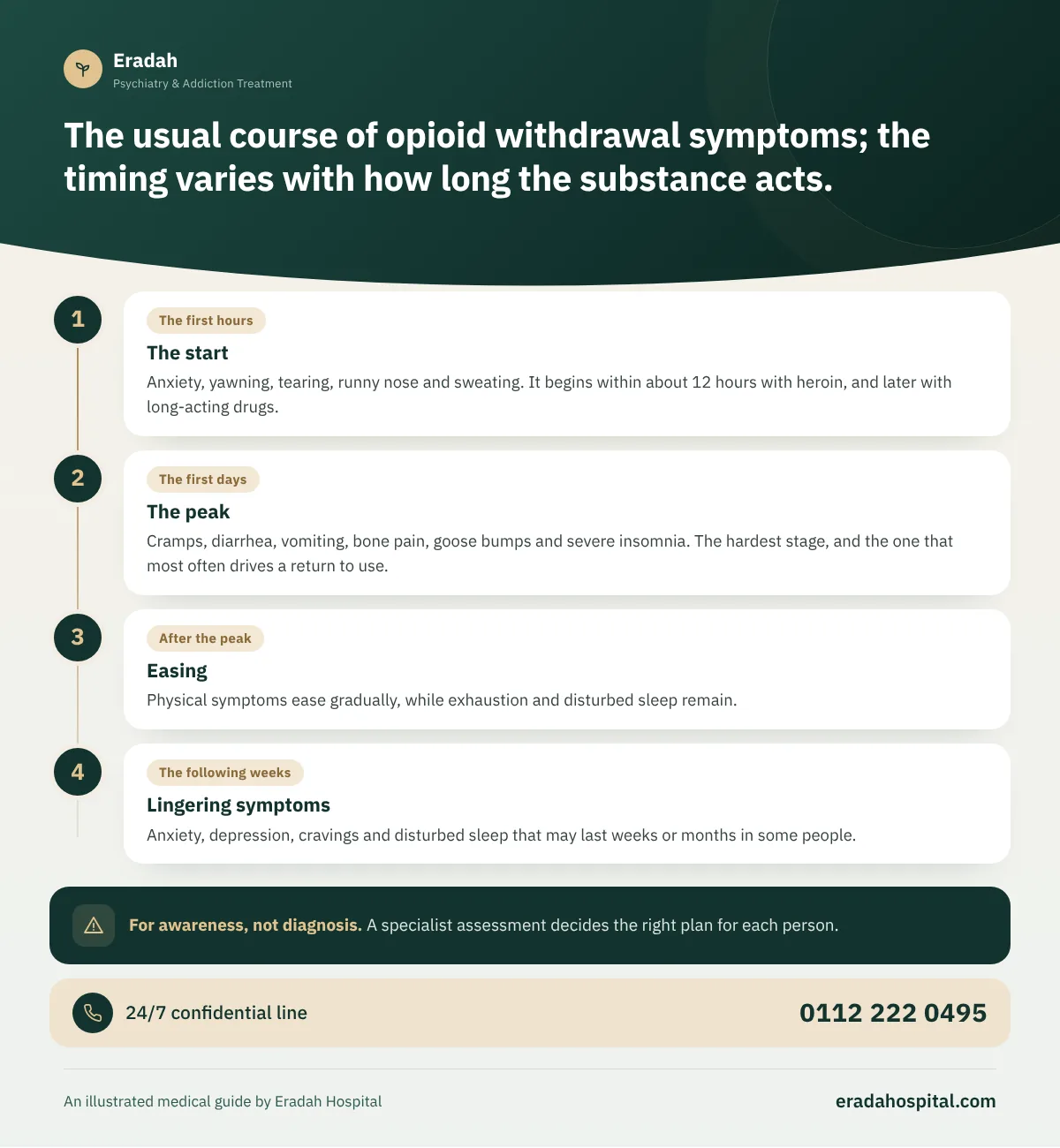
The exact duration varies widely between people and substances, which is why each type needs its own page: heroin withdrawal, tramadol withdrawal and methadone withdrawal.
Do opioid withdrawal symptoms differ from one type to another?
The symptoms are almost the same, but the timing and severity differ depending on how quickly the substance leaves the body. A substance that clears quickly causes early, sharp withdrawal, while one that stays a long time causes withdrawal that comes later and lasts longer.
- Heroin and morphine: short-acting, so withdrawal begins early, within hours, and is sharp.
- Tramadol: has an opioid effect and an effect on serotonin, and its official label warns that stopping it quickly in people who had become dependent has led to severe withdrawal, uncontrolled pain and suicides.
- Methadone: long-acting, so withdrawal is delayed to about 30 hours according to MedlinePlus, and lasts longer.
- Buprenorphine: its withdrawal is usually slower and milder, but it can be prolonged. Details are in buprenorphine withdrawal.
- Codeine and cough medicines: weaker in effect, but long daily use causes real withdrawal. Details are in codeine withdrawal.
Is opioid withdrawal dangerous?
MedlinePlus describes the symptoms as very uncomfortable but usually not life-threatening, and adds at the same time that withdrawing on your own can be very hard and can be dangerous. The danger comes from four directions:
- Dehydration and salt imbalance from vomiting and diarrhea, especially in older adults and people with heart or kidney disease.
- Withdrawal during pregnancy, which needs specialist follow-up rather than sudden stopping.
- Depression and suicidal thoughts, which the tramadol label asks to be monitored during tapering.
- Returning to the old dose after a few days of stopping, which is the most dangerous moment of all.
Withdrawal with sedatives or alcohol: a different situation
Many people do not use opioids alone but combine them with sedatives, pregabalin or alcohol. Here the calculation is completely different, because alcohol and sedative withdrawal can cause seizures and dangerous delirium, unlike opioid withdrawal. This is why anyone mixing substances needs medically supervised detox with a plan that sets what is withdrawn first. The page on sedatives and sleeping pills explains why mixing them with opioids is dangerous.
How are opioid withdrawal symptoms eased medically?
MedlinePlus states that treatment often combines medication, counseling and support, and that doctors may use methadone or buprenorphine to ease withdrawal and shorten the detox period, which may then continue as long-term treatment, along with other medications to calm anxiety, sweating, cramps, insomnia and diarrhea. The doctor decides the medication and its timing; according to the COWS scale paper, buprenorphine can cause sudden withdrawal if given at the wrong time.
Because physical withdrawal is only the beginning, the next step is a complete treatment plan, as in heroin addiction treatment and tramadol addiction treatment.