“Ten years of trust, and in one day I found out everything was a lie. Since then I haven’t slept or eaten.” Not every wound can be seen. A betrayal by a partner or lifelong friend, a sudden breakup, or being let down by family in a time of need can leave a mark as strong as trauma. This is what people call emotional trauma.
What is emotional trauma?
Emotional trauma is an everyday expression rather than a separate medical diagnosis, and people usually mean a sudden break in trust or emotional safety within an important relationship. It differs from psychological trauma in the broader sense, which is usually tied to frightening or life-threatening events such as accidents and assaults, although the two can overlap.
The UK’s National Health Service (NHS) explains that feelings of grief and loss do not come only after a death; they can also appear after the end of a relationship, losing a job or moving to a new place. In other words, what you feel after a breakup is a kind of grief over a real loss, not weakness or exaggeration.
Causes of emotional trauma
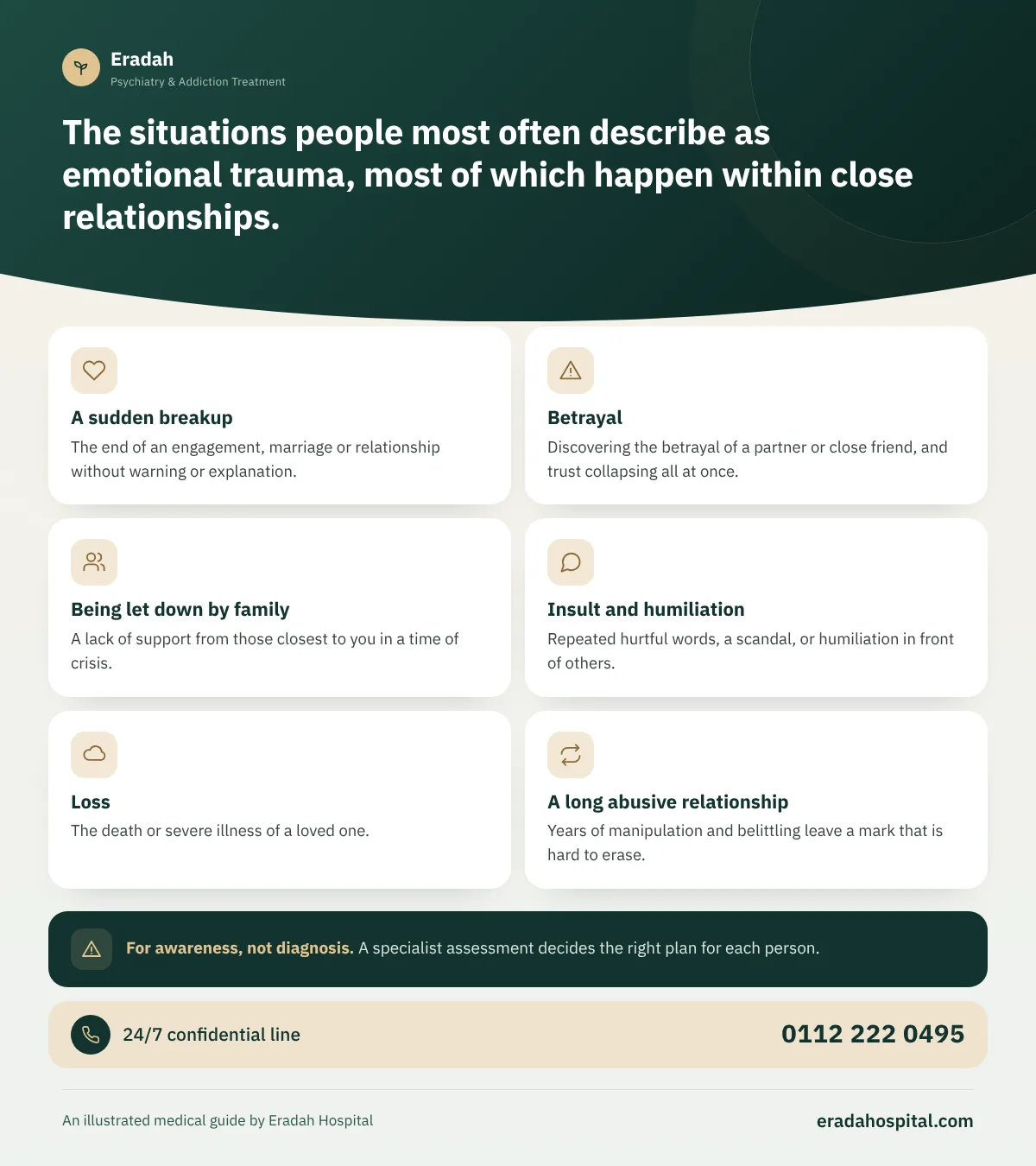
The end of an engagement, marriage or relationship without warning or explanation.
Discovering the betrayal of a partner or close friend, and trust collapsing all at once.
A lack of support from those closest to you in a time of crisis.
Repeated hurtful words, a scandal, or humiliation in front of others.
The death or severe illness of a loved one.
Years of manipulation and belittling leave a mark that is hard to erase.
Symptoms of emotional trauma
Among the signs of grief after a loss, the NHS lists shock and emotional numbness as the first reaction, then overwhelming sadness with a lot of crying, tiredness and exhaustion, anger at the person or at the cause, and guilt. With emotional trauma, these are usually joined by:
- Endless thinking about what happened and its details.
- Sleeplessness, or sleeping more than usual.
- Loss of appetite or emotional eating.
- Loss of trust in people and fear of a new relationship.
- Self-blame and a feeling that you do not deserve love.
- Poor concentration at work and in study.
- Withdrawal from friends and activities.
Why does emotional trauma hurt like a wound in the body?
In a study published in the journal PNAS in 2011, researchers asked people who had recently gone through a breakup they did not want to look at a photo of the other person and think about being rejected by them, then compared their brain activity with that of real physical pain. They found that regions linked to the sensation of physical pain were active in both cases. So the expression “my heart hurts” is not entirely a metaphor.
In rare cases the effect can reach the heart itself. Cleveland Clinic explains that what is called broken heart syndrome is a sudden, temporary weakening of the heart muscle that happens after severe emotional or physical stress such as divorce or losing a job, and it is thought to be caused by stress hormones such as adrenaline. It causes chest pain and shortness of breath that resemble a heart attack, and most patients recover within days to weeks.
Wrong ways to escape the pain
After emotional trauma many people look for anything that will quiet the pain quickly: staying up on the phone until dawn, hashish or sedatives “so I can sleep,” checking the other person’s accounts, or jumping into a new relationship. These fixes bring relief for hours, then prolong the wound, and some open the door to dependence. Someone who finds themselves unable to step away from a relationship that hurts them may want to read about unhealthy attachment.
How do you recover from emotional trauma?
- Allow yourself to grieve; suppressing it prolongs the pain rather than shortening it.
- Tell someone you trust, and do not carry it alone.
- Reduce exposure to what reopens the wound: photos, messages and following their accounts.
- Hold on to the basics: regular sleep, eating and daily movement.
- Postpone big decisions until the feelings settle.
- Review what happened later, calmly, to learn from it, not to beat yourself up.
When does emotional trauma need a specialist?
You need specialized help if the grief stretches over weeks without improvement, disrupts your work or study, shows symptoms of depression such as loss of pleasure and despair, or you begin to rely on a substance to sleep or calm down. The NHS notes that grief after the death of a loved one eases with time for most people, but in some it can last for months or years in what is called prolonged grief disorder. If thoughts of harming yourself appear, call the mental health support line 16328 or the ambulance on 123.
Cognitive behavioral therapy helps change the thoughts that feed self-blame and loss of trust. You can start with a session in Eradah’s outpatient clinics, and the first consultation is free and confidential.