“Since the accident I haven't been able to get into a car, and every time I close my eyes I see that moment.” Many people spend weeks after an accident, an assault or terrible news not knowing whether what they are going through is normal or the start of an illness. Psychological trauma is a common human experience, and understanding what happens afterward is the first thing that helps you deal with it.
What is psychological trauma?
The U.S. National Institute of Mental Health (NIMH) defines a traumatic event as a shocking, scary or dangerous experience that can affect a person emotionally and physically. The U.S. Substance Abuse and Mental Health Services Administration (SAMHSA) describes individual trauma as the result of an event, series of events or set of circumstances that a person experiences as physically or emotionally harmful or life-threatening, with lasting effects on their functioning and their mental, physical and relational well-being.
This means trauma is not measured by the event alone: the same incident may pass with a brief effect on one person and leave a deep wound in another, depending on their age, history and the support they find around them.
Types of psychological trauma
A single sudden event: a car accident, an assault, a fire or an earthquake.
Harm that recurs over a long period, such as violence at home or ongoing bullying.
Abuse or neglect in early life whose effects extend into adulthood.
Witnessing an event happen to someone else, or hearing that it happened to someone close to you.
The unexpected death of a loved one, especially in violent circumstances.
Displacement, prolonged fear and successive losses in a short time.
The UK National Health Service (NHS) notes that repeated harm, such as childhood abuse or neglect, ongoing domestic violence, or repeatedly witnessing violence, can lead to what is called complex trauma or complex post-traumatic stress disorder, which resembles PTSD in its symptoms but differs in its causes.
Symptoms of psychological trauma: common reactions
According to NIMH, it is normal to feel fear during and after a traumatic event, because fear is part of the “fight or flight” response that protects you from danger. Common reactions include:
- Anxiety, sadness or anger that comes in waves.
- Difficulty concentrating and sleeping.
- Repeatedly thinking about what happened, with images that intrude on the mind.
- Avoiding places or people connected to the event.
- Being startled by the slightest sound and feeling constantly tense.
- Physical symptoms: headaches, stomach upset, a racing heart and sweating.
In children younger than 6, NIMH notes that trauma may show up differently: wetting the bed after having learned to use the toilet, stopping talking, re-enacting the frightening event in play, or clinging tightly to a parent. Teenagers may show aggressive behavior, guilt or thoughts of revenge.
What happens after a traumatic event?
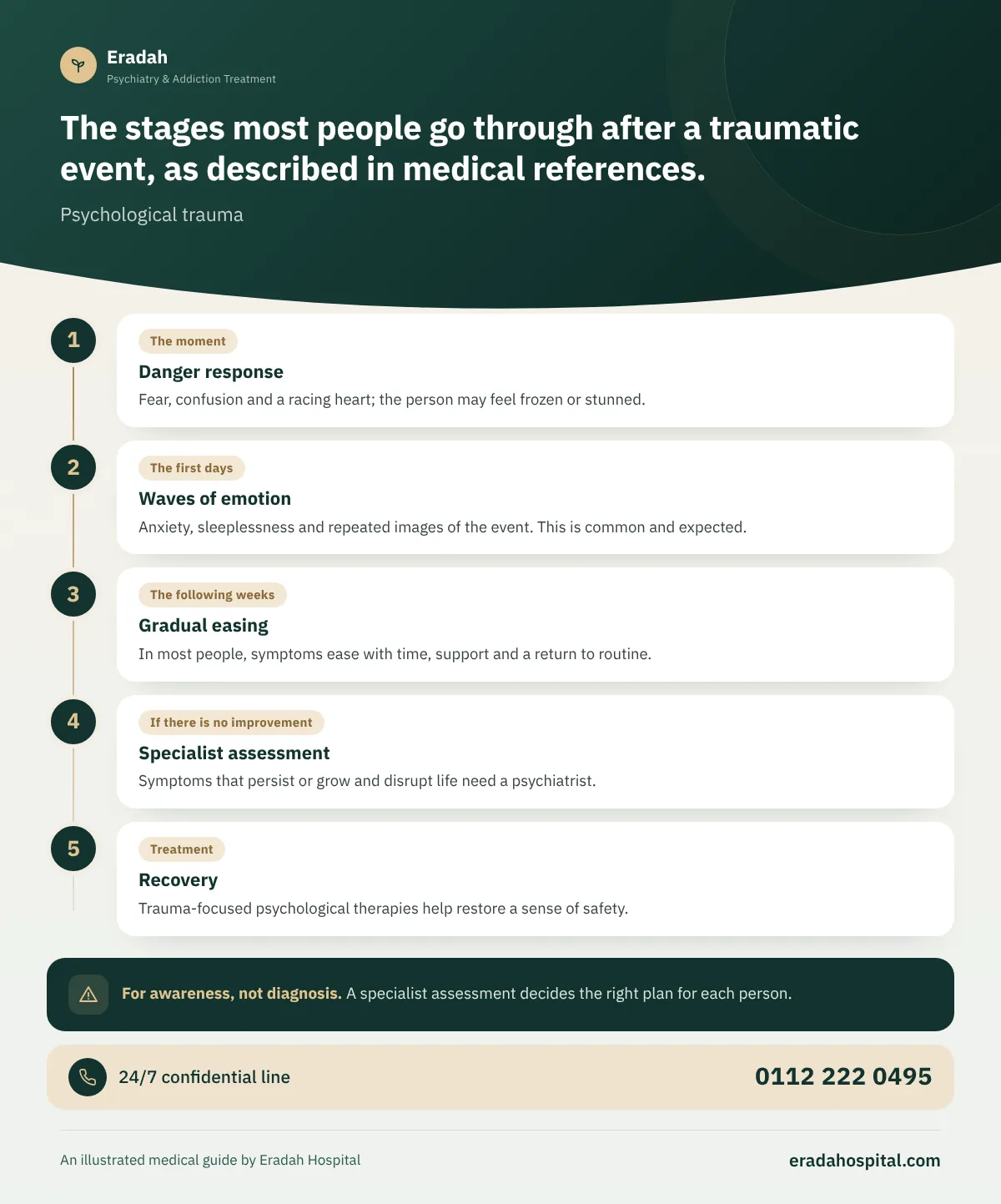
- The momentDanger response
Fear, confusion and a racing heart; the person may feel frozen or stunned.
- The first daysWaves of emotion
Anxiety, sleeplessness and repeated images of the event. This is common and expected.
- The following weeksGradual easing
In most people, symptoms ease with time, support and a return to routine.
- If there is no improvementSpecialist assessment
Symptoms that persist or grow and disrupt life need a psychiatrist.
- TreatmentRecovery
Trauma-focused psychological therapies help restore a sense of safety.
When does psychological trauma become a disorder?
The World Health Organization says that about 70% of people worldwide will experience a potentially traumatic event during their lives, but only a minority (5.6% of them) develop post-traumatic stress disorder, and it estimates that 3.9% of the world's population has had it at some point in life. The rate varies with the type of event; it rises to 15.3% among people exposed to war and armed conflict.
The effects of trauma are not limited to this disorder. According to NIMH, some people who have been through trauma may develop panic attacks, depression, substance use or suicidal thoughts. The risk is higher for people with a personal or family history of mental illness or substance use, those who have had earlier traumas, those under constant stress, or those who lack support around them.
Psychological trauma and addiction
SAMHSA points out that trauma is especially common in the lives of people with mental disorders and substance use disorders. Many turn to alcohol, sedatives or hashish to quiet memories or to sleep, and after a while find themselves facing two problems instead of one. This is why NIMH recommends avoiding alcohol and drugs after trauma, and why someone with both trauma and substance use needs treatment that addresses the two together.
How can you help yourself after psychological trauma?
- Spend time with people you trust who support you, and do not isolate yourself.
- Keep a steady routine for eating, sleeping and moving as far as you can.
- Do something that eases stress: walking, breathing exercises, or prayer and reflection.
- Set small, realistic goals and focus on what you can control.
- Stay away from alcohol, drugs and sedatives taken without a prescription.
- Do not force yourself to talk before you are ready, and do not hold back from talking if you need to.
Treatment for psychological trauma
If symptoms continue or affect your work and home life, trauma-focused psychological therapy is the main option, including cognitive behavioral therapy in its trauma-focused forms. The doctor may prescribe medication for insomnia, anxiety or accompanying depression and will decide its type and dose, so do not start or stop any medication without a doctor. You can find details of the options on the page treatment for post-traumatic stress disorder.
At Eradah, you can begin with an assessment in the outpatient clinics, and the first consultation is free and confidential. If trauma occurs together with addiction or severe symptoms, inpatient treatment is available for men under the supervision of an integrated team.