“The doctor prescribed me Cipralex, but I'm afraid of getting used to it.” This question comes before many psychiatric prescriptions in Egypt, and it often stands between a person and a treatment they need. Here is what you need to know about Cipralex without exaggeration or dismissal: what it is, what to expect in the first weeks, which effects deserve attention, and how to stop safely.
What is Cipralex?
Cipralex is the best-known brand name of escitalopram, made by Lundbeck, and generic versions are available in Egyptian pharmacies, with brand names including Eskita, Estican, Nodep and Cipram. Escitalopram is the active part of an older compound, citalopram, and is classed among antidepressants of the selective serotonin reuptake inhibitor group, which is often the first choice because its side effects are milder than those of older drugs.
What Cipralex is used for
According to the UK's National Health Service (NHS), escitalopram is used to treat:
- Depression, approved by the US Food and Drug Administration for adults and adolescents.
- Generalized anxiety disorder, recently approved by the US agency for adults and for children from age 7, according to the StatPearls reference.
- Panic attacks and social phobia.
- Obsessive-compulsive disorder.
A large network meta-analysis published in The Lancet in 2018, comparing 21 antidepressants, found that escitalopram was among the drugs that combined relatively higher effectiveness with better tolerability, meaning fewer patients stopped it because of side effects.
How does escitalopram work in the brain?
The drug stops nerve cells from reabsorbing serotonin too quickly, so this neurotransmitter stays available for longer in the spaces between cells. But serotonin rises within hours, while improvement lags by weeks, because the real benefit comes from a slow adaptation in the receptors and neural circuits responsible for mood and fear. This is why judging Cipralex after a few days is premature.
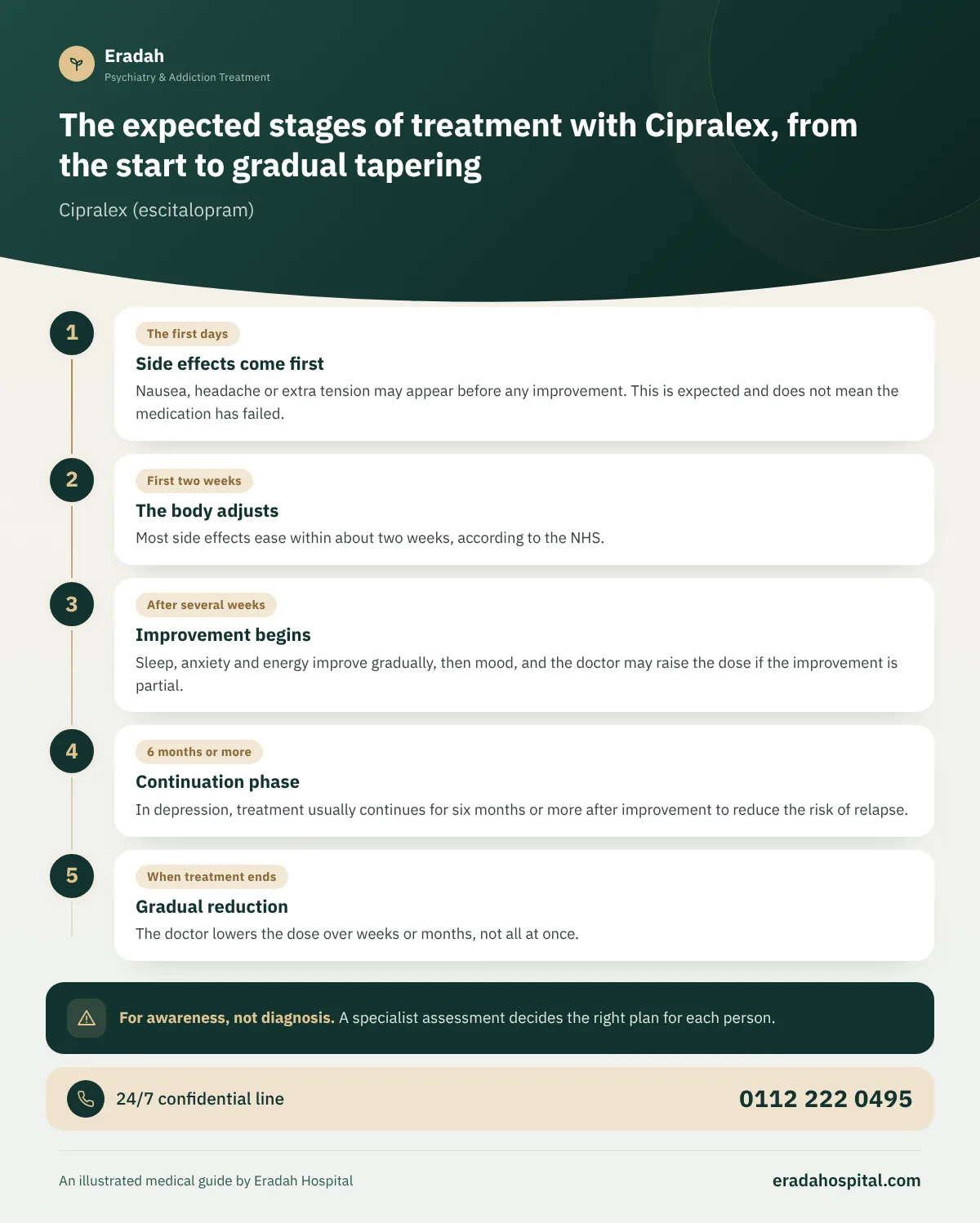
When does Cipralex start working?
- The first daysSide effects come first
Nausea, headache or extra tension may appear before any improvement. This is expected and does not mean the medication has failed.
- First two weeksThe body adjusts
Most side effects ease within about two weeks, according to the NHS.
- After several weeksImprovement begins
Sleep, anxiety and energy improve gradually, then mood, and the doctor may raise the dose if the improvement is partial.
- 6 months or moreContinuation phase
In depression, treatment usually continues for six months or more after improvement to reduce the risk of relapse.
- When treatment endsGradual reduction
The doctor lowers the dose over weeks or months, not all at once.
Side effects of Cipralex
The NHS says common effects include:
- Headache, nausea and sometimes vomiting.
- Increased sweating.
- Diarrhea or constipation.
- Dizziness, drowsiness, or anxiety and restlessness.
- Trouble sleeping.
- Changes in appetite and weight.
- Reduced sexual desire or performance.
- Joint or muscle pain.
Less common but more serious: serotonin syndrome (sweating, trembling, muscle spasms, confusion and a fast pulse), heart rhythm disturbance that may appear as a rapid, irregular heartbeat, dizziness and fainting, and internal bleeding that may appear as bruising or blood in the urine, stool or vomit.
Important interactions and precautions
- MAOI-type antidepressants and any drug that raises serotonin, such as tramadol, because of the risk of serotonin syndrome.
- Blood thinners such as warfarin, and anti-inflammatory painkillers such as aspirin and ibuprofen, because they increase the risk of bleeding.
- Heart rhythm medications and some drugs that prolong the QT interval.
- St. John's wort and some antihistamines.
- Alcohol, because it increases drowsiness and side effects.
Cipralex may not suit people with a heart rhythm disorder, epilepsy, diabetes, glaucoma, liver or kidney disease, or a history of manic episodes. In pregnancy and breastfeeding its use may be appropriate, but the decision rests with the doctor after weighing benefit against risk.
Is Cipralex addictive?
No. Cipralex does not give a feeling of euphoria, does not push a person to raise the dose to chase an effect, and is not linked to compulsive drug-seeking behavior, which are the true hallmarks of addiction. But the body adapts to it, so if it is stopped suddenly, discontinuation symptoms may appear, such as dizziness, nausea, insomnia, irritability and sensations like mild electric shocks. The UK's National Institute for Health and Care Excellence (NICE) points out that these symptoms are often mild and resolve within one to two weeks, but they can become severe with sudden discontinuation.
How to stop Cipralex safely
- Do not stop the medication because you feel better; feeling better is usually a sign that it is working.
- Discuss the right timing with your doctor, ideally during a stable period away from major stress.
- The doctor draws up a gradual tapering plan over weeks or months, depending on how long you have been treated and how you respond.
- Notice the difference between discontinuation symptoms, which appear within days and include new physical symptoms, and a return of depression, which comes on gradually with its original symptoms.
- Tell the doctor if symptoms become severe, as the tapering may need to be slowed.
When to see the doctor, and Eradah's role
See your doctor if you notice no improvement after several weeks, if side effects are bothersome, if thoughts of self-harm appear, or if you have unusual activity and energy that may point to mania. If anxiety or depression comes with the use of sedatives or drugs, integrated treatment in dual diagnosis deals with both problems together. Eradah's psychiatry department provides a review of the medication plan and regular follow-up, alongside an outpatient treatment program for those who need support without staying in the hospital.