What are high serotonin and serotonin syndrome?
Dangerous high serotonin does not usually happen on its own, but when the body is exposed to substances that sharply increase its activity at the synapses, so receptors are overstimulated. This condition is called serotonin syndrome or “serotonin toxicity,” and it ranges from mild, bothersome symptoms to a fatal condition.
Medical references describe the syndrome through three features that appear together: a change in mental state (anxiety, agitation, confusion), autonomic nervous system disturbance (sweating, fever, fast heart rate, high blood pressure, diarrhea), and neuromuscular hyperexcitability (tremor, muscle twitching, exaggerated reflexes, rigidity).
Most cases appear within 6 to 24 hours of changing the dose of a serotonin-acting drug or adding a new substance, and may begin within minutes to hours. So linking symptoms to a recently started drug is the key to suspecting it.
What are the symptoms of high serotonin, from mild to dangerous?
| Level | Symptoms | What should you do? |
|---|---|---|
| Mild | Anxiety and tension, tremor, sweating, dilated pupils, fast heartbeat, mild diarrhea | Call the prescribing doctor right away and do not add any other medication |
| Moderate | Agitation, raised temperature, high blood pressure, repeated muscle jerks especially in the legs, involuntary eye movements, vomiting and diarrhea | Go to the emergency room now |
| Severe | Confusion or delirium, very high fever, muscle rigidity, seizures, altered consciousness | Call an ambulance (123) immediately; this is a life-threatening condition |
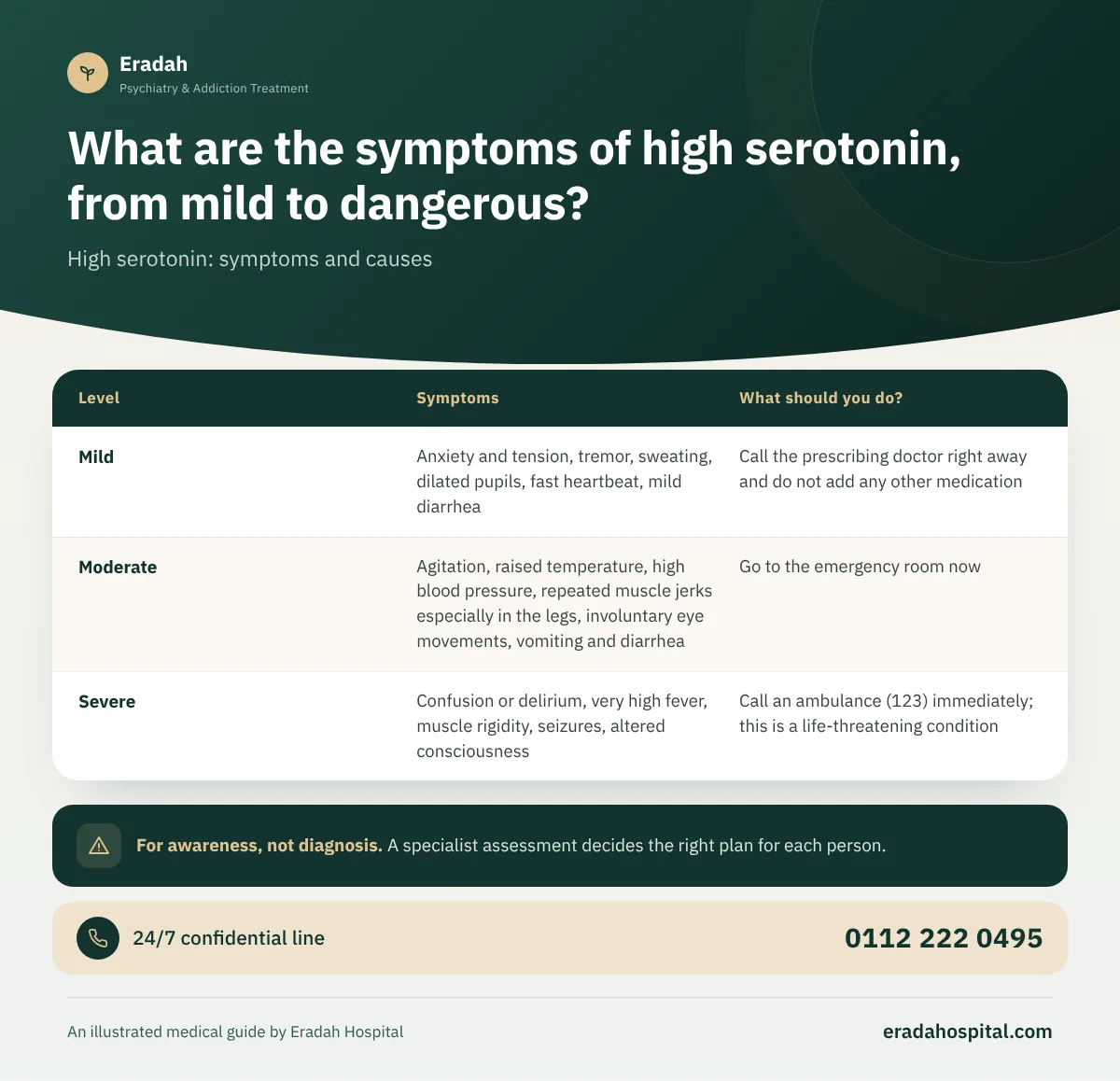
One of the signs doctors focus on most is involuntary muscle jerking (known as “clonus”), whether it appears on its own or when the foot is flexed, along with exaggerated reflexes and tremor. Doctors use clinical criteria based on these signs, together with exposure to a drug or substance that acts on serotonin.
Which drugs and substances raise serotonin dangerously?
The greatest danger comes from combining two or more substances that each increase serotonin in a different way, or from an overdose of a single drug. These are examples of classes and substances cited in medical references:
| Category | Examples | Note |
|---|---|---|
| Antidepressants | SSRIs, serotonin-norepinephrine reuptake inhibitors, monoamine oxidase inhibitors and some older drugs | Combining monoamine oxidase inhibitors with others is among the most dangerous combinations |
| Opioid painkillers | Tramadol, fentanyl and some other painkillers | Tramadol with antidepressants is a common, risky combination in Egypt |
| Migraine medications | Some drugs for migraine attacks | Especially when combined with antidepressants |
| Other medications | Some anti-nausea drugs, an antibiotic called linezolid, lithium, and some cough medicines containing dextromethorphan | Tell every doctor and pharmacist everything you take |
| Herbal supplements | St. John’s wort, tryptophan and 5-HTP | “Natural” does not mean safe with medications |
| Drugs | Ecstasy, cocaine, amphetamines and shabu | Their danger multiplies with antidepressants |
Are there illnesses other than drugs that cause high serotonin?
Yes, although they are rare. Some neuroendocrine tumors, which usually arise in the intestine, release large amounts of serotonin into the blood. When they spread, or their secretions reach the general circulation, they can cause what is known as “carcinoid syndrome.”
- Sudden episodes of flushing of the face and neck.
- Recurrent chronic diarrhea.
- Wheezing in the chest that resembles asthma.
- In the long term, the valves on the right side of the heart may be affected.
This condition is entirely different from drug-induced serotonin syndrome; it develops slowly over months. Only here does a 24-hour urine test for a serotonin breakdown product have diagnostic value, together with imaging, and it is followed by gastroenterologists and oncologists.
What are the risks and complications of high serotonin?
Body temperature may exceed 41 degrees Celsius in severe cases, a condition that needs intensive care.
A fast heart rate and fluctuating blood pressure that can be dangerous.
Seizures may occur in severe cases.
Persistent rigidity and twitching can break down muscle and damage the kidneys.
Some patients may need a ventilator.
Rare but possible if treatment is delayed.
How is high serotonin diagnosed in the emergency room?
There is no blood test that confirms serotonin syndrome. Diagnosis is clinical: it relies on a history of exposure to a drug or substance that acts on serotonin, with an examination looking for muscle jerking, exaggerated reflexes, tremor and raised temperature. Other tests are ordered to assess complications such as kidney function, muscle enzymes and electrolytes.
The doctor distinguishes it from similar conditions, chiefly “neuroleptic malignant syndrome,” which develops more slowly over days with severe muscle rigidity and slowed movement, poisoning by drugs with an anticholinergic effect that causes dry skin, alcohol or sedative withdrawal, and stimulant poisoning. For all of this, it matters that the patient or family honestly report everything that was taken.
How is serotonin syndrome treated?
- Right awayStopping the trigger
The doctor stops all drugs and substances that act on serotonin.
- In an emergencySupportive care
Fluids, cooling, and monitoring of the heart, blood pressure, temperature and breathing.
- For agitationSedative medications
Benzodiazepine drugs are used under supervision to calm agitation and rigidity.
- If there is no improvementAntidote medication
The doctor may prescribe a drug that blocks serotonin receptors, called cyproheptadine.
- Severe casesIntensive care
Intensive cooling, sedation and a ventilator when needed.
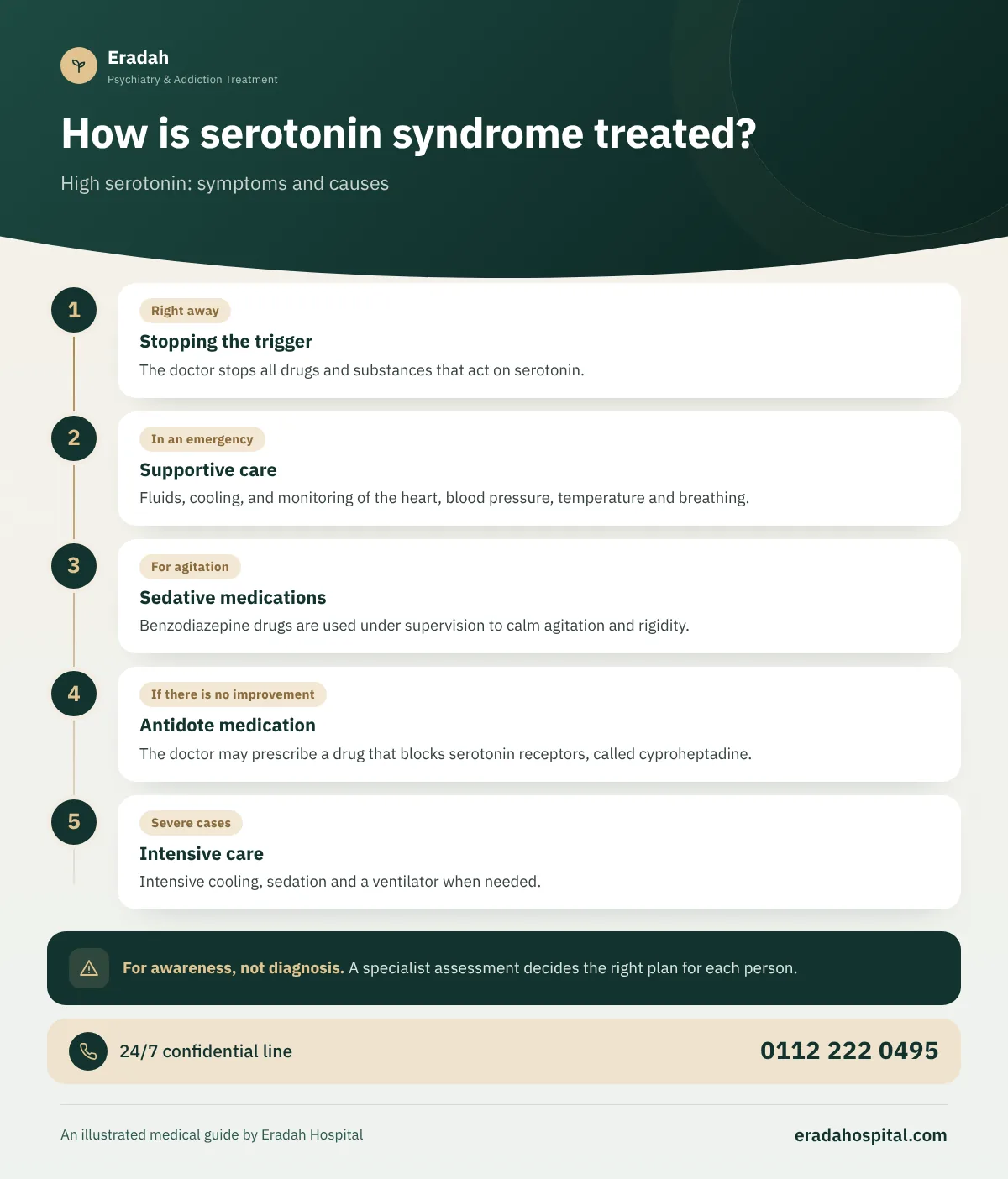
Most mild cases improve within about 24 hours after the trigger is stopped, and it takes longer with drugs whose effect lingers in the body for days. Doctors usually keep the patient under observation for at least a day. After recovery, the psychiatrist reviews the medication plan to avoid a recurrence, and the patient is not left without treatment for the original condition.
How can you protect yourself from dangerous high serotonin?
- Keep a written list of all your medications and supplements and give it to any doctor or pharmacist.
- Do not start a strong painkiller, a cough medicine or an herbal supplement without asking the pharmacist if you take an antidepressant.
- Do not combine two antidepressants or switch from one drug to another except under the doctor’s plan; some drugs need a gap between them.
- Avoid drugs completely, especially ecstasy, stimulants and non-prescribed tramadol, during psychiatric treatment.
- Be alert in the first days after starting a new drug or raising its dose, and watch for any unusual tremor, sweating or agitation.
When should you go to the emergency room for high serotonin?
Go immediately or call an ambulance (123) if you have agitation or confusion with fever and sweating, muscle jerks and rigidity, seizures, or altered consciousness, especially after a new drug, a mix of drugs or drug use. Do not try to treat the condition at home or with extra medication; delay is what turns mild cases into dangerous ones.
Serotonin syndrome: call the ambulance (123) immediately
- Sudden agitation, confusion or severe anxiety after starting a new medicine, increasing a medicine or mixing substances
- High body temperature with heavy sweating and a racing heart
- Repeated involuntary muscle twitching or jerking, especially in the legs, or involuntary eye movements
- Severe muscle rigidity, or seizures
- Diarrhea and vomiting with altered consciousness or difficulty responding
Call the ambulance on 123 or go to the nearest emergency room immediately, and do not wait for the symptoms to go away on their own. Take with you the packaging of all the medicines and supplements the person has taken, do not give them any other medicine or supplement at home, and tell the doctor about any drug they used without fear; the information can save their life.
Ambulance 123 Mental health support line 16328