What is cortisol?
Cortisol is the main hormone in a group called glucocorticoids, the hormones that control blood sugar (glucose) and are made by the adrenal cortex. It is one of the few hormones a person cannot live without, because almost all the body's cells have receptors for it.
Cortisol is made from cholesterol, then travels in the blood, mostly bound to a carrier protein, and enters cells to bind to receptors inside them called "glucocorticoid receptors." Once bound, it moves to the cell's nucleus and switches some genes on and others off, which is why much of its effect comes relatively slowly, over hours rather than seconds, unlike adrenaline.
Cortisol is not a neurotransmitter like dopamine or serotonin, which work in the tiny space between two nerve cells; it is a hormone that travels in the blood and reaches the liver, muscles, immune system and brain together. Even so, the brain is one of its most important targets: it has dense receptors in the areas for memory (the hippocampus), emotion (the amygdala) and control (the prefrontal cortex).
Where is cortisol released and how does the brain control it?
Cortisol is released from the middle layer of the adrenal cortex, but the decision to release it starts in the brain through a chain of three stations that doctors call the HPA axis (hypothalamus, pituitary gland, adrenal gland):
- Station 1The hypothalamus
Senses stress, a drop in sugar, or the approaching time of waking, and releases a releasing hormone called CRH.
- Station 2The pituitary gland
Responds by releasing adrenocorticotropic hormone (ACTH) into the blood.
- Station 3The adrenal gland
ACTH reaches it and it releases cortisol within minutes.
- FeedbackBack to the brain
Cortisol returns to the hypothalamus and pituitary and tells them the amount is enough, so release falls. This "thermostat" is what prevents it from staying high all the time.
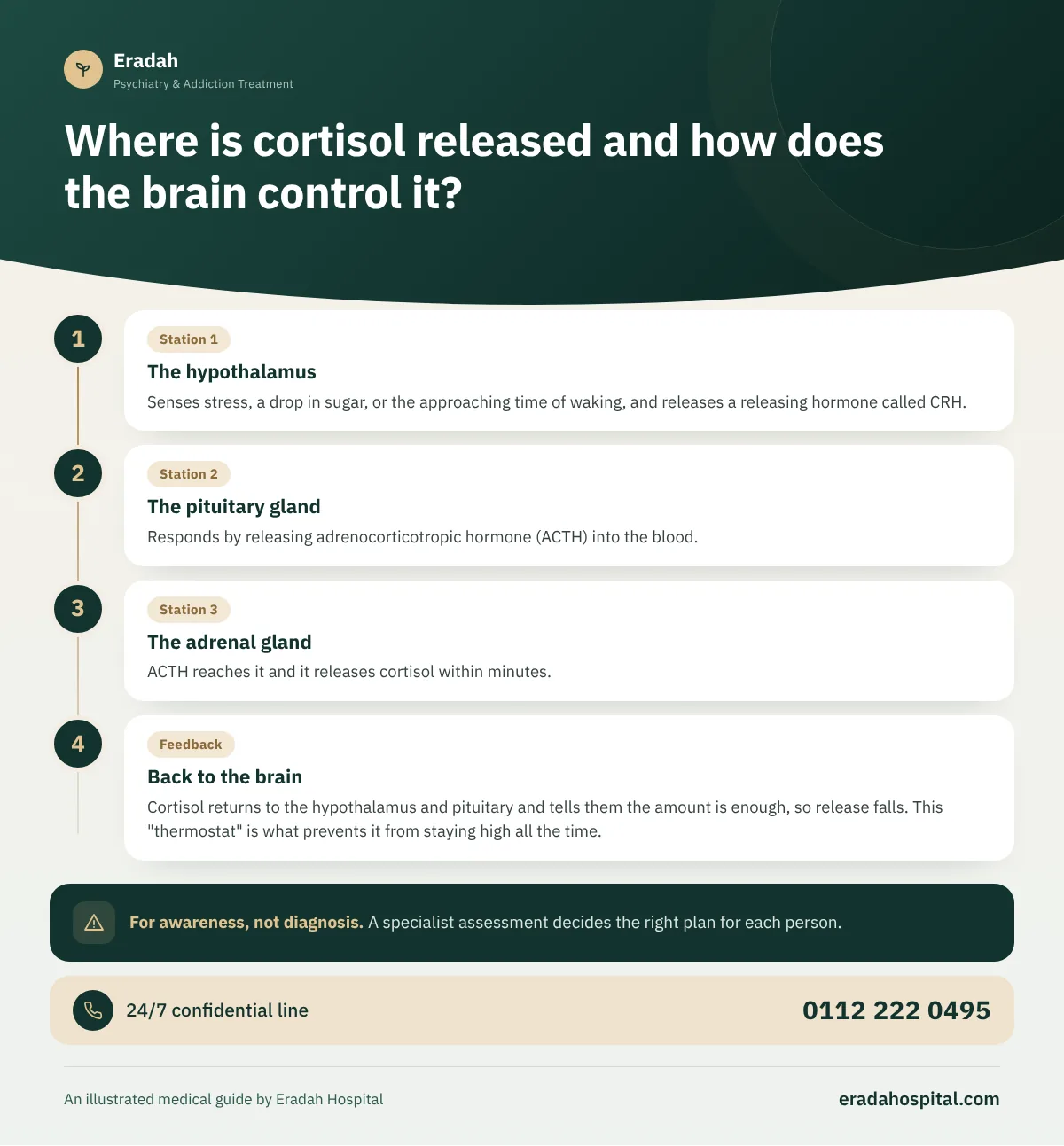
This feedback is important for understanding two things we will return to: that cortisone medications taken for a long time "convince" the brain that cortisol is plentiful, so the adrenal gland becomes dormant, and that chronic stress and addiction can spoil the setting of this thermostat.
What are cortisol's functions in the body?
Prompts the liver to produce glucose and reduces some tissues' use of it, ensuring fuel for the brain during fasting, exertion and illness.
Increases the blood vessels' response to adrenaline and retains sodium, which is why blood pressure can drop severely when it is acutely deficient.
Suppresses inflammatory signals and stops the immune system from overreacting, which is the property that cortisone medications exploit in treating asthma, rheumatism and allergies.
Its rise in the late night prepares the body for waking and activity, and it is part of the body clock.
Supplies the body with energy during crises and temporarily pauses non-urgent functions such as digestion and reproduction.
An appropriate amount consolidates memories of important events, while chronic elevation strains memory areas and increases anxiety.
Why does cortisol rise in the morning and fall at night?
Cortisol has a clear daily rhythm: it begins to climb in the last hours of sleep, peaks near waking, then falls gradually through the day to its lowest levels at night. Right after waking there is an additional brief jump that researchers call the "cortisol awakening response."
This rhythm is tied to the body clock, which is set by light, and it runs roughly opposite to the hormone melatonin, which rises at night. That is why night shifts, repeated late nights and travel across time zones disrupt the cortisol curve, and also why the doctor pays attention to the timing of the test sample; a value considered normal at 8 a.m. may be very high at midnight.
Is cortisol really the "stress hormone"?
The nickname is partly right and partly misleading. It is true that cortisol rises in physically or psychologically stressful situations, but it is not a "bad hormone" to be gotten rid of. A temporary rise during an exam, illness or exertion is a healthy response that protects the body, and then the level returns to normal when the situation passes.
The real problem is in two situations: chronic stress, which keeps the alarm system active for weeks and months and disrupts the daily rhythm, and hormonal diseases that raise or lower it significantly. The difference between them is fundamental: the first often improves with stress management and sleep (see ways to lower cortisol naturally), and the second needs medical diagnosis and treatment that relaxation exercises cannot provide.
How does cortisol work with serotonin and dopamine?
Cortisol does not work alone; it exchanges influence with the brain's neurotransmitters. Chronic stress and persistently high cortisol are linked in research to changes in the serotonin and dopamine systems, which is one reason for its link to anxiety, depression and sleep disorders. Disruption of the HPA axis is seen in a proportion of people with depression, but it is not present in everyone and is not enough on its own to explain the illness.
With the reward system in particular, a relationship important to Eradah emerges: stress increases the pull toward whatever gives quick relief, including drugs and compulsive behaviors, and this is the focus of the cortisol and addiction page.
What happens when cortisol levels are out of balance?
A true imbalance in cortisol goes in two directions, and each has known diseases and clear tests. The table below is for illustration only and is not a diagnostic tool:
| Point of comparison | Chronic excess (hypercortisolism) | Deficiency (adrenal insufficiency) |
|---|---|---|
| Most common causes | Long-term cortisone medications, and pituitary or adrenal tumors | Sudden cessation of cortisone, and autoimmune diseases affecting the adrenal gland (Addison's disease) |
| Common signs | Fat around the belly and face, purple stretch marks, and muscle weakness | Severe fatigue, weight and appetite loss, dizziness, and sometimes darkening of the skin |
| Most serious danger | High blood pressure and sugar, osteoporosis and infections | Adrenal crisis: low blood pressure, vomiting and confusion, which is an emergency |
| Who treats it? | An endocrinologist | An endocrinologist, and the emergency room in the case of a crisis |
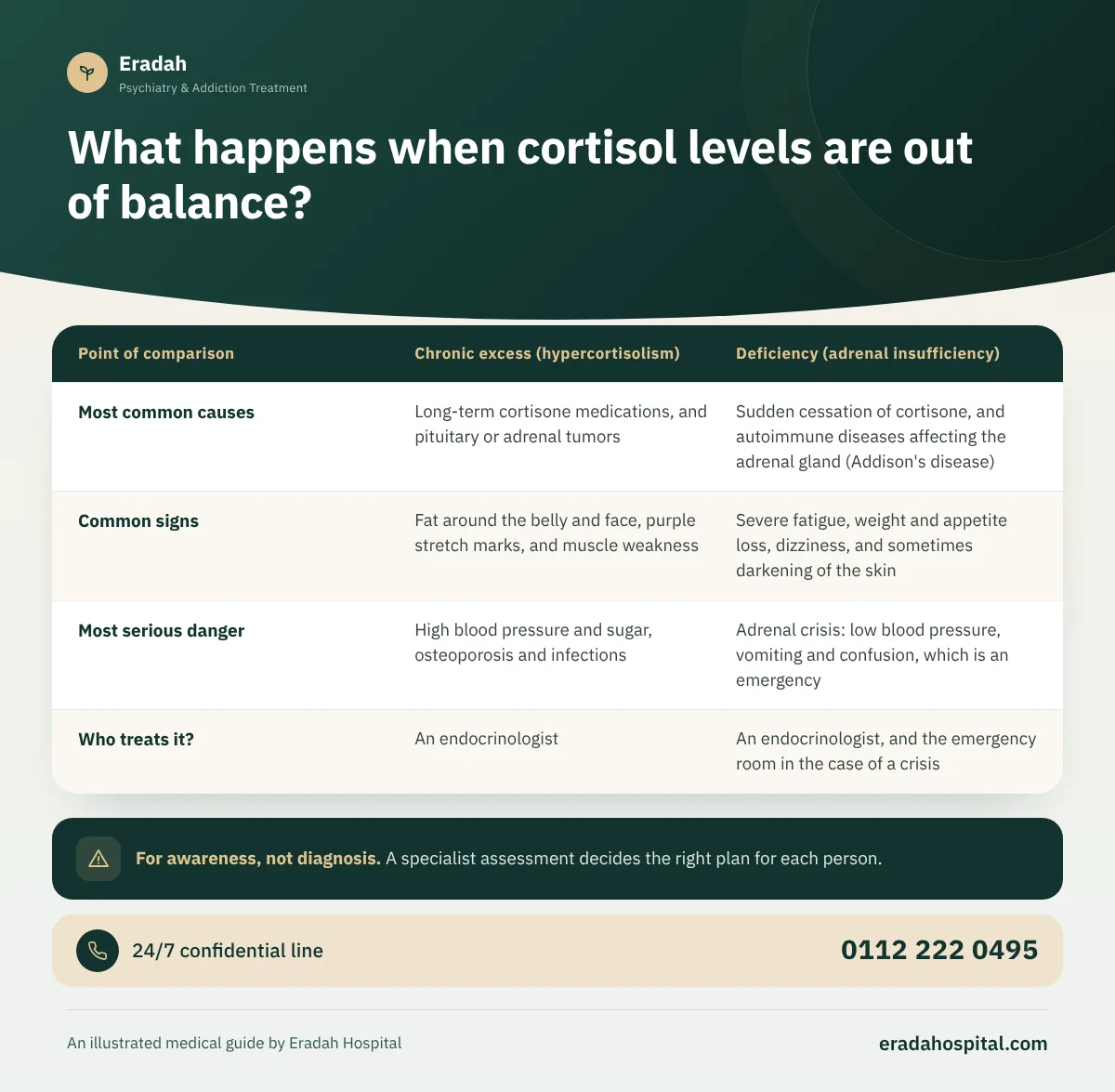
We have not given cortisol deficiency a separate page because it is a purely medical condition that is not treated at home: someone with severe fatigue, weight loss and dizziness needs a doctor, not dietary advice. And anyone taking cortisone should know that stopping it suddenly after long-term use can cause a dangerous crisis, because the adrenal gland needs time to regain its activity, and the medication should be reduced under a plan set by the doctor.
Can cortisol be measured with a blood test?
Yes, and this is where cortisol differs from most brain chemistry: there is no blood test that reveals serotonin or dopamine levels inside the brain, but cortisol is a hormone that travels in the blood itself, so it can be measured accurately. The doctor chooses the type of test according to the question being asked:
- Morning blood test: usually taken in the morning when the level is at its highest, and it may be repeated in the afternoon to track the rhythm; it is especially useful when deficiency is suspected.
- 24-hour urine test: measures the "free cortisol" excreted in the urine over a full day.
- Late-night saliva test: shows whether cortisol fails to fall at night as it should.
- Stimulation and suppression tests: the doctor gives a specific medication and then measures the response, which is the most precise way to tell conditions apart.
What is the relationship between cortisol and cortisone medications?
"Cortisone" in everyday language is a catch-all name for corticosteroid medications such as prednisolone, dexamethasone and hydrocortisone, which are manufactured or cortisol-like versions. They are used because they have a strong ability to calm inflammation and immunity, and they are important medications that save the lives of people with severe asthma, immune diseases and some cancers.
But using them for a long time raises the level of "active cortisol" in the body, which is the most common cause of symptoms of high cortisol. At the same time the brain switches off its commands to the adrenal gland, so it becomes dormant. That is why there are two rules that must not be broken: do not take cortisone without a prescription, and do not stop it suddenly without your doctor. These medications are completely different from the "anabolic steroids" that are misused in gyms.
Myths and facts about cortisol
| The myth | The truth |
|---|---|
| Cortisol is a harmful hormone that should always be lowered | It is essential for life, and the problem is chronic or severe imbalance, not its presence |
| "Adrenal fatigue" is a common cause of tiredness | It is not a recognized medical diagnosis, and according to the Endocrine Society no test proves it; tiredness has real causes that should be looked for |
| A belly paunch is evidence of high cortisol | Most belly fat is caused by lifestyle; Cushing's syndrome is rare and has other signs that doctors know |
| A home saliva test reveals your stress | Saliva measurements are research or diagnostic tools for specific questions; they do not measure a "stress level" and do not replace a doctor |
| A particular supplement regulates cortisol | No supplement regulates it safely for everyone, and some supplements interact with medications or harm the liver |
Cortisol guide: everything you need to know
We have gathered everything about cortisol in 3 pages, each answering one question in detail. Choose what you are looking for:
High cortisol: symptoms and causes
Signs of excess cortisol and Cushing's syndrome, its causes from cortisone medications to tumors and alcohol, how it is diagnosed with tests, and when to go to the emergency room.
Ways to lower cortisol naturally
What science really proves about sleep, exercise, tea and coffee, breathing and social support, with a table of the strength of evidence and a warning about supplements.
Cortisol and addiction
How cortisol rises during withdrawal, why stress leads to cravings and relapse, and how treatment helps calm the stress system.
Adrenal crisis (a sharp drop in cortisol): call the ambulance (123) immediately
- Sudden severe weakness or inability to stand, in a person with adrenal insufficiency or who has been taking cortisone for a long time and stopped suddenly
- Repeated vomiting or diarrhea that prevents keeping down the prescribed tablets
- Sudden severe pain in the abdomen, lower back or legs
- Severe dizziness or fainting, or coldness and pallor with a racing heartbeat (signs of low blood pressure)
- Confusion, unusual drowsiness, seizures or loss of consciousness
Call the ambulance (123) or go to the nearest emergency room immediately and do not wait for symptoms to improve. Tell the medical team that the patient is taking cortisone or has adrenal insufficiency, and show them the emergency card or the medication box. If the doctor has prescribed an emergency injection and trained you to use it, use it as you were taught, and call the ambulance as well. Do not try to treat the condition at home in any other way.
Ambulance 123 Mental health support line 16328