Can gaming addiction be treated?
Yes. A systematic review published in 2022 indicates that psychological interventions substantially reduce excessive gaming, with a moderate improvement in anxiety and depression that lasts for months after treatment ends, although the research is still at an early stage and needs larger studies.
The goal is not always complete lifelong abstinence from all games, since games are part of this generation’s culture. The therapist agrees on a realistic goal with the person: it may be stopping a particular game that was the source of the problem, or returning to limited, structured gaming that does not crowd out sleep, study and work.
What practical steps can you start with on your own?
- Observe before you change: for a week, record when you play, for how long and why, and how strong your urge is before each session.
- Set a clear goal: such as “no gaming after 10 p.m.” or “only three sessions a week,” instead of “I’ll cut down a bit.”
- Start with sleep: take the console and phone out of the bedroom and charge them elsewhere.
- Decide when the session ends before it starts: a set number of matches rather than open-ended time, and do not start a new match after the cutoff.
- Fill the gap: plan alternative activities for the times when you used to play, especially sport and meeting friends.
- Remove triggers: turn off game notifications and unfollow streaming channels that stir up the urge.
- Tell someone you trust: being accountable to a friend or family member multiplies your chances of sticking with it.
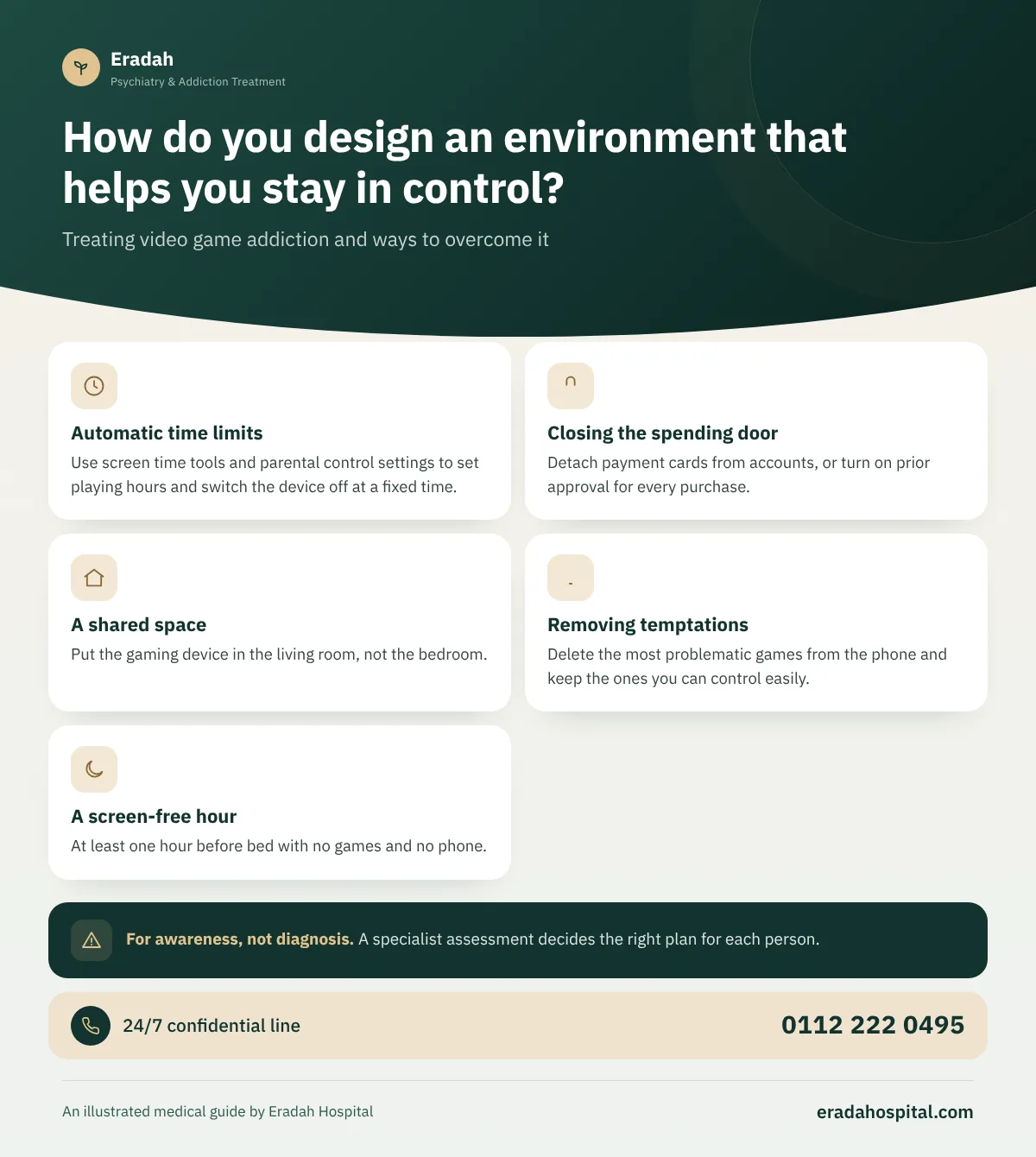
How do you design an environment that helps you stay in control?
Willpower alone gets tired, while a well-designed environment works all the time. These are simple settings available on most devices and platforms:
Use screen time tools and parental control settings to set playing hours and switch the device off at a fixed time.
Detach payment cards from accounts, or turn on prior approval for every purchase.
Put the gaming device in the living room, not the bedroom.
Delete the most problematic games from the phone and keep the ones you can control easily.
At least one hour before bed with no games and no phone.
How does cognitive behavioral therapy help treat gaming addiction?
CBT is the most studied treatment for gaming addiction. It works on two fronts: the thoughts that fuel gaming, such as “I have to finish this event or I’ll lose everything” or “I’m not good at anything except gaming,” and the behavior, by identifying triggers, setting up alternative plans, and gradually cutting down gaming.
- Recognizing the situations and feelings that come before long gaming binges.
- Challenging exaggerated beliefs about the importance of the game and of achievement inside it.
- Learning alternative skills for coping with boredom, stress and sadness.
- Building a balanced daily schedule that restores sleep, study and movement.
- Making a clear plan for facing high-risk situations and preventing relapse.
Reviews indicate that combining CBT with mindfulness training or family intervention may be more effective than either alone. The program usually runs for a number of weekly sessions over weeks to a few months.
What is the role of family therapy and parents?
With children and teenagers, treatment often does not succeed without the family. The UK’s national gaming disorders service, for example, offers family consultations, workshops, parent support groups and family therapy alongside individual treatment. The aim is for parents to move from being “police” to being partners in the plan, without blaming them.
- Agreeing on clear written rules with the son’s participation, with predictable and consistent consequences.
- Cutting down gradually instead of a sudden ban that may trigger violence.
- Rewarding commitment and progress, not just punishing mistakes.
- Reducing daily conflict, improving communication and spending enjoyable time together away from screens.
- Both parents agreeing on the same plan so the son cannot exploit a disagreement between them.
Are there medications to treat gaming addiction?
There is currently no approved medication for gaming disorder itself, and small studies have tried some drugs without enough evidence to approve them. However, a psychiatrist may prescribe treatment for co-occurring conditions such as ADHD, depression or anxiety, and control over gaming often improves when these conditions are treated.
When do you need a specialist? And is hospital admission necessary?
Seek a specialist assessment if your own attempts to cut down have failed for weeks, if school or work has clearly declined, if gaming comes with violence, severe withdrawal, persistent sadness or uncontrolled spending, or if any thoughts of self-harm appear.
| Level | Who is it suited for? | What does it include? |
|---|---|---|
| Self-help or family plan | Early problems or risky gaming | Changing the environment and rules, with family follow-up |
| Outpatient treatment | Most cases | Individual or group CBT sessions, family sessions, and treatment of co-occurring conditions |
| Intensive program or residential stay | A few severe cases with violence, severe depression or complete withdrawal from life | A structured environment to restore routine and integrated treatment under a team’s supervision |
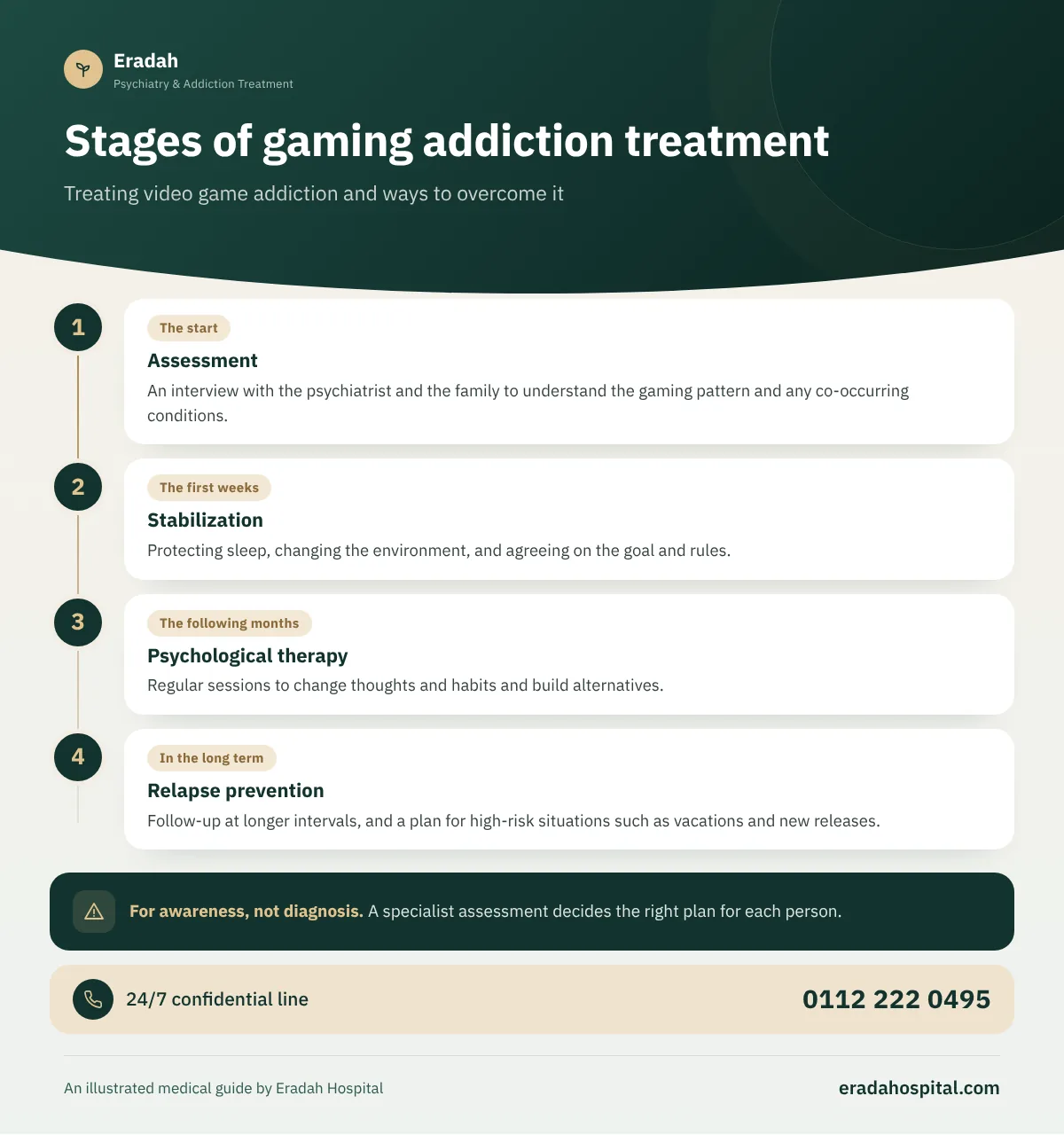
What are the stages of treatment?
- The startAssessment
An interview with the psychiatrist and the family to understand the gaming pattern and any co-occurring conditions.
- The first weeksStabilization
Protecting sleep, changing the environment, and agreeing on the goal and rules.
- The following monthsPsychological therapy
Regular sessions to change thoughts and habits and build alternatives.
- In the long termRelapse prevention
Follow-up at longer intervals, and a plan for high-risk situations such as vacations and new releases.
How do you prevent relapse?
Relapse is common in behavioral addictions, and when it happens it means the plan needs adjusting, not that treatment has failed. The riskiest times are long vacations, the release of a new game or season, and major pressures such as exams or losing a job. It helps to agree in advance on early warning signs, such as a return to late nights or hiding time spent, and on what the person and their family will do if they appear.
Choosing a hospital for gaming addiction treatment
The word “hospital” can mislead a family looking for a solution to gaming addiction; in most cases this condition does not need detox or a hospital bed. What makes the difference is a psychological team skilled in CBT aimed at gaming, who knows how to work with parents, because most of those who come to the clinic are teenagers. So judge any facility by practical questions before you judge it by its building:
- Does the team look for ADHD, social anxiety and depression, or does it just count gaming hours?
- Is a realistic goal agreed with the son, such as giving up a particular game or structured play, instead of a blanket ban imposed by force?
- Are there sessions for parents that train them in device rules and in calming angry outbursts when the screen is switched off?
- Does the program address in-game purchases and separating payment cards from accounts?
- Does the therapist track sleep and school attendance after sessions end, not just the number of hours played?
At Eradah we see children and teenagers for assessment, treatment and follow-up through outpatient clinics and an intensive day program, where psychologists lead individual and group cognitive behavioral sessions, while the family program gives parents consistent tools for managing the home. If the picture is not yet clear, review the signs of gaming addiction before your visit.
Gaming addiction treatment at Eradah
At Eradah Psychiatry & Addiction Treatment, treatment begins with a comprehensive assessment by a psychiatrist with the family’s participation, to understand the gaming pattern and what lies behind it, such as anxiety, depression or ADHD. We then set up an individual plan that combines CBT, family sessions and treatment of co-occurring conditions, with outpatient follow-up in most cases and more intensive programs when needed, in complete confidentiality.