What are the main signs of phone addiction?
Because problematic phone use is not an official diagnosis, researchers rely on signs borrowed from addiction: loss of control, constant preoccupation, anxiety when away, and continued use despite harm. The more of them come together and the longer they last, the clearer the problem.
| The sign | What it looks like in real life |
|---|---|
| Loss of control | You open the phone "for a minute" and find yourself an hour later somewhere completely different |
| Preoccupation | You think about what you're missing on the phone while away from it |
| Anxiety when apart | Clear tension if you forgot it at home or the battery is about to die |
| Tolerance | You need more time on the phone to feel the same satisfaction |
| Neglecting other activities | Putting off sleep, study, exercise and time with family |
| Continuing despite harm | You know it steals your sleep and focus and you carry on |
Is frequent phone checking a sign of addiction?
Compulsive checking is the most distinctive sign of this problem. It is not about how many messages reach you, but that you open the phone when nothing has arrived, move between apps with no aim, then close it and reopen it minutes later. Many people notice they are holding the phone in their hand without remembering when they picked it up.
- Opening the phone in every moment of waiting: in line, at a traffic light, in the elevator.
- A feeling that the phone vibrated or rang, then discovering nothing happened; many people describe this phenomenon.
- Checking the phone as soon as you wake up before getting out of bed, and in the middle of the night if you wake.
- Difficulty finishing a film, book or lecture without reaching for the phone.
- Going straight back to the phone right after closing it, as if the hand moves on its own.
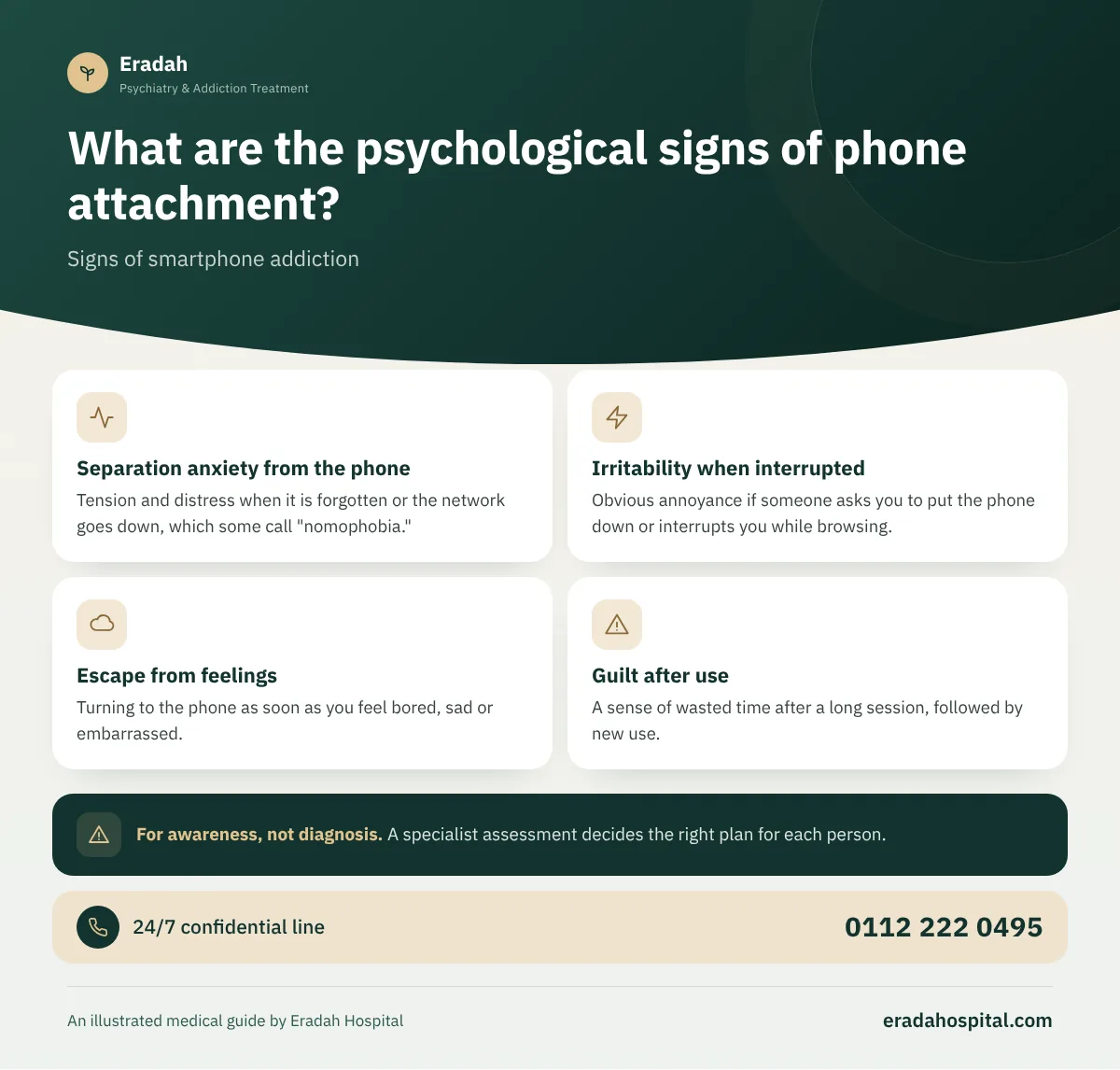
What are the psychological signs of phone attachment?
Tension and distress when it is forgotten or the network goes down, which some call "nomophobia."
Obvious annoyance if someone asks you to put the phone down or interrupts you while browsing.
Turning to the phone as soon as you feel bored, sad or embarrassed.
A sense of wasted time after a long session, followed by new use.
The person may also notice that his concentration has become short, his tolerance for boredom has dropped, and that he needs a "dose" of the phone to be able to start a hard task. These are signs of a habit that has set in and can be changed, not flaws in character.
What are the visible physical signs?
| The sign | What the person or his family notices |
|---|---|
| Bent neck and shoulders | A constant hunched posture and complaints of upper back pain |
| Eye strain | Dryness, redness and difficulty focusing visually after long use |
| Thumb and wrist pain | Stiffness or pain with constant typing and scrolling |
| Signs of staying up late | Morning drowsiness, frequent yawning and dark circles around the eyes |
| Walking with eyes on the screen | Tripping or bumping into things while walking, or crossing the street without paying attention |
How do the signs appear in young children?
Young children don't check notifications, but their attachment to the screen shows in other ways: severe crying and tantrums when the video is turned off, refusing to eat except in front of the phone, difficulty sleeping without a screen, little interest in playing with real toys or with other children, and sometimes delayed speech that deserves to be shown to a pediatrician.
At this age in particular, the child learns from his surroundings: if the phone is the first way to calm or quiet him, he will look for it whenever he feels any distress. That is why a young child's signs are often a mirror of the home's habits.
How do the signs differ between teenagers and adults?
In teenagers: the phone under the pillow, staying up until dawn in chats and videos, sleeping in class, severe tension if cut off from the group for a few hours, and a feeling that "everything is happening without me." This may come with falling grades and isolation at home despite constant contact with the outside.
In adults: checking email and messages on vacation and in the middle of the night, poor concentration at work because of interruptions, checking the phone while driving, arguments with a partner about phone preoccupation, and sometimes guilt toward the children because the screen steals their time.
Self-assessment questions about your relationship with your phone
- Do you often open your phone for no particular reason and then close it without doing anything?
- Do you feel tense if you forget your phone or its battery is low?
- Is the phone the last thing you look at before sleep and the first thing you pick up on waking?
- Has someone close to you complained that you were absorbed in the phone while they were talking to you?
- Have you tried to cut down your use and not succeeded?
- Do you use the phone while driving or crossing the road?
- Have you noticed that the phone has affected your sleep, work or studies?
If you find yourself in a number of these questions, start with practical steps instead of feeling guilty, which you will find in phone addiction treatment and how to stop.
How can a family open the conversation about the phone without a clash?
- Start with yourselves: "We've all been holding our phones a lot; let's agree on something together."
- Describe what you notice calmly, without mockery or nicknames, such as "you don't sleep before 3 a.m."
- Ask about the positive side: what does the phone give him? Friends? An escape from pressure?
- Avoid suddenly confiscating the phone in a moment of anger; it destroys trust and pushes toward hiding it.
- Suggest a short shared experiment, such as a week with no phones at the dinner table.
Severe distress or thoughts of self-harm? Get help now
- Talk of death or that life is not worth living, or goodbye messages on the phone or platforms
- A breakdown or severe panic after online bullying, threats or blackmail over the phone
- Violent outbursts in which they hurt themselves or others when the phone is taken away
- Total isolation in the room for days with stopping eating, sleeping or studying
- Obvious despair and a sudden stop in talking to family and friends
Stay with the person, speak to them calmly and listen without blame or mockery, and do not make taking the phone a punishment in the moment of crisis. If there is a danger to their life, call an ambulance (123) or take them to the nearest emergency room, or call the mental health support line 16328 (24 hours). In cases of blackmail, keep the messages and do not delete them, and ask the relevant authorities for help.
Ambulance 123 Mental health support line 16328
14How does phone addiction show up in dealing with people?
One of the clearest signs is what is called "phubbing", which means ignoring the person in front of you by being absorbed in the phone. It may seem minor: a quick glance at the screen while a friend is talking, a phone on the lunch table, or replying to a message in the middle of a spouse's or child's words. But when it repeats it becomes a pattern that everyone notices except the person himself.