What is a realistic goal for treating phone addiction?
Unlike substance addiction, complete abstinence is not the goal when treating problematic phone use, because the phone is an essential tool for work, study and staying in touch. The goal is to regain "choice": to pick up the phone because you decided to, put it down when you want to, and get your sleep, focus and time with people back.
Because it is not an official diagnosis, there is no single standard treatment protocol for it. But specialists borrow effective tools from the treatment of habits and behavioral addictions, and above all they look at what may lie behind the attachment: anxiety, depression, loneliness or attention difficulties.
How do you start? Know your numbers first
Before changing anything, open the "Screen Time" or "Digital Wellbeing" report in your phone's settings and review a full week: How many hours a day? How many times did you pick up the phone? Which apps take most of the time? At what hours? Many people are surprised by the numbers, and that surprise is itself a strong motivation to change.
- Pick the two or three apps that use most of your time without giving you real value.
- Notice the riskiest times: before sleep, after waking up, or at work.
- Write down what you want to get back: an hour of sleep? Time with your children? Reading?
What is a practical digital detox plan?
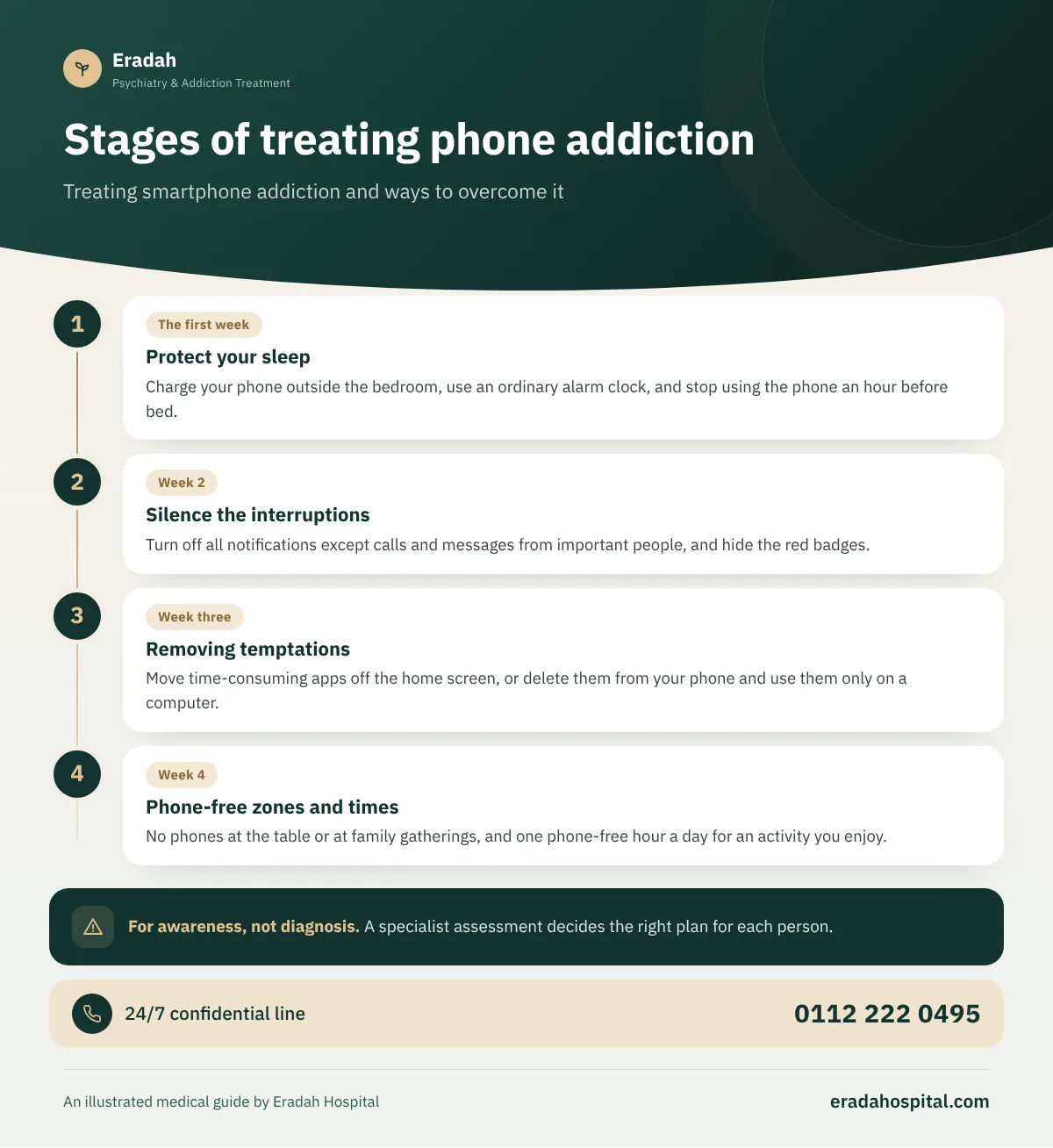
You do not need to throw your phone into the sea. This is a gradual four-week plan, and each week adds a step to the one before:
- The first weekProtect your sleep
Charge your phone outside the bedroom, use an ordinary alarm clock, and stop using the phone an hour before bed.
- Week 2Silence the interruptions
Turn off all notifications except calls and messages from important people, and hide the red badges.
- Week threeRemoving temptations
Move time-consuming apps off the home screen, or delete them from your phone and use them only on a computer.
- Week 4Phone-free zones and times
No phones at the table or at family gatherings, and one phone-free hour a day for an activity you enjoy.
If you stumble in a given week, do not start from zero. Repeat the same week. The goal is new habits that last, not a short challenge that ends with a return to how things were.
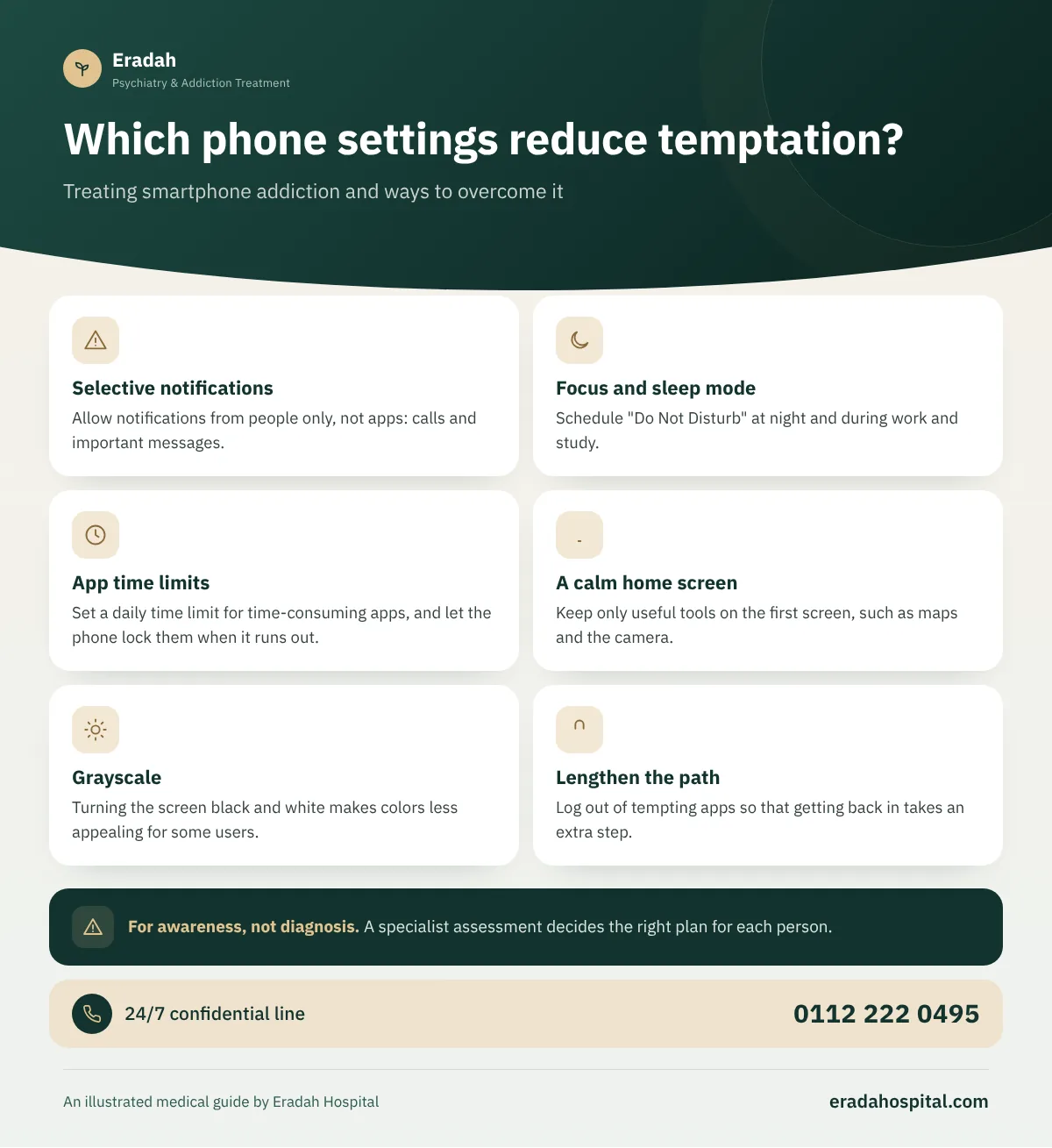
Which phone settings reduce temptation?
Allow notifications from people only, not apps: calls and important messages.
Schedule "Do Not Disturb" at night and during work and study.
Set a daily time limit for time-consuming apps, and let the phone lock them when it runs out.
Keep only useful tools on the first screen, such as maps and the camera.
Turning the screen black and white makes colors less appealing for some users.
Log out of tempting apps so that getting back in takes an extra step.
Does cutting off the phone completely work?
The idea of a complete "digital detox" for a day or a week has become popular. A systematic review published in 2022 looked at the available research and found that abstaining does, of course, reduce use during the abstinence period, and that some studies saw improvement in depression symptoms, but the results for anxiety, life satisfaction and relationships were mixed and inconclusive, and some participants even showed negative effects.
The practical takeaway: a short break can be a useful start for breaking the habit and noticing how you feel, but it is not a treatment in itself. What makes the difference is what you do after you come back: new settings, clear limits and real alternatives.
How does cognitive behavioral therapy help with phone addiction?
When self-help steps are not enough, or when anxiety or depression lies behind the attachment, cognitive behavioral therapy can help. It works on the thoughts that feed constant checking, such as "If I don't reply right away, they'll be upset" or "I have to know everything as it happens," and on behavior, by identifying triggers, trying alternatives and gradually building tolerance for being away from the phone.
- Learning to notice the moment of urge without acting on it immediately (mindfulness exercises).
- Gradual practice at tolerating boredom and anxiety without escaping to the screen.
- Rebuilding the daily routine around sleep, movement and relationships.
- Treating co-occurring anxiety, depression or attention difficulties, with psychological or medication treatment according to the doctor's assessment.
How can a family set up a phone plan at home?
Rules applied only to children usually fail. What works best is a "family plan" that everyone takes part in, adults before children, that takes each child's age into account, and that keeps in mind the World Health Organization's recommendation to avoid screens for infants and limit them for children under five:
- No phones at the dining table, for adults and children alike.
- All phones are charged overnight in a shared place outside the bedrooms.
- A set daily screen-free time for the family: a walk, a game or a conversation.
- For children: age-appropriate content, watched together with a parent whenever possible.
- For teenagers: rules negotiated with them and reviewed from time to time, not one-sided orders.
- Parents commit first; a good example is stronger than any monitoring app.
When do you need a specialist for phone addiction?
Ask a doctor or psychotherapist for an assessment if your attempts have failed for weeks despite following the steps, if the phone is your only way of escaping persistent sadness or anxiety, if your studies or work have clearly declined, if your family notices withdrawal or severe irritability when you are away from the phone, or if any thoughts of self-harm appear. In that last case, do not wait: call an ambulance (123) or the mental health support line 16328.
What should you do if you slip back into old habits?
Going back to excessive use during stressful periods or holidays is to be expected, because the phone is always there and cannot be removed for good. Treat the relapse as a signal, not a failure: review your screen time report, turn back on the settings you let slip, and start again from the sleep step. With each cycle, getting back to balance becomes faster.
Choosing a Hospital for Phone Addiction Treatment
Phone addiction rarely requires hospital admission, and anyone who offers you a "stay" just because you use your phone a lot is exaggerating. The more important question when choosing where to get treatment is whether they will look for what is hiding behind the screen. The phone is often a painkiller for anxiety, loneliness, insomnia or depression, and treating the symptom without the cause brings the person back to their habits within weeks. These are points worth asking about:
| Question | Why it matters for the phone in particular |
|---|---|
| Does the therapist start by measuring your actual use? | Our own estimate of our phone hours is usually lower than the real figure, and the numbers reveal the risky times. |
| Are anxiety, depression and sleep disorders assessed? | These conditions make the phone a refuge that is hard to leave. |
| Is the goal balanced use or confiscating the device? | Total deprivation is hard to sustain with a device you need for work and study. |
| Does the family take part in a home plan? | Rules that everyone follows, adults before children, work better than rules imposed on one person. |
At Eradah, our psychologists provide cognitive behavioral therapy through outpatient treatment, and the doctor decides whether any co-occurring disorder needs treatment. We see teenagers for assessment and follow-up. Residential treatment is for men only, and only in a few cases determined by the assessment. The first consultation is free and confidential; call or send a WhatsApp message to 01122220495 at any hour, or leave your details and we will call you back. To understand the roots of the problem, read the causes of excessive phone attachment.
Phone addiction treatment at Eradah
At Eradah Psychiatry & Addiction Treatment Center, we treat problematic phone use as a sign worth understanding, not blaming. It begins with an assessment by a psychiatrist to look for what may lie behind it, such as anxiety, depression or attention difficulties, followed by an individual cognitive behavioral therapy plan and family counseling sessions to set up a home plan, with fully confidential outpatient follow-up.