What are the key signs of compulsive shopping?
Researchers sum up compulsive shopping along three axes: preoccupation and urgency about buying, loss of control over it, and distress or harm resulting from it. Research scales such as the Bergen Shopping Addiction Scale and the pathological buying screener are built around these axes; they are tools that help specialists and do not diagnose on their own.
| The sign | What it looks like in daily life |
|---|---|
| Preoccupation | Repeatedly thinking about products and offers, and browsing stores for hours even with no clear intention to buy |
| Urgency | A sudden strong urge to buy that is hard to put off, and tension until the purchase is made |
| Loss of control | Buying more than planned, and failing to stop or stick to a budget |
| Buying to soothe feelings | Shopping after an argument, a tiring day, or feeling lonely and bored |
| Regret after buying | A brief rush followed by guilt, shame and worry about the cost |
| Not using purchases | Items with tags still on in the closet, duplicates, or things never opened |
| Concealing | Hiding packages and receipts, having orders delivered to another address, and lying about what things cost |
| Continuing despite harm | Carrying on buying despite debt, arguments and repeated promises to stop |
What are the clear behavioral signs?
- Browsing shopping apps for hours at night, filling the cart and then paying in a moment of weakness.
- Packages arriving at home or work again and again, and trying to receive them when the family is away.
- Buying more than one of the same thing in different colors or sizes with no need.
- Waiting for sale seasons and limited offers with great tension, and feeling it is "a chance that won't come again."
- Frequently returning purchases and then buying others, in a cycle that never ends.
- Giving purchases away to others as gifts to get rid of guilt or to hide them.
- Spending almost all free time in shopping malls or online stores.
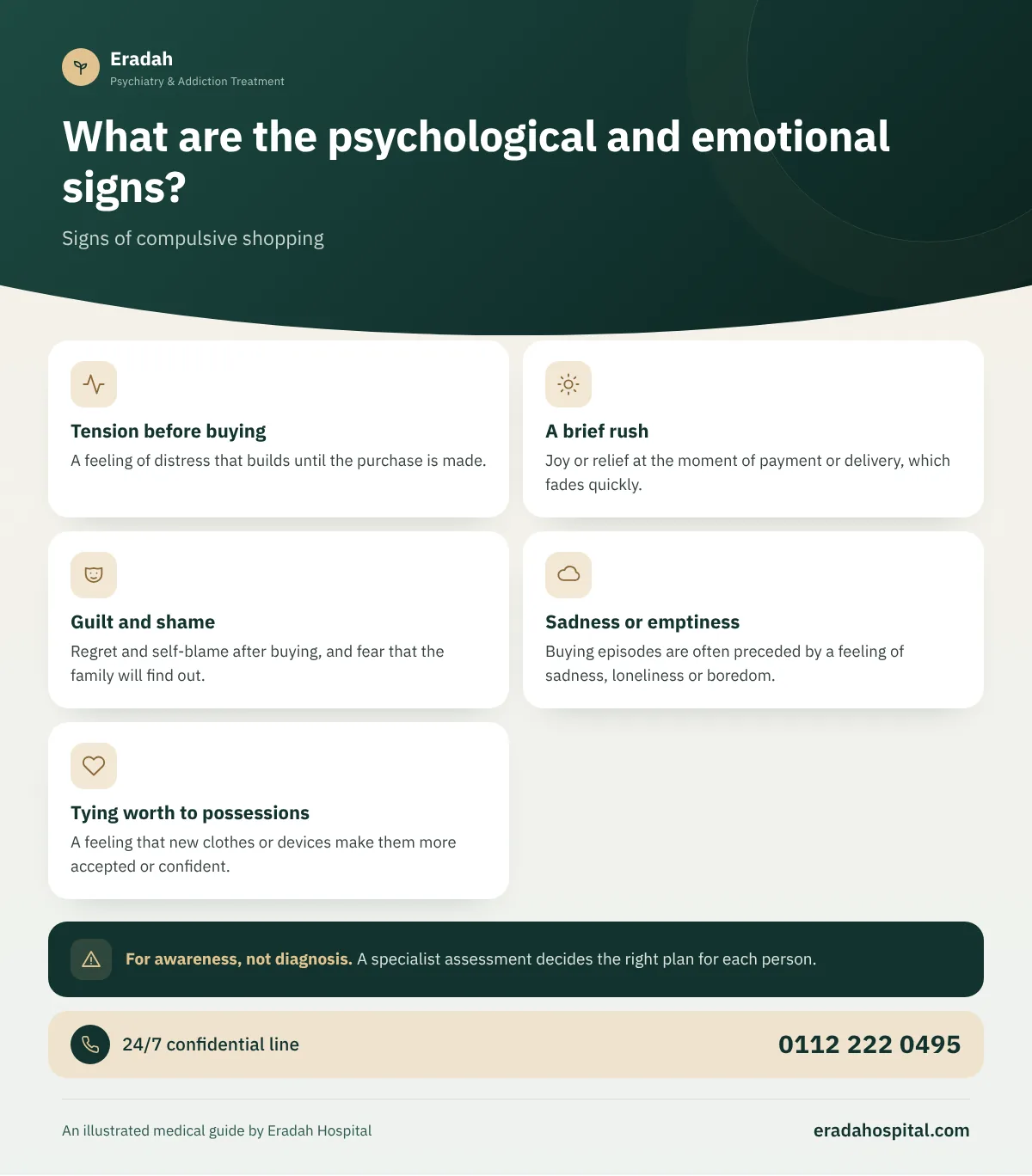
What are the psychological and emotional signs?
A feeling of distress that builds until the purchase is made.
Joy or relief at the moment of payment or delivery, which fades quickly.
Regret and self-blame after buying, and fear that the family will find out.
Buying episodes are often preceded by a feeling of sadness, loneliness or boredom.
A feeling that new clothes or devices make them more accepted or confident.
What financial signs call for attention?
- The salary or allowance regularly running out before the end of the month because of purchases.
- Repeatedly relying on credit cards, installments or "buy now, pay later" services for several purchases at the same time.
- Borrowing from family or friends without explaining the real reason.
- Falling behind on basic bills or rent while the buying continues.
- Secretly opening new accounts or cards, or using a family member's card without permission.
- Messages and calls from banks or installment companies that the person avoids answering.
How do the signs show up in online shopping?
With online shopping the signs are more hidden: there are no bags for the family to see, and a purchase can be made in a minute from bed. Signs here include many payment alerts on the phone, long wish lists that are reviewed constantly, following offer and influencer accounts that promote products, frequent buying late at night, and anger or tension when someone tries to talk about the orders.
Do the signs differ between young people and adults?
In teenagers and young people it may show up as spending the whole allowance on clothes, accessories, beauty products or video game purchases, constant pressure on parents to buy the latest products, and strong influence from what influencers display. In adults it may show up as accumulated debt and hiding it from a spouse, buying costly tools and devices that go unused, and repeated marital arguments about money.
How does the family notice compulsive shopping?
The person often does not admit the problem at first, and the signs appear gradually: many packages of unknown origin, a closet filling with new things that go unused, tension when asked about spending, conflicting stories about what things cost, and then debts that suddenly surface. A sustained change matters more than a single incident, since all of us sometimes buy things we do not need.
Self-assessment questions about your relationship with compulsive shopping
- Do you think about shopping most of the time, or feel an urge to buy that is hard to resist?
- Do you buy to improve your mood when you feel sad, stressed or lonely?
- Do you feel guilt or shame after buying most of the time?
- Do you have many things you have not used or never opened?
- Do you hide your purchases or receipts from your family or partner?
- Have you tried to stop or cut back and failed more than once?
- Has buying caused debt, arguments or neglect of basic obligations?
If several of these questions apply to you, look at the practical steps on the compulsive shopping treatment page, and consult a specialist if they come with persistent sadness, anxiety or despair.
How do you start the conversation with someone you love?
- Pick a calm time, away from the moment you discover a package or a new receipt.
- Start with concern for them, not accusation: "I feel like you've been stressed lately, and I'm worried about you and the pressure you're under."
- Avoid words like "wasteful" or "irresponsible," since shame increases hiding.
- Ask about their feelings before and after buying, and listen without interrupting.
- Offer help with one specific step: going over the debts together, or booking an appointment with a specialist.