Why does shopping become compulsive behavior?
There is no single cause of compulsive shopping, but a group of factors that come together: a psychological vulnerability such as difficulty regulating emotions or low self-esteem, an environment that makes buying easy and tempting at every moment, and repeated experience in which the brain learns that buying eases distress quickly.
Many patients describe the beginning as innocent: a gift to themselves after a hard day, then repeating it at every low moment, until buying becomes the first, and perhaps the only, way of dealing with feelings.
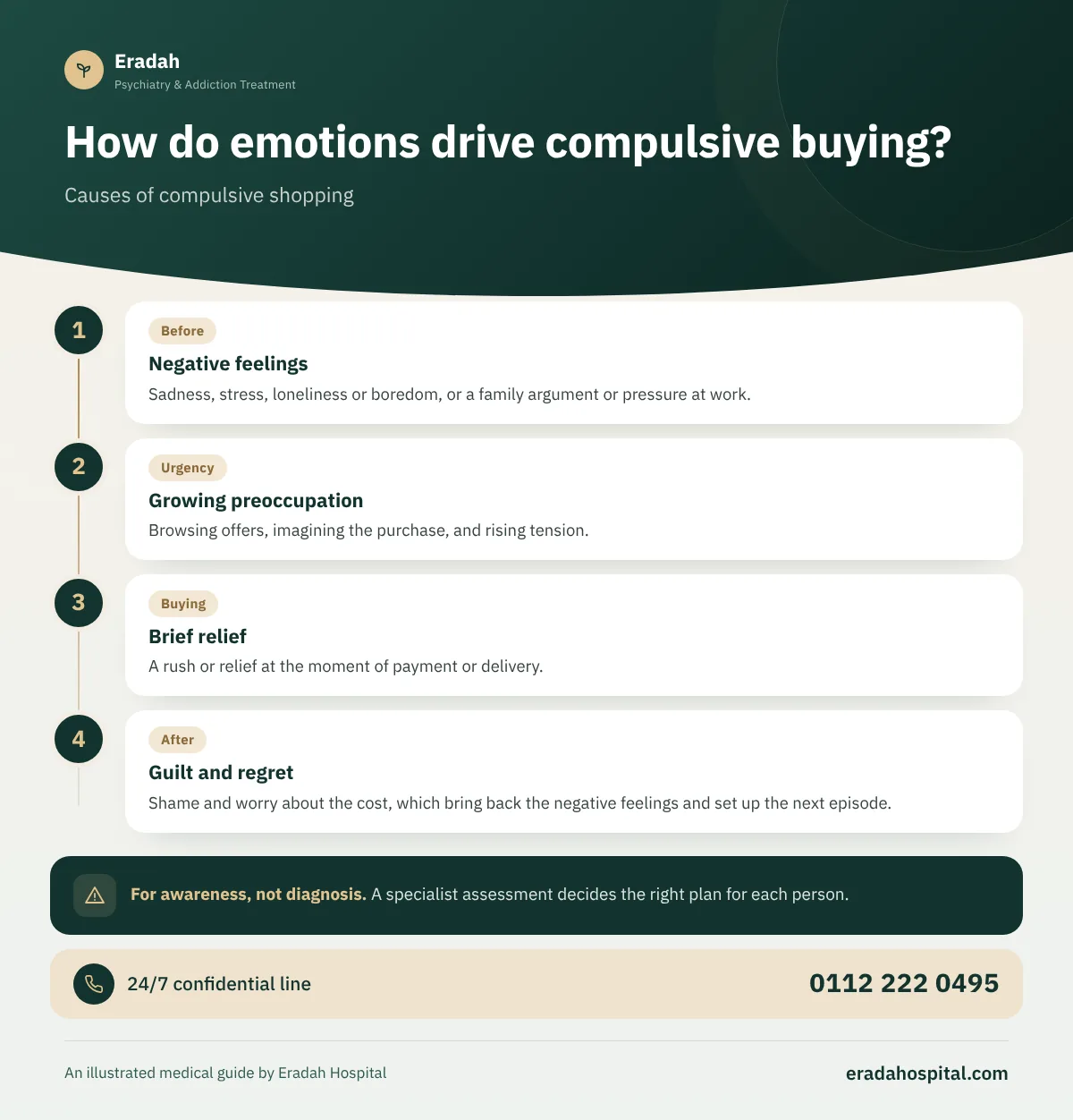
How do emotions drive compulsive buying?
Research agrees that emotion regulation is the most important driver. Negative feelings such as sadness, anxiety, anger, loneliness and boredom usually come before buying episodes, and buying gives immediate but short-lived relief. Then guilt arrives and brings the distress back, so the cycle repeats.
- BeforeNegative feelings
Sadness, stress, loneliness or boredom, or a family argument or pressure at work.
- UrgencyGrowing preoccupation
Browsing offers, imagining the purchase, and rising tension.
- BuyingBrief relief
A rush or relief at the moment of payment or delivery.
- AfterGuilt and regret
Shame and worry about the cost, which bring back the negative feelings and set up the next episode.
How are depression and anxiety linked to compulsive shopping?
Compulsive shopping is often linked to other psychological conditions, and studies suggest that a large proportion of those who struggle with it also have mood or anxiety disorders. Among the most important of these conditions:
| The situation | How they relate to compulsive buying |
|---|---|
| Depression | Buying is an attempt to feel some pleasure amid persistent emptiness and sadness |
| Anxiety | Temporary relief from stress by being absorbed in searching and buying |
| Attention-deficit/hyperactivity disorder | Impulsivity, difficulty delaying desire, and thrill seeking |
| Borderline personality disorder | Intense emotional swings and impulsive spending |
| Hoarding disorder | Difficulty getting rid of things, with purchases piling up |
| Gambling addiction and substance addiction | They share a cycle of desire and impulse, and may occur in the same person |
Because the relationship runs both ways, depression drives buying, and debt and guilt deepen depression. That is why treatment is not complete without assessing these co-occurring conditions.
What is the role of self-esteem and appearances?
Compulsive shopping is linked to low self-esteem and to the belief that possessions improve one's image in one's own eyes and others': new clothes give confidence, a brand gives status, and the latest device gives a sense of distinction. Researchers call this tendency materialism, meaning tying happiness and personal worth to owning things. In societies that care a great deal about appearances and social occasions, the pressure to keep up with others can intensify.
How do marketing tactics and online shopping encourage compulsive buying?
Modern shopping is designed to shorten the distance between desire and payment. We explain these tactics to raise awareness, not to accuse commerce itself:
Online shopping is available all day and from bed, with no effort or waiting.
Saved card details and fast checkout remove the moment of thought that taking out a wallet used to provide.
Countdowns and "only two left" create a sense of urgency and reduce thinking.
Algorithms show what fits your interests precisely, and follow you after you visit a product.
Promotion in the form of "a friend's advice" makes the advertising less obvious and more influential.
Splitting small purchases into installments postpones the feeling of cost, and the installments pile up without the person noticing their size.
What is the role of family and environment?
- Learning from the family: growing up in a home where buying or gifts were used to make up for attention or to calm conflicts.
- Lack of financial literacy: never learning budgeting, saving and delaying desire from a young age.
- Family and marital pressures: conflict and loneliness at home push people to look for compensation outside.
- Occasions and social pressure: spending to keep up with relatives and friends on clothes, gifts and preparations.
- Trauma and loss: the problem may begin or intensify after divorce, a bereavement or severe stress.
Can some medications cause compulsive buying?
Yes, in a few cases. Some medications that activate dopamine receptors, such as certain drugs for Parkinson's disease and restless legs, have been described as possibly causing impulse-control disorders in some patients, including compulsive buying or gambling. Similar warnings have been issued for some psychiatric medications.
What triggers set off a buying episode?
It is helpful to distinguish between the factors that make a person vulnerable and the triggers that set off an episode at a particular moment. Among the most common triggers: an exhausting workday, an argument with a partner, loneliness at night, payday, messages about offers and discounts, browsing influencers' accounts, walking through shopping malls, and occasions and holidays. Knowing your personal triggers is the basis of a change plan.
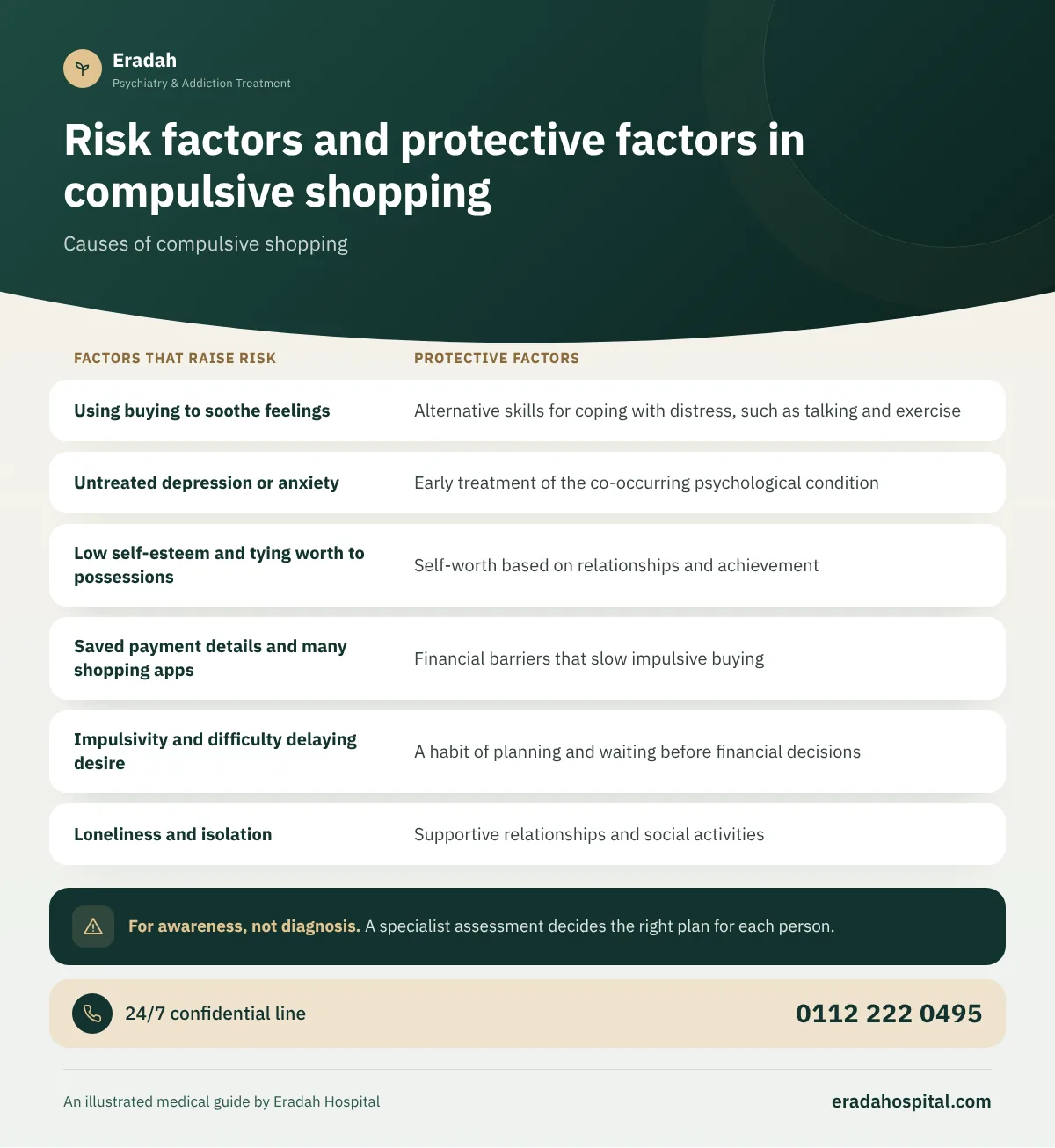
What are the risk and protective factors in compulsive shopping?
| Factors that raise risk | Protective factors |
|---|---|
| Using buying to soothe feelings | Alternative skills for coping with distress, such as talking and exercise |
| Untreated depression or anxiety | Early treatment of the co-occurring psychological condition |
| Low self-esteem and tying worth to possessions | Self-worth based on relationships and achievement |
| Saved payment details and many shopping apps | Financial barriers that slow impulsive buying |
| Impulsivity and difficulty delaying desire | A habit of planning and waiting before financial decisions |
| Loneliness and isolation | Supportive relationships and social activities |