Why is compulsive shopping not a minor problem?
Many people see overspending as a minor "personal flaw," but when compulsive shopping continues it leaves accumulating losses in money, mind and family, and they worsen because the person hides them until they explode as a crisis.
The danger is that the harms feed one another: debt raises stress, stress raises the urge to buy, hiding raises conflict, and conflict raises loneliness and sadness. That is why we explain the harms plainly here, not to frighten but to show why this deserves treatment.
What are the financial harms of compulsive shopping?
- Accumulated debt: on credit cards, installment plans and pay-later services, with interest and late fees that multiply the amount.
- Draining savings: spending what was set aside for emergencies, children's education or housing.
- Neglecting basic obligations: falling behind on rent, bills and necessary expenses while the buying continues.
- Borrowing from family and friends: with the embarrassment and strained relationships that follow.
- Many small installments: each installment looks small, but together they eat the monthly income without the person noticing.
How does compulsive shopping affect mental health?
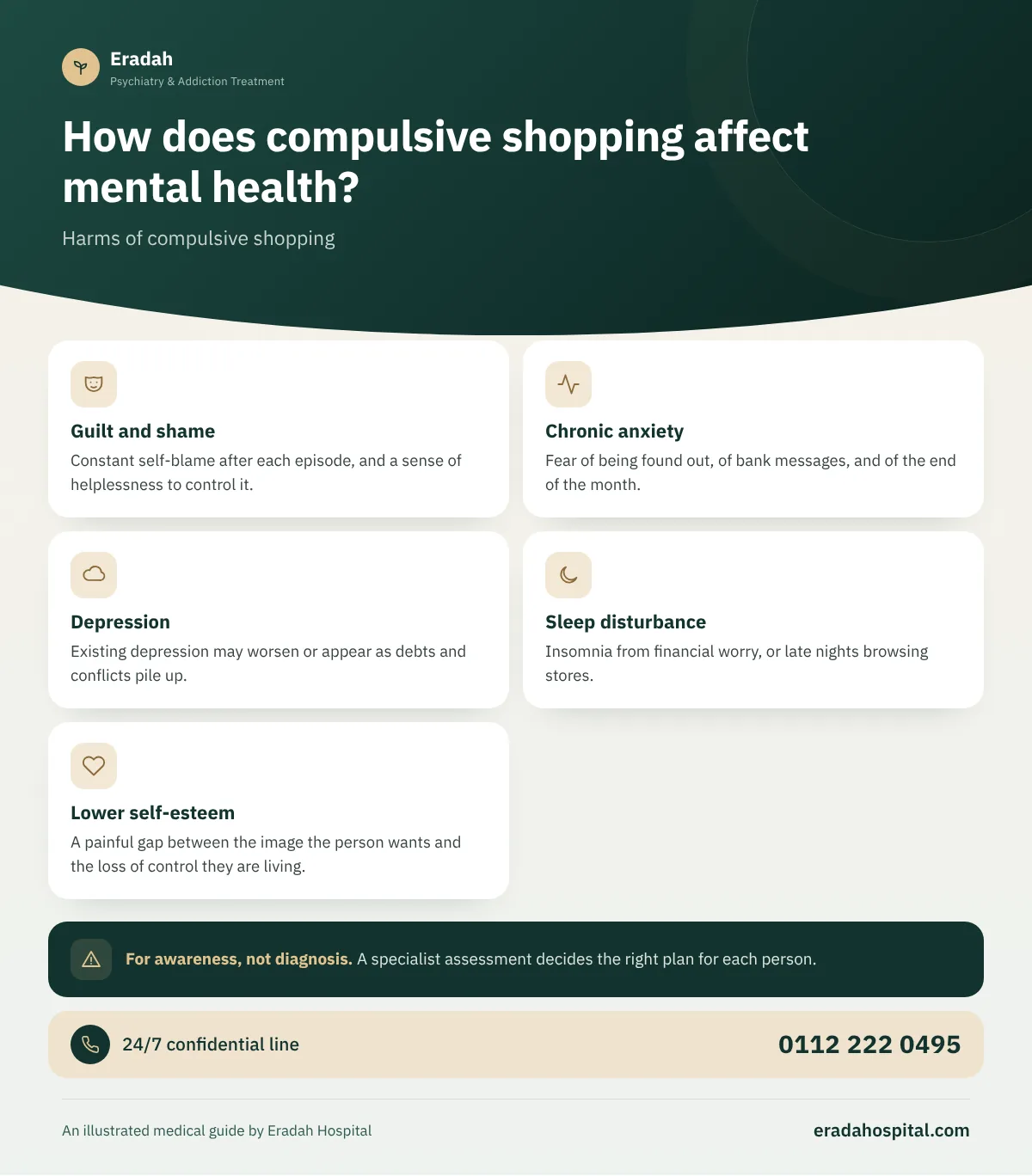
The relief buying gives is short, but what follows lasts. Common psychological harms include:
Constant self-blame after each episode, and a sense of helplessness to control it.
Fear of being found out, of bank messages, and of the end of the month.
Existing depression may worsen or appear as debts and conflicts pile up.
Insomnia from financial worry, or late nights browsing stores.
A painful gap between the image the person wants and the loss of control they are living.
Some people may turn to alcohol, sedatives or other substances to bear this pressure, which complicates the picture. If that happens, a specialist assessment for dual diagnosis becomes essential.
Can the crisis become life-threatening?
Severe financial crises and debt are linked to greater psychological strain and despair, and some people may feel there is no way out, especially with shame and fear of scandal. These feelings are understandable but they are not the truth: debts can be rescheduled and negotiated, relationships can be repaired, and compulsive shopping is treatable.
If thoughts of death or self-harm appear, in you or in someone you know, this is an emergency: call an ambulance (123) or the mental health support line 16328, and do not wait to solve the financial problem first.
How does it affect the marital relationship and family?
In many families the conflict is not so much about the money itself as about hiding and lying. When a partner discovers debts or hidden purchases, they feel betrayed and lose trust, and suspicion may spread to other parts of the relationship. Common family harms include:
- Repeated arguments about money that turn into a constant struggle at home.
- Lost trust and mutual monitoring of spending and phones.
- One partner carrying the burden of repayment alone, with a sense of unfairness and exhaustion.
- Separation or divorce in cases that drag on without treatment.
- Strained relations with the relatives and family members who were borrowed from.
What is the effect of compulsive shopping on children?
Children are affected in two ways: directly when the family's resources set aside for their needs and education fall short, or when they live in an atmosphere of conflict and tension, and indirectly when they learn from example that buying is the way to cope with distress, or that love is expressed through gifts. They may also sometimes be asked to hide it from the other parent, which is a heavy burden for a child.
Does compulsive shopping cause clutter in the home?
Unused purchases often pile up in closets and rooms, and may be hidden in various places. In some people compulsive buying combines with difficulty getting rid of things, so the home gradually becomes a crowded place that causes embarrassment, prevents having guests and increases family conflict. This overlap with hoarding deserves a specialist assessment.
How are work and daily life affected?
| Area | Possible effect |
|---|---|
| Time | Hours every day spent browsing, comparing, receiving and returning |
| Work | Distraction and browsing stores during work, and financial worry that weakens concentration |
| Social relationships | Avoiding friends for fear of money questions, or tension because of debts |
| Goals | Postponing plans for marriage, housing or education because of the financial drain |
Why are the harms more severe for young people and students?
Studies show that compulsive shopping is more common among university students than among adults in general, and these students often have no steady income. So debt can start early through online installments or borrowing from family and friends, and studies suffer from anxiety and late nights browsing stores. Getting used early to buying to soothe feelings can also entrench a pattern that is hard to change later, and delay important steps such as saving, independence and marriage. Intervening at this stage is easier and far less costly.
Can the complications of compulsive shopping be avoided?
Yes, and the earlier the intervention, the smaller the losses. Simple financial steps such as deleting saved payment details and turning off pay-later services, together with honest talk with someone you trust and seeking a specialist assessment, can stop debt from building up before it becomes a crisis. The details are on the compulsive shopping treatment page.
Debt crisis, hopelessness or suicidal thoughts? Get help now
- Talk of there being no way out of debt or of the family being "better off without him"
- A sudden collapse after debts or hidden purchases are exposed, with intense shame
- Withdrawing from people and not eating or sleeping for days
- Suddenly saying goodbye to family or putting affairs in order, or talking about death
- Increased use of alcohol, sedatives or other substances to bear the pressure
Stay with the person and listen without blaming them about money right now; debts can be dealt with later, but their life is the priority. Call an ambulance on 123 or take them to the nearest emergency room, or call the mental health support line 16328 (24 hours), and keep away from them medications and anything they could use to harm themselves.
Ambulance 123 Mental health support line 16328