Does a person who uses LSD need treatment?
LSD use does not usually turn into physical addiction, but that does not mean everyone who uses it needs no help. A specialist assessment becomes necessary in the following situations:
- Repeated use despite problems or promises to stop.
- Using other substances with LSD, such as hashish, ecstasy or alcohol.
- Persistent anxiety, panic attacks or depression after use.
- Strange thoughts, suspicion of others or hallucinations outside the times of use.
- A return of visual disturbances that bothers the person or disrupts their life.
- A previous psychiatric disorder or a family history of psychosis.
What are the stages of LSD addiction treatment?
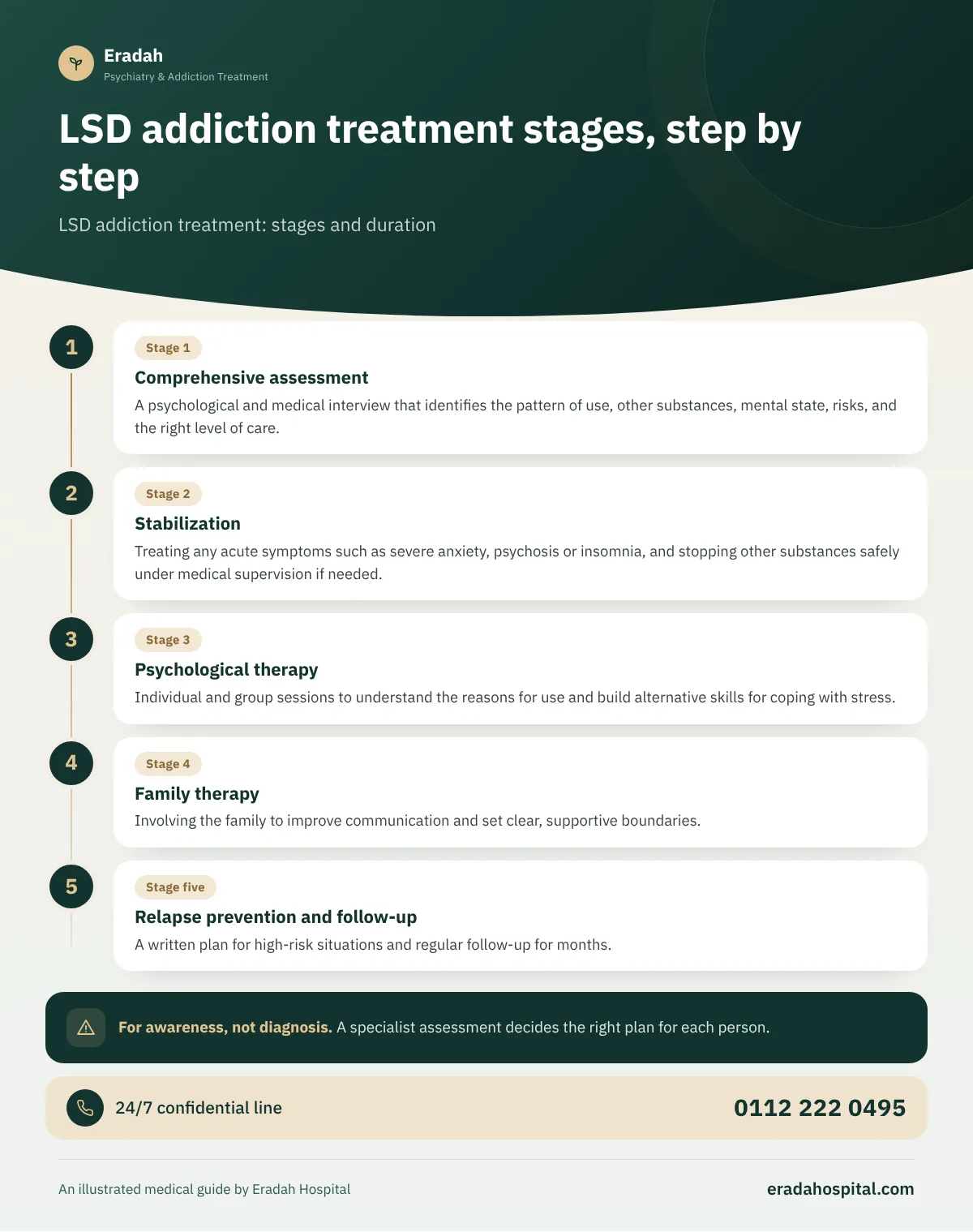
- Stage 1Comprehensive assessment
A psychological and medical interview that identifies the pattern of use, other substances, mental state, risks, and the right level of care.
- Stage 2Stabilization
Treating any acute symptoms such as severe anxiety, psychosis or insomnia, and stopping other substances safely under medical supervision if needed.
- Stage 3Psychological therapy
Individual and group sessions to understand the reasons for use and build alternative skills for coping with stress.
- Stage 4Family therapy
Involving the family to improve communication and set clear, supportive boundaries.
- Stage fiveRelapse prevention and follow-up
A written plan for high-risk situations and regular follow-up for months.
How is someone treated after a bad trip or acute psychosis?
In an emergency the first goal is safety: a calm environment, few stimuli, constant reassurance, and monitoring of vital signs. The doctor may need to use sedatives or antipsychotics for a short time if the agitation is severe or dangerous, and only the doctor decides this.
If psychotic symptoms continue after the drug has worn off, the person needs a careful psychiatric assessment, because it may be the start of a psychotic disorder that needs longer treatment and follow-up.
Are there medications for treating LSD addiction?
There is no approved medication that treats the craving for LSD itself or blocks its effect. But the doctor may use medicines to treat complications and co-occurring disorders, depending on each case:
| Problem | Role of the medication |
|---|---|
| Severe agitation and acute anxiety | Short-acting sedatives in the hospital to protect the patient. |
| Persistent psychosis | Antipsychotics under the supervision of a psychiatrist. |
| Depression and chronic anxiety | Antidepressant or anti-anxiety medicines when needed. |
| Persistent perceptual disorder | Medication options with limited results, decided by a specialist doctor. |
Medication names and doses are decided only by the treating doctor after assessment. Never take, stop or change any psychiatric medicine without consulting him.
What types of psychotherapy are used?
Helps identify the situations and thoughts that drive use and change them.
Strengthens the person's own motivation to change instead of pressuring him.
Sharing experiences with others facing the same challenge.
Rebuilds trust and teaches the family how to support without enabling.
Techniques for dealing with the effects of a bad trip and persistent fear.
Activities, relationships and skills that fill the gap that drug use used to fill.
Why does dual diagnosis treatment matter?
Many young people who repeatedly use hallucinogens have anxiety, depression or an attention disorder, and are trying to escape from them. Treating the substance use alone without treating these disorders leaves the cause in place and raises the chance of relapse. That is why the plan must address both conditions together, in what is known as dual diagnosis.
Does treatment require a hospital stay?
| Inpatient treatment (residential) | Outpatient treatment | |
|---|---|---|
| When is it suitable? | Psychosis or dangerous agitation, multiple-substance use, or previous attempts that failed | Stable cases with good family support |
| Advantages | Constant monitoring and a safe, substance-free environment | Continuing school or work and daily life |
| Duration | Weeks, depending on the case | Regular sessions over several months |
How long does LSD treatment take?
The duration varies widely by case. An assessment and a few sessions may be enough for some people if the problem was a limited experience without complications, while someone who uses multiple substances or has had psychotic symptoms needs a longer program that may last months with extended follow-up. What matters is that follow-up continues after the intensive phase ends.
How do we prevent relapse?
- Identifying triggers: places, parties, people and feelings linked to use.
- A written alternative plan for what the person does when he feels a craving or pressure.
- Ongoing treatment for anxiety and depression, if present.
- Strengthening supportive relationships and healthy activities such as exercise, school and work.
- Treating a relapse, if it happens, as a signal to adjust the plan rather than a final failure.
How do you choose a suitable treatment center?
- Psychiatrists who specialize in addiction and psychosis, not just a general program.
- A comprehensive assessment at the start and a written plan tailored to each patient.
- Family therapy and a follow-up program after discharge.
- Official licensing and full respect for the patient's confidentiality and dignity.
- Clear explanation of the treatment stages and expected duration.
Choosing a Hospital for LSD Addiction Treatment
LSD does not leave a physical dependence that needs a week of detox, so choosing a place here is not about withdrawal. The more important question is whether the team can deal with what the substance may leave in the mind. Some users go through a bad trip accompanied by panic or agitation, some continue to have psychotic symptoms after the effect wears off, and others suffer a persistent perceptual disorder such as flashing images and distorted colors. These cases need a psychiatrist first.
- The ability to assess early psychosis and tell the effect of the substance from the start of an independent psychotic disorder.
- A calm, low-stimulus environment where an agitated patient is protected from harming himself without violence.
- Detailed questioning about hashish, stimulants and alcohol, since LSD rarely comes alone.
- Treatment for the anxiety, depression or attention problems that may have motivated the experimentation in the first place.
- The possibility for the family to start with a consultation even if their son refuses to attend at first.
Eradah's psychiatric hospital combines treatment of psychiatric disorders and addiction under one medical management, with a doctor on site around the clock and a medication plan decided by the doctor when needed. To know which symptoms are cause for concern, see symptoms of LSD use.
Treating LSD problems at Eradah
At Eradah we start with a comprehensive, confidential psychological and medical assessment, then set up an individual plan that includes treatment of psychological complications, cognitive behavioral therapy, family therapy, treatment of any co-occurring use of other substances, and follow-up after discharge. The family can start with a consultation even if the person is not yet ready.