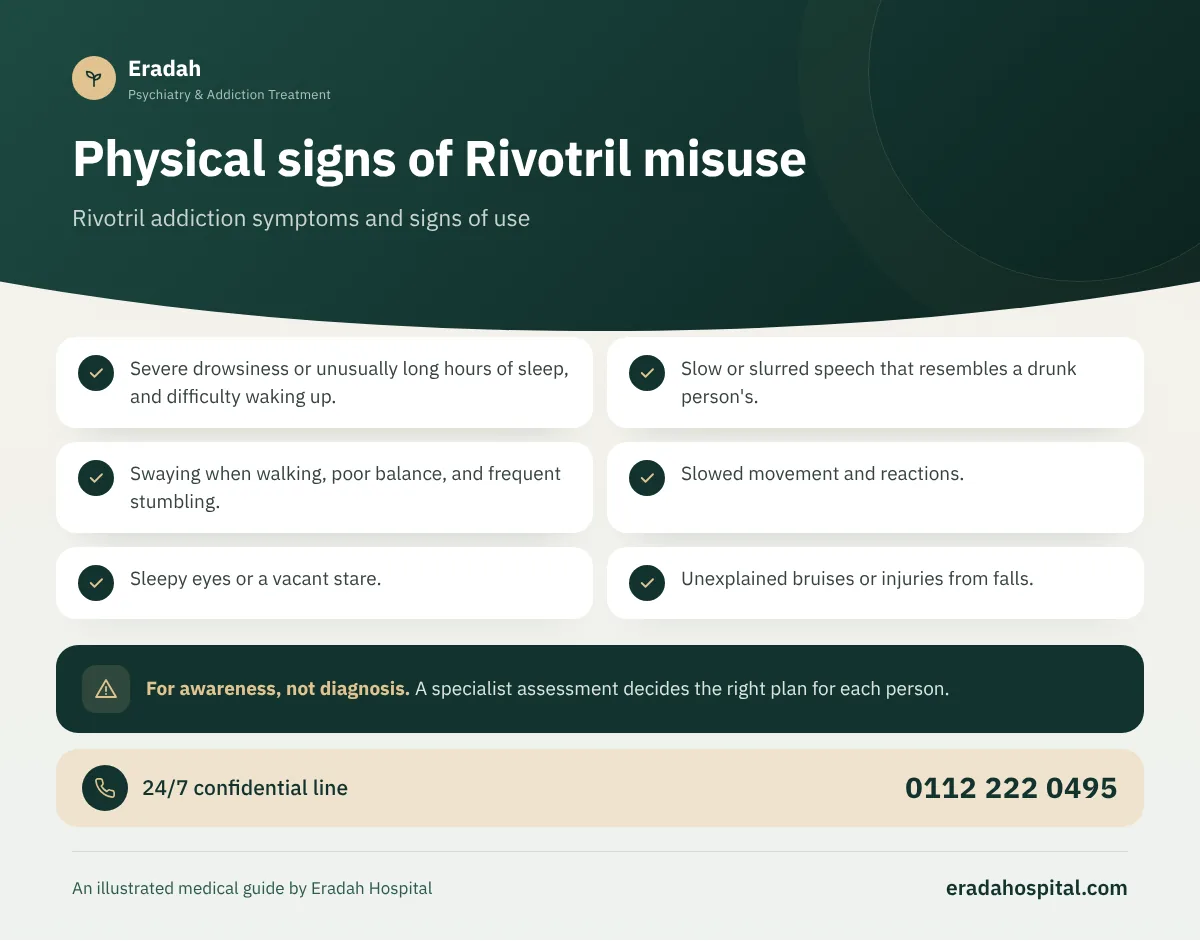
What are the physical signs of Rivotril misuse?
These signs usually appear hours after use, and are clearer with large amounts or when mixed with other substances:
- Severe drowsiness or unusually long hours of sleep, and difficulty waking up.
- Slow or slurred speech that resembles a drunk person's.
- Swaying when walking, poor balance, and frequent stumbling.
- Slowed movement and reactions.
- Sleepy eyes or a vacant stare.
- Unexplained bruises or injuries from falls.
What behavioral signs might the family notice?
- Forgetting conversations or events from hours earlier, or repeating the same questions.
- Withdrawing and losing interest in work, school, or friends.
- Repeatedly seeking the drug from more than one doctor or pharmacy, or asking for the prescription to be repeated before it is due.
- Finding many strips of pills, or pills hidden in unusual places.
- Asking for money often with changing excuses.
- Sudden swings between excessive calm and fits of irritability or impulsiveness.
Psychological and cognitive signs
Difficulty following a conversation or finishing tasks, and clearly slowed thinking.
They no longer seem moved by happy or sad events the way they used to be.
In some people agitation and impulsivity appear instead of calm, especially when mixed with alcohol.
Intense tension and constant preoccupation with getting the drug if the supply runs low.
How do you tell the signs of Rivotril apart from other substances?
The signs of sedatives and depressant substances are similar, but there are differences that help families notice. The table is for awareness only; confirmation comes from medical assessment and testing:
| The sign | Rivotril | Tramadol | Alcohol |
|---|---|---|---|
| Pupils | Usually normal | May be narrow | Normal or dilated |
| Smell | None | None | A distinct smell |
| Drowsiness and slurred speech | Marked | Moderate, and may cause activity at first | Marked |
| Forgetfulness | Common and distinctive | Lower | Common with large amounts |
| Distinctive signs | Swaying and long sleep without a smell | Itching, constipation, and sometimes seizures | Flushed face and mood swings |
The signs often overlap because the person is using more than one substance. So don't try to "diagnose" the substance yourself; focus on the change in behavior and ask for a specialist assessment.
When is Rivotril use considered addiction?
Doctors rely on the DSM-5 diagnostic criteria for sedative, hypnotic, or anxiolytic use disorder. Some of the main criteria, summarized:
- Taking larger amounts or for longer than intended.
- A persistent desire, or failed attempts, to cut down.
- Spending a long time getting the drug or recovering from its effects.
- A strong craving for the drug.
- Failing to meet obligations at work, school, or home.
- Continuing despite social or family problems.
- Giving up important activities because of use.
- Use in dangerous situations such as driving.
- Continuing despite knowing about the physical or psychological harm.
- Tolerance: needing a larger amount for the same effect.
- Symptoms appearing when stopping or cutting down.
What is the difference between a patient who follows treatment and someone who misuses it?
| Medical use | Misuse or addiction |
|---|---|
| Sticks to the amount and schedule set by the doctor | Raises the amount or takes it between doses on their own |
| Sees the doctor regularly | Avoids the doctor, or moves between doctors and pharmacies |
| Takes it to treat a diagnosed condition | Takes it to escape feelings, for a high, or with other substances |
| Does not mix it with alcohol or opioids | Mixes it with tramadol, alcohol, or hashish |
| Daily life is stable | Decline in work, relationships, and interests |
Special signs in teenagers and older adults
The picture of Rivotril misuse differs by age, and the signs may be wrongly put down to tiredness, "adolescence," or old age:
A sudden drop in school performance, sleeping at odd times, changing friends, sharp mood swings, and sometimes pills disappearing from the family's medicines.
Growing confusion and forgetfulness that may be mistaken for dementia, repeated falls, and asking for the medication early or from more than one doctor.
Hiding the use behind exhaustion and pressure, relying on the drug "to get through the day" or to sleep.
In all these groups the rule stays the same: notice the change from the person's usual state, write down what you see, then ask for a specialist assessment instead of guessing.
How do you talk to someone you suspect is addicted to Rivotril?
- Choose a calm time when they are alert, not while they are drowsy or irritable.
- Talk about specific things you have noticed and your concern for them, not accusations.
- Avoid threats and insults, which push toward denial and hiding.
- Do not ask them to stop right away; stopping suddenly is dangerous. Suggest instead a visit to a specialist doctor.
- Offer to go with them, and prepare information about a reliable treatment center.
What happens after stopping the medication is a different stage with its own risks, and you will find the details on the page about Rivotril withdrawal symptoms.
When should you call an ambulance right away?
If you notice drowsiness the person cannot be woken from, slow or irregular breathing, blue lips, or seizures, do not wait. Call an ambulance (123) immediately, especially if you know or suspect they mixed Rivotril with tramadol or alcohol.
Signs of serious Rivotril poisoning: call an ambulance on 123 immediately
- Deep drowsiness from which the person does not wake easily or does not respond to calling and shaking
- Very slow, weak, or irregular breathing, or bluish lips
- Loss of consciousness or coma, especially if they took tramadol or alcohol with it
- Seizures or an epileptic fit, especially after suddenly stopping the medicine
- Severe confusion, slurred speech, and inability to stand
Call an ambulance on 123 immediately, place the person on their side (recovery position) so they do not choke, do not leave them alone, and do not give them anything by mouth. Tell the medical team everything they took, especially opioids and alcohol.
Call the ambulance 123