“The match I used to wait for all week, now I watch it and it doesn't matter to me, and all food tastes the same.” This feeling that life has lost its color, and that what used to make you happy has become dull, has a scientific name, anhedonia, and people call it loss of passion. It is not laziness or weak faith. It is a symptom with causes that can be looked for and treated.
What is loss of passion (anhedonia)?
The Cleveland Clinic defines anhedonia as a lack of interest, enjoyment or pleasure in life's experiences, so you do not want to spend time with others or in activities that used to make you happy. It explains that changing interests across life stages is normal, but with anhedonia you get far less pleasure from the things you love. Many describe it as “a void where the feelings should be.”
Types of anhedonia
You do not enjoy being with people, so you avoid visits, calls and gatherings.
Touch, smell, food, music or intimacy no longer give you a feeling of pleasure.
These are the two types the Cleveland Clinic mentions, and they can occur together in the same person.
Signs of loss of passion
- Withdrawing from friends and social activities.
- Stopping hobbies that were part of your life.
- Flattened emotions and difficulty feeling joy even at happy news.
- Loss of sexual desire.
- Declining interest in eating or in the taste of food.
- A feeling that nothing is worth the effort.
Causes of loss of passion
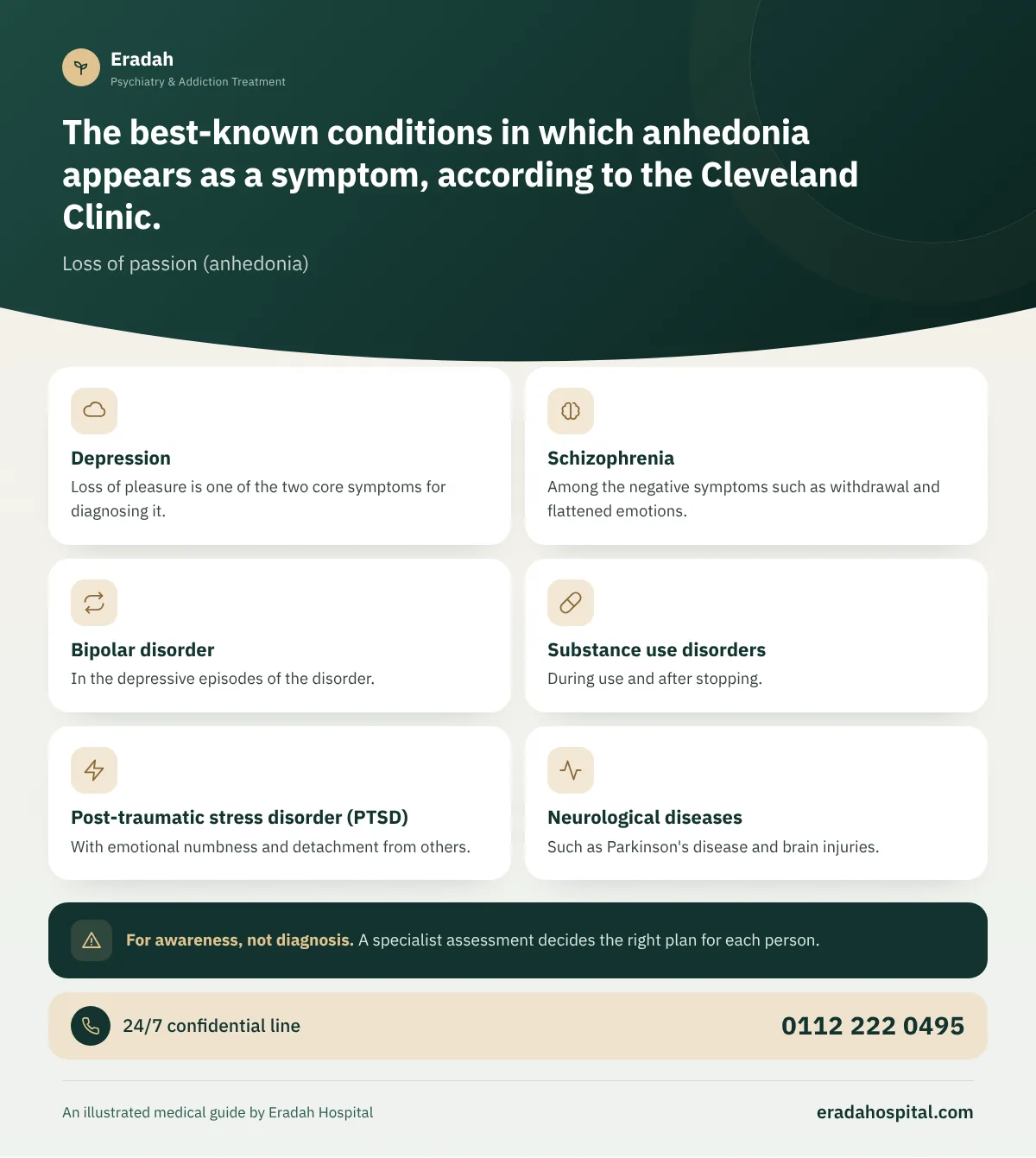
According to the Cleveland Clinic, anhedonia can be a symptom in the following conditions:
Loss of pleasure is one of the two core symptoms for diagnosing it.
Among the negative symptoms such as withdrawal and flattened emotions.
In the depressive episodes of the disorder.
During use and after stopping.
With emotional numbness and detachment from others.
Such as Parkinson's disease and brain injuries.
The same source states that research links anhedonia to reduced activity in a region of the brain called the ventral striatum, part of the “reward center” that works with dopamine. The doctor may order tests to rule out physical causes such as vitamin D deficiency or an underactive thyroid.
Loss of passion and depression
The UK's National Health Service (NHS) states that low mood lasting two weeks or more may be a sign of depression, and its other symptoms include not enjoying life, hopelessness and poor concentration. So if loss of passion comes together with persistent sadness or emptiness, changes in sleep and appetite, or a sense of worthlessness, review the symptoms of depression and ask for an assessment. It differs from burnout, which is usually tied to work and improves when the pressure eases.
Loss of passion and addiction
In a systematic review published in the Australian and New Zealand Journal of Psychiatry in 2014 covering 32 studies, anhedonia was found to be high among people dependent on different substances, to often appear as a result of use and recede with abstinence, and to predict increased craving and likelihood of relapse in those trying to stop. This explains why many people complain in the first weeks after quitting drugs that “nothing has any taste,” and why dual diagnosis needs treatment that follows mood and pleasure, not withdrawal alone.
Treatment of loss of passion
The Cleveland Clinic says there is no treatment for anhedonia alone; the doctor treats the underlying cause or condition, which may include cognitive behavioral therapy, antidepressants or antipsychotics depending on the diagnosis, and medication and psychotherapy are often combined. Only the doctor decides the medication and its dose, so do not start or stop any medication without a doctor. The source adds that regular exercise such as walking helps because it stimulates the release of dopamine.
- Plan one small enjoyable activity each day even if you do not feel like it; action sometimes comes before the feeling.
- Move daily, even if only a short walk.
- Stay in contact with at least one person.
- Stay away from alcohol and drugs, which make the problem worse in the long run.
- Ask for an assessment if loss of passion lasts more than two weeks.
When do you need a doctor?
The Cleveland Clinic warns that leaving anhedonia untreated can lead to major depression, isolation, difficulty in relationships and suicidal thoughts. If you have thoughts of harming yourself, call the mental health support line 16328 or an ambulance (123) immediately. You can start with an assessment in Eradah's outpatient clinics, and the first consultation is free and confidential.