“The medication really improved my mood, but since then I feel like I'm not myself, and I'm too embarrassed to tell the doctor.” This sentence sums up a problem many people live with in silence. Sexual side effects are among the most common reasons for quitting antidepressants without telling the doctor, even though they are among the most solvable. Here we explain what happens, why, and what options are available.
How do antidepressants affect sex?
Most modern antidepressants work by raising serotonin in the brain. This neurotransmitter helps regulate mood and anxiety, but it also takes part in regulating desire, arousal and reaching orgasm, so raising it can slow these responses. That is why sexual problems are linked more to the medications with the strongest effect on serotonin. To understand this neurotransmitter's role, you can read the serotonin guide.
Sexual effects of antidepressants: what might you notice?
According to the US medical library MedlinePlus and the UK's National Health Service (NHS), possible problems include:
- Low sexual desire in men and women.
- Difficulty getting or keeping an erection.
- Delayed or absent ejaculation.
- Delayed or difficult orgasm.
- Vaginal dryness in women.
- A general sense of emotional numbness that sometimes extends to intimacy.
Not everyone who takes an antidepressant gets these effects, and some may ease with time. But it is important to know that they are a recognized drug effect, not a “weakness” in you or a problem in the relationship.
Which antidepressants affect sex the least?
An analysis published by researchers Serretti and Chiesa in 2009 pooled studies that asked patients directly about their sexual function using specialized questionnaires. It found that the rate of sexual problems with the most affecting medications ranged from 25.8% to 80.3% of patients, and the highest medications in order were: sertraline, then venlafaxine, then citalopram, then paroxetine, then fluoxetine.
| Medications more often linked | Medications less often linked | |
|---|---|---|
| Examples | Sertraline, venlafaxine, citalopram, paroxetine and fluoxetine | Mirtazapine, bupropion, agomelatine and moclobemide |
| Compared with placebo | Clearly higher rate of problems | No clear difference |
| Main way of working | Strongly raising serotonin | Different mechanisms that do not rely on blocking serotonin uptake alone |
| Note | May be the most suitable for other symptoms despite this effect | Not all are available or suitable for every case |
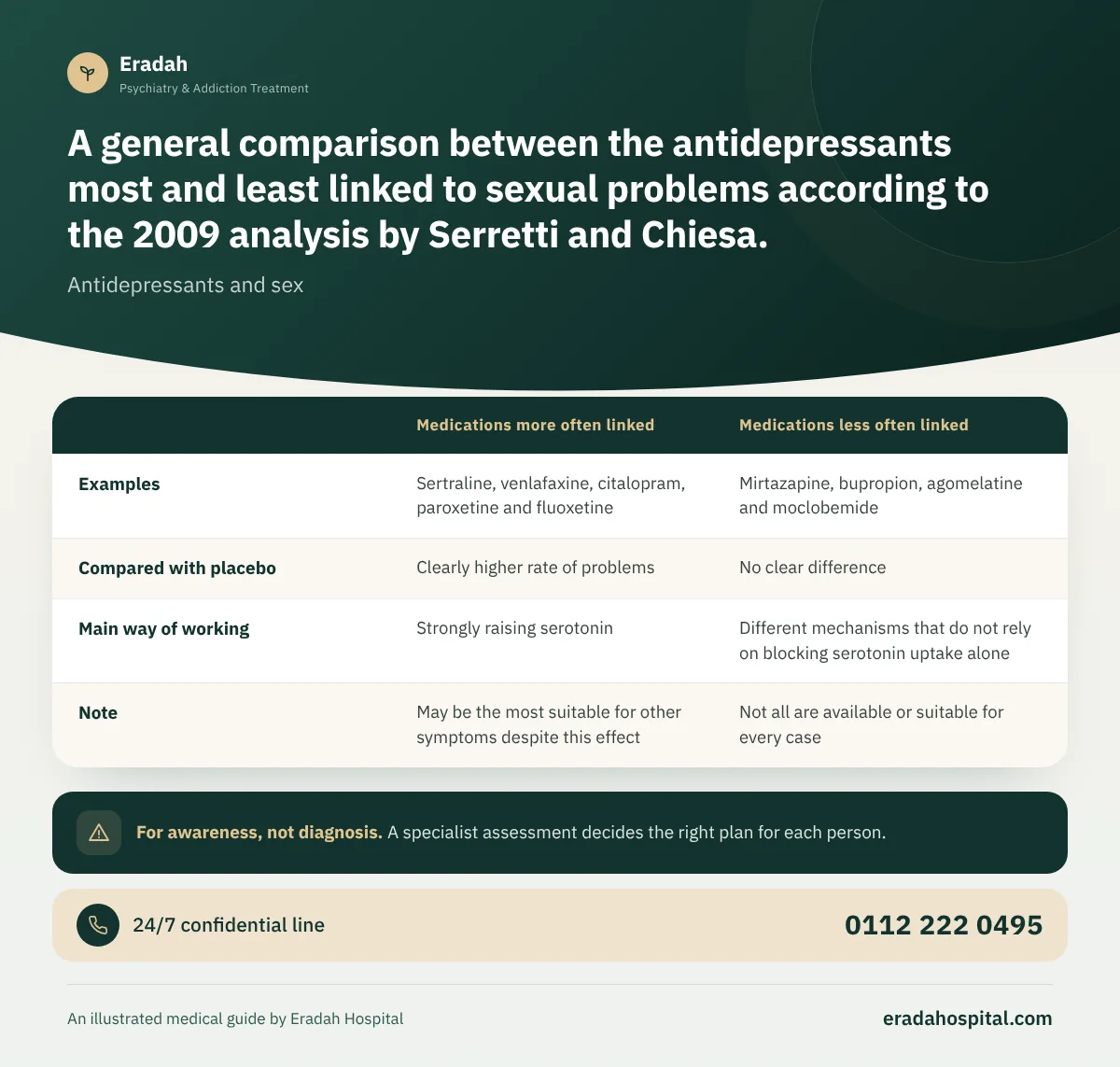
But this does not mean you should ask to change your medication right away; the medication with less sexual effect may be less suited to your symptoms or carry other effects, such as weight gain and sleepiness with mirtazapine.
Is the cause the medication or the depression itself?
Symptoms of depression include losing interest in enjoyable things, including intimacy. Anxiety also weakens sexual response. That is why a good doctor asks: was the problem there before the medication? Did it start with the medication or after the dose was raised? Is mood improving while sex life gets worse? These questions determine the right solution. Alcohol and some drugs also make the problem worse, as the drugs and sex guide explains.
What does the doctor do about the sexual effects of antidepressants?
- Assessment first: is the problem from the medication, the illness or another physical cause such as diabetes or blood pressure?
- Measured waiting: some effects ease after the first few weeks.
- Adjusting the plan: the doctor may change the dose or its timing depending on the case.
- Changing the medication: to one less linked to these effects, if it suits your symptoms.
- Supportive treatment: the doctor may add another treatment or refer you for a specialist assessment.
Does the problem continue after stopping antidepressants?
In most people, sexual function improves after the medication is stopped under the doctor's plan. But the UK's NHS notes that these problems may continue in some people after stopping. How common this is, and why, has not yet been settled, but it is another reason to discuss sexual effects with the doctor early, and not keep suffering in silence.
When should you ask for help?
Talk to your doctor if these effects affect your relationship or make you think of quitting treatment. If they come with a painful erection lasting for hours, that is an emergency requiring a trip to the hospital. At Eradah, the psychiatrist reviews your whole medication plan with complete confidentiality through outpatient treatment, and if the problem is tied to substance use, the dual diagnosis program treats both sides together.