“I can't sleep and I can't eat, and the doctor wrote me Remeron for the night.” This picture, depression with insomnia and loss of appetite, is exactly what Remeron is good at. But the same advantage, drowsiness and increased appetite, can become a drawback for someone else, which is why the medication needs to be well understood before starting.
What is Remeron?
Remeron is the original brand name of mirtazapine, with an orally disintegrating version called Remeron SolTab, and in Egypt there are local generics whose well-known brand names include Mirtimash, Mirtadepine, and Rabizapine. The StatPearls reference classes it as an atypical tetracyclic antidepressant, different from the selective serotonin reuptake inhibitor group to which most modern antidepressants belong.
How does mirtazapine work?
Instead of blocking serotonin reuptake, mirtazapine shuts the alpha-2 “brake” receptors in the brain, which increases the release of serotonin and noradrenaline. It also blocks other receptors, including the histamine receptors responsible for drowsiness and some serotonin receptors linked to nausea. The StatPearls reference explains that this combination is the reason for its sedating, anti-nausea, anxiety-easing, and appetite-boosting effects.
Uses of Remeron
The main use is depression. The StatPearls reference notes that doctors often prefer it for a patient who has both depression and insomnia, or who is underweight, or who has not responded enough to SSRIs. It is also used off-label for insomnia, panic attacks, post-traumatic stress disorder, generalized anxiety, and more. A network analysis in The Lancet in 2018 found mirtazapine to be among the more effective antidepressants of the 21 drugs the analysis covered.
When does Remeron start working?
According to the UK's NHS, mirtazapine usually starts working after one to two weeks, and treatment usually continues for at least 4 to 6 months. You should tell your doctor if improvement has not begun after two to four weeks. Sleep and appetite often improve before mood.
Remeron compared with SSRIs
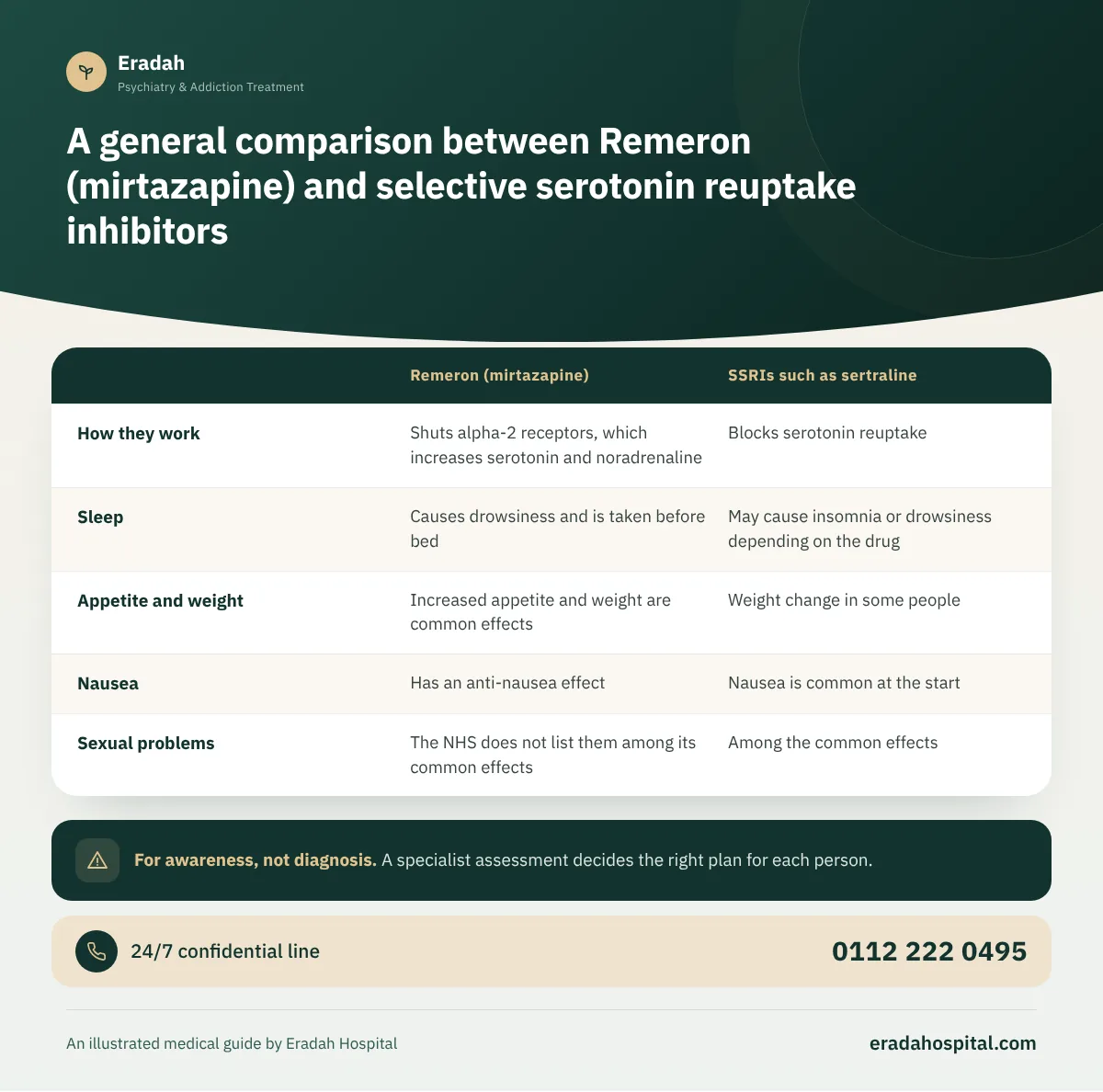
| Remeron (mirtazapine) | SSRIs such as sertraline | |
|---|---|---|
| How they work | Shuts alpha-2 receptors, which increases serotonin and noradrenaline | Blocks serotonin reuptake |
| Sleep | Causes drowsiness and is taken before bed | May cause insomnia or drowsiness depending on the drug |
| Appetite and weight | Increased appetite and weight are common effects | Weight change in some people |
| Nausea | Has an anti-nausea effect | Nausea is common at the start |
| Sexual problems | The NHS does not list them among its common effects | Among the common effects |
Side effects of Remeron
- Drowsiness, which is why it is generally taken before bed.
- Increased appetite and weight.
- Headache and dry mouth.
- Dizziness or tremor.
- Nausea or diarrhea.
Rare serious effects that the UK's NHS lists include signs of infection such as fever, sore throat, and mouth ulcers, which may mean a problem with blood cells; yellowing of the eyes or skin; manic episodes; suicidal thoughts; and severe allergic reaction. The US National Library of Medicine also asks you to tell your doctor about any previous high cholesterol or triglycerides, and notes the possibility of angle-closure glaucoma.
Interactions and who the medication does not suit
- It is not usually recommended for people under 18.
- Caution in liver, kidney, and heart disease, epilepsy, diabetes, and schizophrenia, and when there is a family history of QT interval disorder.
- It interacts with other antidepressants, opioid painkillers such as morphine and buprenorphine, carbamazepine, and sedatives such as benzodiazepines.
- Alcohol doubles the drowsiness, so it is best avoided.
- In pregnancy and breastfeeding the decision is the doctor's, after weighing benefit and risk.
Is Remeron addictive? And how is it stopped?
Remeron does not cause euphoria or addiction, as explained in the guide on whether psychiatric medications cause addiction. But stopping it suddenly may cause discontinuation symptoms, so the doctor reduces it gradually over weeks or months.
When should you ask for help?
Contact your doctor immediately if thoughts of self-harm appear, or fever with a sore throat, or yellowing. And if the insomnia or depression is linked to substance or sedative use, Eradah's dual diagnosis treatment treats both sides together, through outpatient treatment or the psychiatry department as needed.