“I feel something pressing on my chest, and no matter how much I breathe in it never feels complete, and I've had X-rays and tests and everything is normal.” This is one of the complaints emergency, chest and heart doctors hear most. When the tests are normal, the conversation turns to psychological shortness of breath: real symptoms driven by anxiety and stress.
What is psychological shortness of breath?
Psychological shortness of breath, which people call a “tightness” or “nervous breathlessness,” is a feeling of difficulty breathing or of an incomplete breath that is not due to heart or lung disease, but to the way a person breathes under the influence of anxiety and stress. It is one of the best-known forms of psychosomatic illness, meaning real physical symptoms driven by a psychological factor. The UK's National Health Service (NHS) lists a panic attack among the common causes of shortness of breath, alongside asthma, chest infections, obesity and smoking.
How does anxiety cause shortness of breath?
The MedlinePlus encyclopedia explains that hyperventilation is fast, deep breathing that can leave you feeling you are suffocating. We breathe in oxygen and breathe out carbon dioxide, and overbreathing lowers the level of carbon dioxide in the blood, which is what causes most of its symptoms. Emotional causes, according to the source, include anxiety, nervousness, panic attacks and stress. Cleveland Clinic calls a condition in which hyperventilation recurs in response to strong feelings such as fear, anxiety and anger hyperventilation syndrome.
Symptoms of psychological shortness of breath
- A feeling that you cannot take a full breath, and frequent sighing.
- Dizziness or lightheadedness and difficulty thinking clearly.
- Palpitations or a racing heart, and sometimes chest pain.
- Numbness and tingling in the arms or around the mouth.
- Muscle spasms in the hands and feet.
- Dry mouth, belching and bloating.
- Sleep problems.
These symptoms, as MedlinePlus lists them, resemble serious physical symptoms, so many people are frightened by them, and their fear increases the speed of their breathing, which intensifies the symptoms.
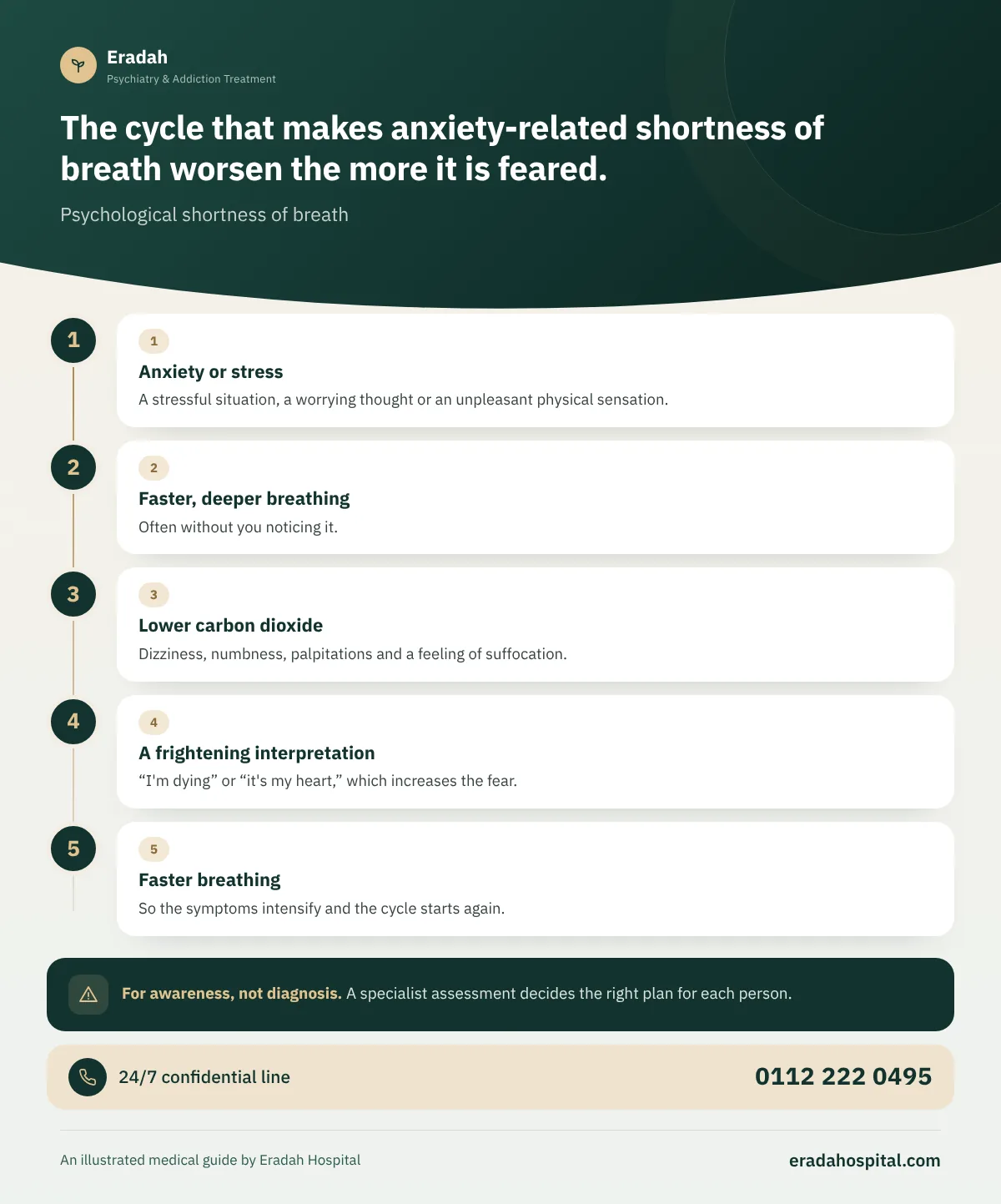
The cycle of psychological shortness of breath
- 1Anxiety or stress
A stressful situation, a worrying thought or an unpleasant physical sensation.
- 2Faster, deeper breathing
Often without you noticing it.
- 3Lower carbon dioxide
Dizziness, numbness, palpitations and a feeling of suffocation.
- 4A frightening interpretation
“I'm dying” or “it's my heart,” which increases the fear.
- 5Faster breathing
So the symptoms intensify and the cycle starts again.
Psychological or physical shortness of breath? Signs you should not put off
It is not right to judge shortness of breath as psychological before an examination. MedlinePlus says rapid breathing for the first time may be an emergency that calls for going to the ER right away, because it has medical causes such as heart and lung disease, bleeding, infection and diabetic ketoacidosis in people with diabetes.
What do you do during an episode of psychological shortness of breath?
If your doctor has confirmed that your episodes are linked to anxiety or panic, MedlinePlus says the goal is to raise carbon dioxide in the blood, and ways to do that include:
- Ask someone nearby to reassure you in a calm voice: “You're fine, this isn't a heart attack, nothing is going to happen to you.”
- Try pursed-lip breathing: purse your lips as if blowing out a candle, then let the air out slowly.
- Breathe from your belly, not the top of your chest, and let your exhale be longer than your inhale.
- Sit down and relax your shoulders, and focus on something around you instead of watching your chest.
- Remember that the episode peaks and then subsides.
MedlinePlus adds that relaxation exercises such as progressive muscle relaxation and meditation, and regular exercise, help prevent episodes, and if they are not enough the doctor may prescribe a medication that they decide. Do not start or stop any medication without a doctor.
Treatment of psychological shortness of breath
Cleveland Clinic says that treating hyperventilation depends mainly on treating its cause, so if there is no physical cause and a psychological disorder is behind it, treatment is psychotherapy and medication when needed. Most often behind it are panic attacks and generalized anxiety, and sometimes illness anxiety, which leads the person to repeat tests without feeling reassured. Cognitive behavioral therapy helps correct the frightening interpretation of the symptoms and break the cycle.
If episodes of tightness recur even though your tests are normal, or you have started avoiding going out for fear of them, or you rely on a sedative in order to breathe, a psychological assessment is your next step. You can start in Eradah's outpatient clinics, and the first consultation is free and confidential.