What are psychosomatic illnesses?
A stomach that churns before every exam, a headache that sharpens with every quarrel, a rash that comes back in stressful periods. Many people know this link from experience, and science now explains how it happens and why treating it takes two kinds of doctors, not one.
The word “psychosomatic” joins mind and body, and describes conditions in which the two interact: psychological stress causes or worsens physical symptoms, and physical illness in turn increases anxiety and depression. Modern medicine does not treat these illnesses as a separate category, but sees the psychological factor as influencing most illnesses to varying degrees. Still, there are cases in which this influence is clear and large, and these are what people usually mean by psychosomatic illnesses.
How does psychological stress affect the body?
When the brain senses a threat it switches on the emergency system: adrenaline is released, so the heart speeds up, blood pressure rises and muscles tense, then cortisol is released, which alters blood sugar and immunity. This is useful for minutes, but when stress lasts for months the body stays on alert: muscles stay tense, the digestive system, which is linked to the brain through the “gut-brain axis,” is affected, inflammation increases and sleep is disturbed. You can find more detail in the guide to psychological stress.
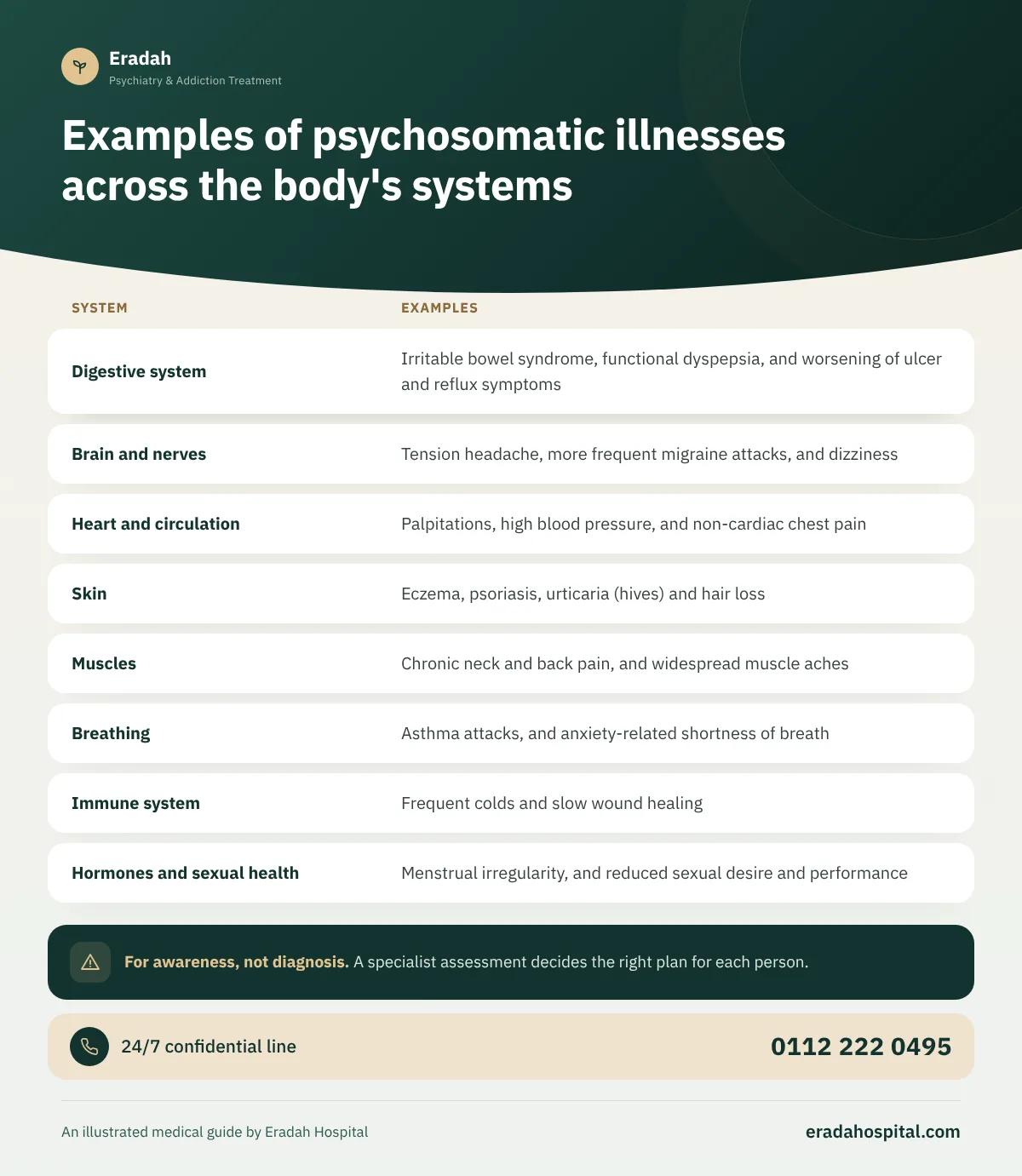
Examples of psychosomatic illnesses
| System | Examples |
|---|---|
| Digestive system | Irritable bowel syndrome, functional dyspepsia, and worsening of ulcer and reflux symptoms |
| Brain and nerves | Tension headache, more frequent migraine attacks, and dizziness |
| Heart and circulation | Palpitations, high blood pressure, and non-cardiac chest pain |
| Skin | Eczema, psoriasis, urticaria (hives) and hair loss |
| Muscles | Chronic neck and back pain, and widespread muscle aches |
| Breathing | Asthma attacks, and anxiety-related shortness of breath |
| Immune system | Frequent colds and slow wound healing |
| Hormones and sexual health | Menstrual irregularity, and reduced sexual desire and performance |
Are psychosomatic illnesses imaginary?
No. This is the most common misunderstanding. Irritable bowel causes real pain, eczema really shows on the skin, and high blood pressure is measured by a device. The difference is that the psychological factor is part of the cause, and therefore part of the treatment. Saying “it's psychological” to a patient to mean “there's nothing wrong” hurts them and delays their treatment.
When should you suspect a large psychological factor?
- Symptoms clearly worsen in stressful periods and ease on vacation.
- Tests do not fully explain how severe the symptoms are.
- Accompanying anxiety, depression or insomnia.
- Symptoms move between more than one body system.
- Improvement with relaxation, exercise or talking about the problem.
- A history of stress or trauma before the symptoms began.
Treatment of psychosomatic illnesses
The most effective treatment works on both sides together: medical treatment for the physical symptom and psychological treatment for stress and anxiety. Among the most studied approaches are cognitive behavioral therapy, relaxation and breathing techniques, gut-directed hypnotherapy for irritable bowel, regular exercise, and better sleep. The doctor may prescribe small doses of some antidepressants because they ease pain and gut sensitivity even without depression. Analyses of studies have shown that psychological therapies and antidepressants clearly improve irritable bowel symptoms.
Signs that need emergency care, not a psychological explanation
- Chest pain on exertion, or with shortness of breath and sweating
- Sudden severe headache unlike any before
- Blood in the stool, unexplained weight loss or a persistent fever
- New symptoms after the age of 50
- Overuse of painkillers or sedatives with severe drowsiness or slow breathing
Do not blame stress for a symptom before being examined: call ambulance (123) or go to the nearest emergency department with any of these signs, however obvious the psychological stress is. If chronic pain is accompanied by despair or thoughts of death, do not leave the person alone, and call the mental health support line 16328 (24 hours).
Ambulance 123 Mental health support line 16328