“I can't control myself when I get upset; I do things I regret minutes later.” When emotions are this stormy, it is not enough to tell a person to “think positively”. That is why dialectical behavior therapy emerged: a treatment that begins by acknowledging that the pain is real, then teaches, step by step, how to manage it without causing harm.
What is dialectical behavior therapy?
Dialectical behavior therapy, abbreviated DBT, is a psychological treatment developed by Marsha Linehan in the 1970s according to Cleveland Clinic. It is built on cognitive behavioral therapy but adapted specifically for people with intense emotions, adding acceptance and empathy alongside change. “Dialectical” here means holding two ideas that seem opposed: “I accept myself as I am” and “I need to change”, both of which are true at the same time.
Who is dialectical behavior therapy used for?
It was designed mainly for borderline personality disorder, and Cleveland Clinic notes it is also used for self-harm and suicidal behavior, post-traumatic stress disorder, substance use disorders, binge eating and bulimia, and depression and anxiety. The common thread among these conditions is that the person resorts to harmful ways of controlling intense negative emotions, and the therapy teaches healthier ones.
Components of dialectical behavior therapy
- Individual sessions: with a therapist, in which the patient reviews their daily record of feelings and behavior, and the most dangerous behaviors, such as self-harm, are addressed first.
- Skills training group: closer to a classroom in which participants learn the skills, rather than a session for discussing personal problems.
- Phone support in crises: short calls with the therapist at set times to apply a skill in the moment.
- Consultation team for therapists: supports the therapists themselves to maintain the quality of treatment.
The four skills in dialectical behavior therapy
Noticing what is happening inside you and around you in the present moment without judgment or impulsive reaction.
Getting through an acute crisis without making it worse through substance use or self-harm.
Understanding and naming emotions and reducing how easily you blow up.
Asking for what you need and saying “no” while keeping the relationship and your self-respect.
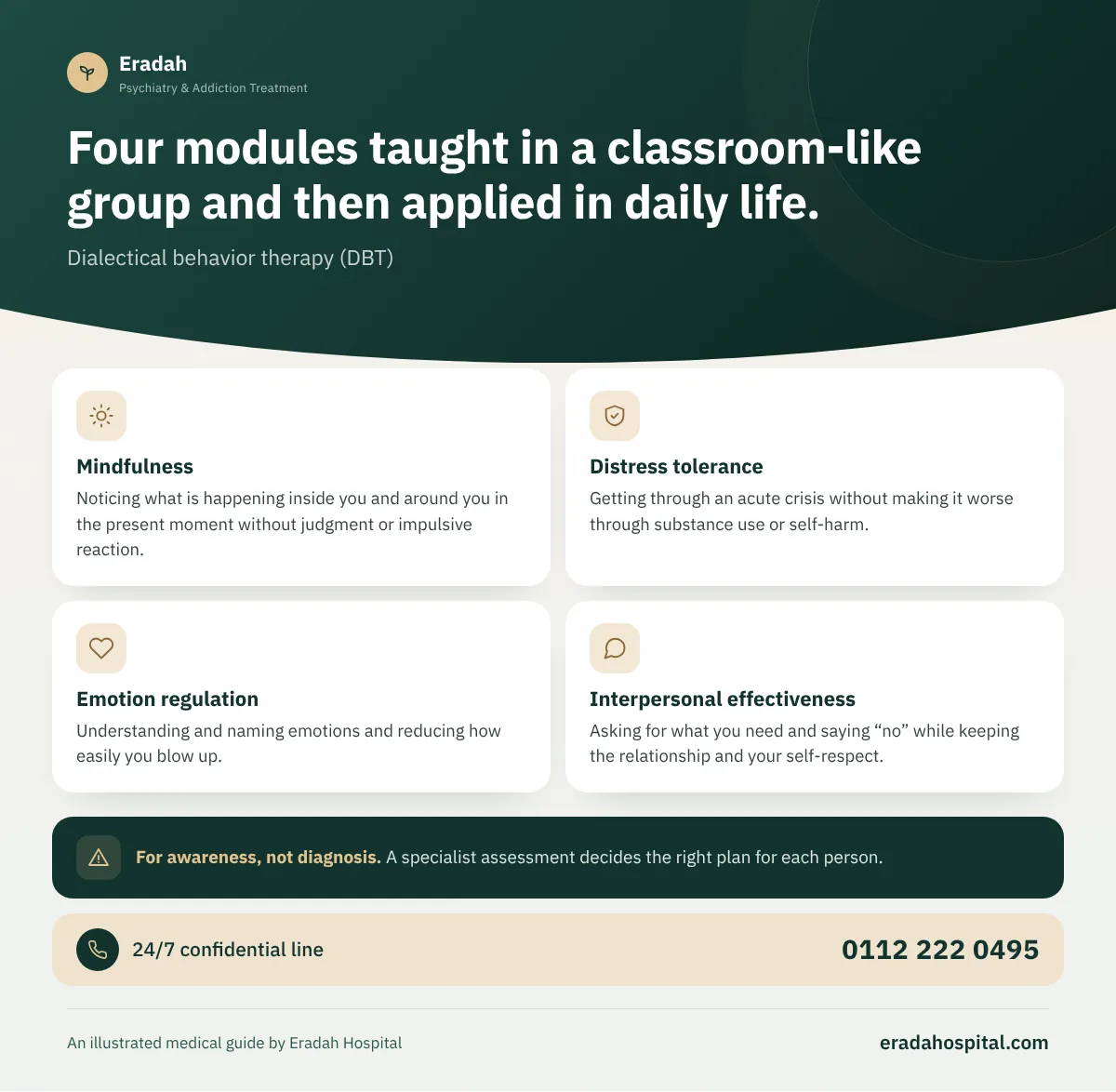
These skills are taught gradually, and then the patient is asked to apply them in real situations and record what happened. A skill such as distress tolerance includes quick practical tools for calming the body when the storm is at its peak, before reckless decisions are made.
Dialectical behavior therapy and addiction
Many people with borderline personality disorder use drugs or alcohol as a quick way to switch off emotional pain, as explained in the guide to borderline personality and addiction. For this reason, a version of dialectical behavior therapy was developed that takes substance use into account. In a randomized trial published by Linehan and colleagues in 1999 on women with borderline personality disorder and drug dependence, dialectical behavior therapy achieved a greater reduction in substance use than treatment as usual, and kept participants in treatment longer. This is a clear example of the importance of treating dual diagnosis in parallel rather than one after the other.
How effective is dialectical behavior therapy?
In a two-year randomized trial published in 2006, participants who received dialectical behavior therapy were half as likely to attempt suicide as those who received treatment from other experts. A Cochrane review published in 2020 also found that, compared with treatment as usual, dialectical behavior therapy reduced the severity of borderline personality symptoms and self-harm and improved social functioning, while cautioning that the quality of much of the evidence is still limited.
How long dialectical behavior therapy takes and what is asked of you
Cleveland Clinic notes that treatment usually takes at least six months to a year, and that treating borderline personality disorder may take years. At the start the patient is asked to commit to attending both individual and group sessions and to keep a daily record. Improvement here means having tools that make crises shorter and less harmful, even if some symptoms remain.
When should you ask for help?
If bouts of anger, impulsiveness or self-harm keep recurring, or substance use is your way of escaping feelings, the first step is a comprehensive psychological assessment. At Eradah the plan is built on this assessment, emotion regulation skills are used within borderline personality disorder treatment, and treatment may begin inside the psychiatric hospital when the crisis is acute, then continue in outpatient treatment.