What is the goal of treating social media addiction?
Unlike with drugs, the goal is usually not lifelong total abstinence, because platforms have become part of study, work and communication. The goal is regaining control: using platforms by conscious choice, at a time you decide, for a purpose you know, and then closing them without a struggle.
Some people need a temporary break from a particular app at first so the cycle is broken, followed by a gradual return with new rules. This varies with the severity of the condition and the reason for use, which a specialist assessment determines when needed.
How do you start on your own? Practical steps to overcome social media addiction
- Know the size of the problem: Review your phone's “screen time” data for a week without changing anything, and notice when, where and why you open the apps.
- Set a realistic goal: Gradual reduction is better than an extreme decision that collapses after two days, such as cutting an hour each week.
- Turn off unnecessary notifications: Keep only messages from important people, and turn off like and suggestion notifications.
- Move apps off the home screen: Put them in a distant folder, or log out after each use so that logging in becomes a conscious decision.
- Set screen-free times: The first hour after waking up, the last hour before sleep, and mealtimes and study time.
- Take the phone out of the bedroom: Use a regular alarm clock and charge the phone outside the room.
- Clean up what you follow: Unfollow accounts that make you feel inadequate or angry, and follow what benefits and inspires you.
- Fill the gap: Prepare alternatives for moments of boredom: a book, exercise, a call to a friend, a short walk.
How do you design your digital environment to help you?
Willpower is a limited resource, and the environment is stronger than it. So specialists focus on making excessive use harder and alternatives easier:
| Tool | How it helps |
|---|---|
| Time limits in phone settings | Alert you when you reach the agreed limit and add a moment of pause |
| Focus or Do Not Disturb mode | Stops interruptions during work, study and sleep |
| Black-and-white screen | Reduces the appeal of colors and makes scrolling less tempting for some people |
| Using platforms in the browser instead of the app | Reduces notifications and adds steps that slow automatic access |
| Parental control tools | Help regulate children's use, alongside a conversation that explains why, not just secret monitoring |
These tools do not work alone if the person is not convinced of the change, but they reduce the number of daily battles with yourself.
Does cognitive behavioral therapy help?
Cognitive behavioral therapy is one of the most widely used and best-studied approaches for behavioral addictions, and research suggests it helps with internet addiction and problematic use in general, although studies specifically on social media platforms are still limited. It helps the patient to:
- Identify the personal triggers that set off a scrolling binge, such as boredom, stress or loneliness.
- Adjust thoughts linked to use, such as “I have to reply right away” or “I'll miss something important.”
- Learn alternative ways of coping with difficult feelings instead of escaping to the screen.
- Build a balanced daily schedule that includes sleep, movement, relationships and achievement.
- Make a plan for high-risk situations and for relapse prevention.
The therapist may also use motivational interviewing to help an ambivalent person discover their own reasons for change, especially with teenagers who reject the idea that there is a problem.
What is the role of family therapy with teenagers?
With children and teenagers, involving the family is essential, because the problem lives inside the home and its rules. Family therapy helps to:
- Agree on clear, fair rules that include everyone, parents too.
- Turn the daily argument over the phone into dialogue and shared responsibility.
- Improve communication and enjoy family time without screens.
- Teach parents to grant digital independence gradually according to the child's maturity.
The American Psychological Association recommends teaching teenagers “digital literacy” skills such as recognizing edited content and disguised advertising, dealing with comparison, and protecting privacy.
Are there medications for treating social media addiction?
There is no approved medication for social media addiction itself. But if compulsive use is linked to a mental health condition such as depression, anxiety or attention-deficit/hyperactivity disorder, a psychiatrist may prescribe medication for that condition as part of the same treatment plan. No psychiatric medication should be started, stopped or adjusted except on a doctor's decision.
When do you need a specialist for social media treatment?
- Your repeated attempts on your own have failed for weeks despite real effort.
- Your studies or work have clearly declined, or absences have become frequent.
- Use is accompanied by persistent sadness, severe anxiety or isolation.
- Violent outbursts of anger appear when you try to cut back.
- Overuse is combined with video games, gambling or substance use.
- You have experienced bullying or blackmail, or any thoughts of self-harm have appeared, in which case help is urgent.
How do you deal with relapse in social media use?
Returning to long scrolling after a period of improvement is expected, especially in times of stress or vacations, and it does not mean the plan has failed. The key is to notice early signs, such as the phone returning to the bed or notifications being switched back on, and then return to your plan without beating yourself up. It helps to review weekly what has worked and what hasn't, and to adjust the rules to your circumstances.
- The first weekMonitoring and awareness
Tracking real use and triggers without judgment, and turning off most notifications.
- Weeks 2–4Organization
Screen-free times, the phone outside the bedroom, and alternatives for moments of boredom.
- The second monthStabilization
Often a noticeable improvement in sleep and concentration, and adjusting the rules based on experience.
- AfterwardRelapse prevention
Regular review, and watchfulness for early signs in times of stress.
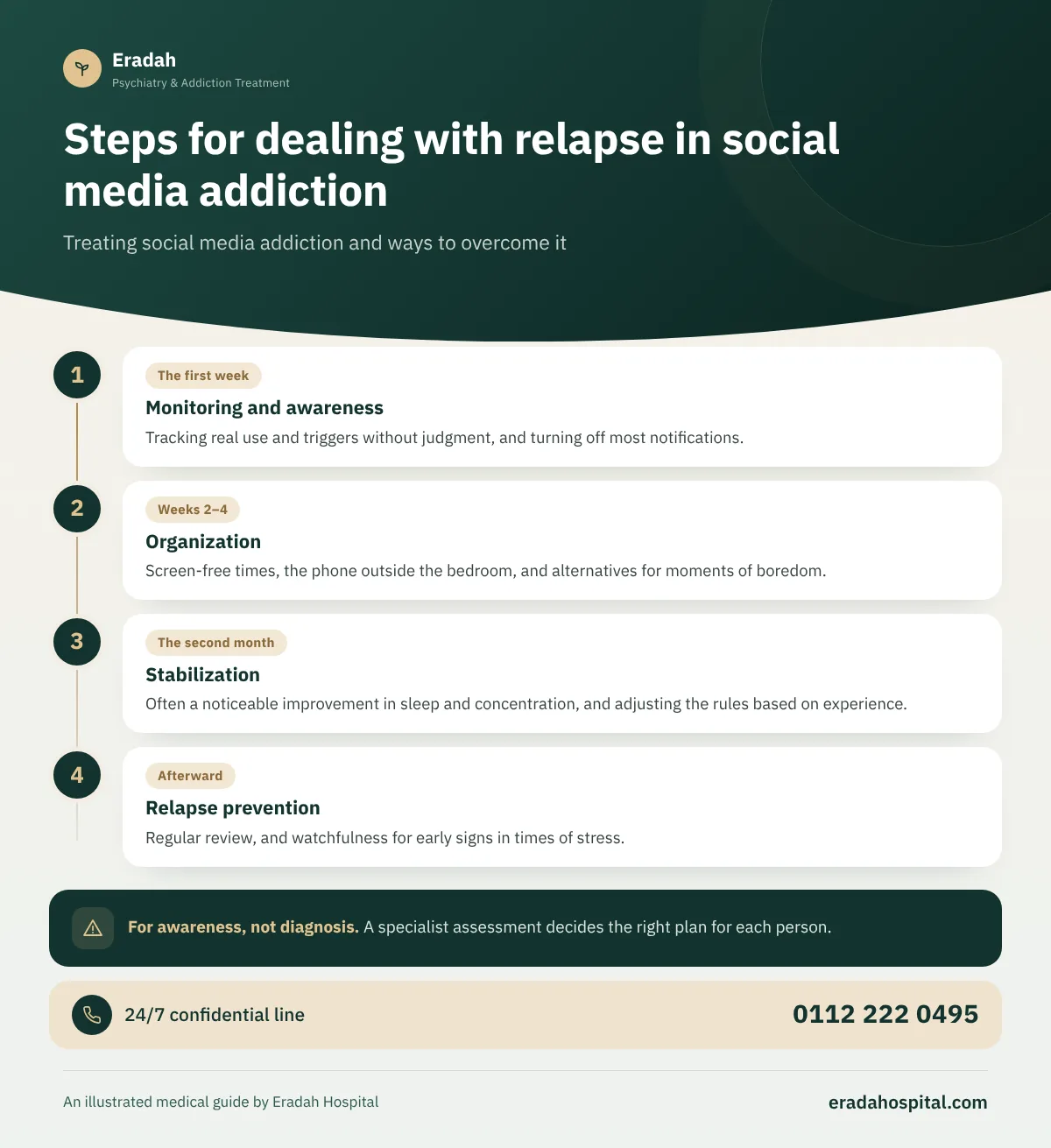
This timeline is approximate and for illustration only; the duration varies from person to person according to the severity of the condition and any accompanying problems.
Choosing a Hospital for Social Media Addiction Treatment
Social media addiction is different in that it touches a person's image of themselves: constant comparison with others, fear of missing out, and sometimes cyberbullying or online blackmail that a teenager hides from their parents. So the treatment provider needs psychological expertise with these wounds, not just a detox program or a bed. Before you choose, check the following:
- That the therapist asks about the content of use, not only its duration: what the person follows and how they feel afterward.
- That they assess body image, social anxiety and mood, since these often accompany compulsive scrolling.
- That they have a clear approach to bullying or blackmail, including guiding the family to make an official report.
- That they work with parents on an agreement about accounts and privacy that respects the son's or daughter's age.
- That they can detect any co-occurring gambling, gaming or substance use.
Eradah offers outpatient psychotherapy sessions led by specialists and a program that helps the family set calm boundaries, and we see teenagers for assessment, treatment and follow-up. Residential treatment with us is for men only; girls and women receive a free first consultation and we guide them to the right place. To talk in complete confidence: 01122220495 by call or WhatsApp around the clock, or message us from the contact page.
Social media addiction treatment at Eradah
At Eradah Psychiatry & Addiction Treatment Center we begin with a comprehensive assessment by a psychiatrist to understand the pattern of use and what lies behind it, whether anxiety, depression, attention difficulties or family problems. We then build an individual plan that combines, as needed, cognitive behavioral therapy, family sessions and follow-up of any accompanying mental health condition, with special attention to teenagers and their families, in complete confidentiality.