Are the harms of social media real, or exaggerated?
The scientific evidence indicates that the harm is real but uneven: moderate, purposeful use may cause no problem and may even help, while compulsive and prolonged use, especially at night and with content that encourages comparison, is linked to clear harm to mind, body and relationships.
The US Surgeon General's 2023 advisory concluded that there is not enough evidence to say social media is safe enough for children and adolescents, while acknowledging that the relationship is complex and research is ongoing. It is important to note that many studies are correlational, meaning they show that two things happen together without always proving which causes the other.
How does social media addiction affect sleep?
Sleep is the first casualty in most cases. Late-night scrolling delays bedtime, stimulating content keeps the brain alert, and notifications can wake a person in the middle of the night. Over time sleep loss accumulates and shows up as:
- Morning exhaustion and difficulty waking up and concentrating at school or work.
- Mood swings and irritability, because lack of sleep weakens the brain's ability to regulate emotions.
- Greater vulnerability to anxiety and depression, since the link between sleep disruption and mental health is strong and well known.
- A disrupted body clock: long late nights followed by daytime sleep, especially on vacations.
If late nights turn into chronic insomnia even after the phone is put away, the guide to insomnia may help.
What is the link between addiction to social networking sites and anxiety and depression?
Problematic use is linked to more symptoms of depression and anxiety and to feelings of loneliness, especially among teenagers. Several mechanisms overlap in this effect:
Lack of sleep alone is enough to raise the risk of mood disorders and anxiety.
Comparing real life with selected, idealized snapshots feeds a sense of inadequacy and failure.
Virtual interaction replaces the get-togethers, movement and hobbies that protect mental health.
Repeated exposure to disturbing news, arguments and violent content raises stress.
Being interrupted all the time by notifications keeps the nervous system on high alert.
On the other hand, depression or anxiety may already be present, pushing the person to overuse as an escape. This is why a good assessment has to look in both directions, and cutting back use is sometimes not enough without treating the accompanying mental health condition.
How does social media affect body image and self-esteem?
Platforms display filtered images and unrealistic beauty standards, and teenagers are exposed to them daily and intensely. The US Surgeon General's advisory noted that many adolescents say platforms make them feel worse about their bodies, and that girls are more affected.
This can lead to dissatisfaction with appearance, excessive preoccupation with weight and looks, and anxiety about appearing in photos. In some more vulnerable people it may be linked to problems in their relationship with food that deserve early specialist assessment. Parents should know that a teenager's sudden preoccupation with weight or extreme dieting is a sign that calls for conversation and consultation, not comments on their appearance.
What are the risks of cyberbullying and online blackmail?
Cyberbullying follows the victim into their bedroom and does not stop when the school day ends, and it can spread in front of a wide audience. It is linked to sadness, anxiety, isolation and refusing to go to school, and in severe cases to thoughts of self-harm. Teenagers may also be groomed or blackmailed with private photos or information.
- Reassure your children that they can tell you without fear of punishment or having their phone taken away immediately.
- Do not respond to the bully or blackmailer and do not give in to their demands; keep the messages and images as evidence.
- Use the platform's block and report tools, and report to the relevant authorities in cases of blackmail and threats.
- Seek psychological support for the victim, as the effects of bullying can continue after it stops.
This is general educational information and not legal advice.
How are concentration, study and work affected?
Constantly switching between studying and the phone fragments attention, and the brain needs time to return to focus after each interruption. As people get used to fast, short content, patience for long reading or complex tasks becomes harder. The result is more time to finish things, more mistakes, lower grades or performance, and a feeling of exhaustion despite little real achievement.
What is its effect on relationships and family?
Platforms may bring distant people closer, but they push close people apart when the phone is present at every moment. Being absorbed in the phone while talking with a partner or children sends an implicit message that they matter less, and increases conflict and feelings of neglect. Platforms can also stir up jealousy and suspicion between spouses and reduce shared family time. Children who see their parents constantly absorbed in screens may feel neglected and copy the same behavior.
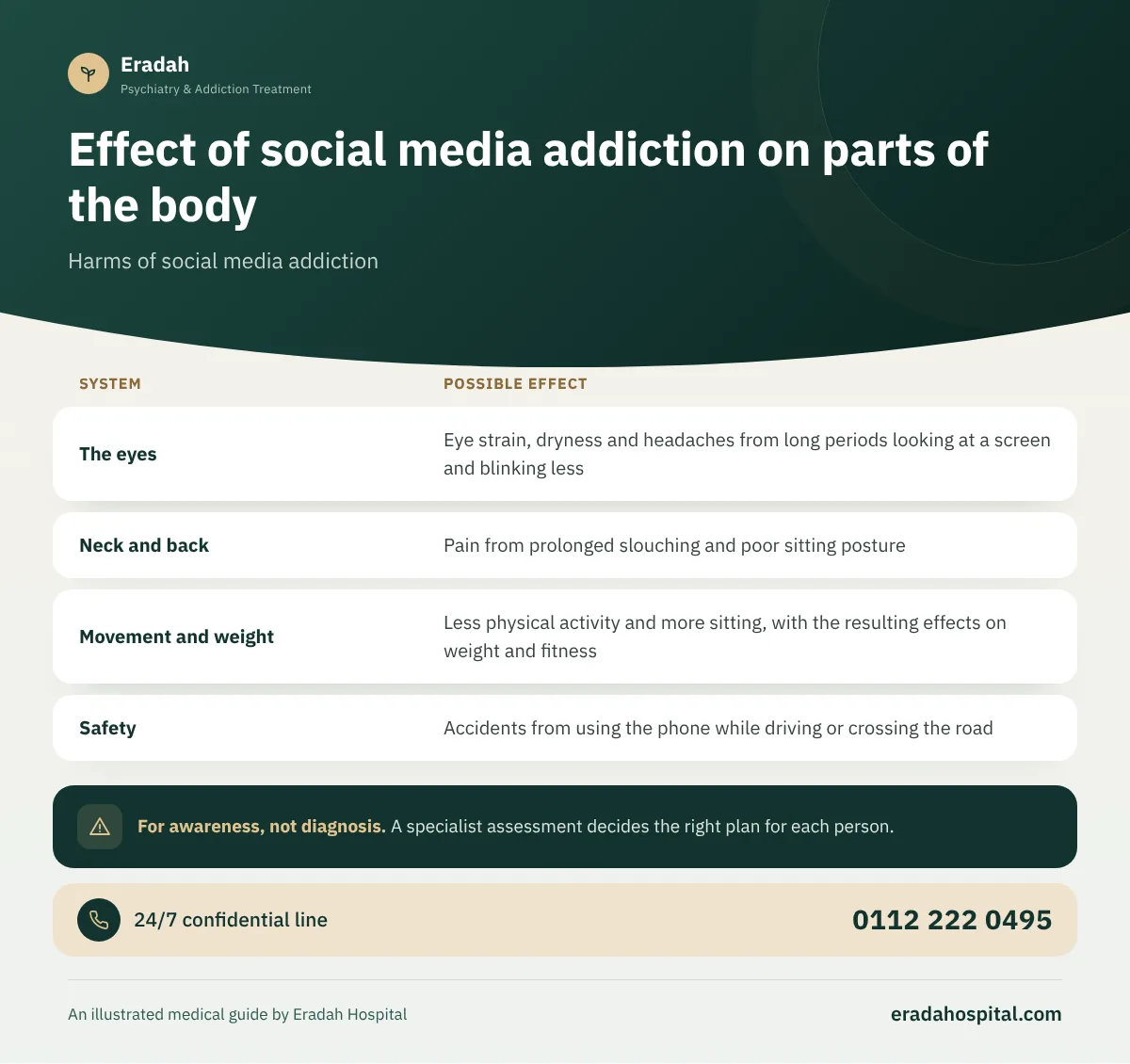
Are there physical harms?
| System | Possible effect |
|---|---|
| The eyes | Eye strain, dryness and headaches from long periods looking at a screen and blinking less |
| Neck and back | Pain from prolonged slouching and poor sitting posture |
| Movement and weight | Less physical activity and more sitting, with the resulting effects on weight and fitness |
| Safety | Accidents from using the phone while driving or crossing the road |
Why are children and teenagers more affected?
Because they are at a sensitive stage of brain, identity and self-esteem development, because enough sleep is essential for their growth and learning, and because they are less able to recognize harmful content or deal with bullying and grooming. This is why the American Psychological Association recommends age-appropriate supervision and teaching children skills for mindful use rather than relying on bans alone.
Can these harms be avoided?
Yes, in most cases. Many harms, such as poor sleep, weak concentration and distress after comparison, improve within weeks of bringing use under control. The most important thing is early intervention, before academic and psychological losses accumulate. Learn the practical steps on the page about treating social media addiction, and if thoughts of self-harm appear, ask for help immediately.
Bullying, online blackmail or suicidal thoughts? Get help now
- Talk of wanting to die, of life being meaningless, or of being a "burden" on the family
- A sudden collapse after a message, post or online scandal, or intense fear of private photos or information being published
- Complete withdrawal from family and friends and suddenly deleting accounts, with clear sadness or hopelessness
- Self-harm or talk of it, or saying goodbye to people and giving away personal belongings
- Sleeplessness for several days in a row with agitation or severe hopelessness
Do not leave the person alone; ask calmly what they are going through and listen without blame or violently confiscating the phone. In cases of blackmail, do not pay and do not delete the messages; keep the evidence and report it to the competent authorities. If thoughts of self-harm appear, call an ambulance on 123 or take them to the nearest emergency room, or call the mental health support line 16328 (24 hours).
Ambulance 123 Mental health support line 16328