Why do people look for ways to raise endorphins naturally?
Many people look for endorphins because they want to ease chronic pain, lift a weary mood, or find a healthy alternative to a substance they have given up. The intention is excellent, but it is important to know what endorphins can and cannot do.
The body releases endorphins in specific situations and in controlled amounts, and they cannot be “recharged” with a food or a supplement. What we can do is practice activities that release endogenous opioids naturally, which are mostly good for physical and mental health anyway. The science here is still developing, so we clearly separate what is established from what is merely popular lore.
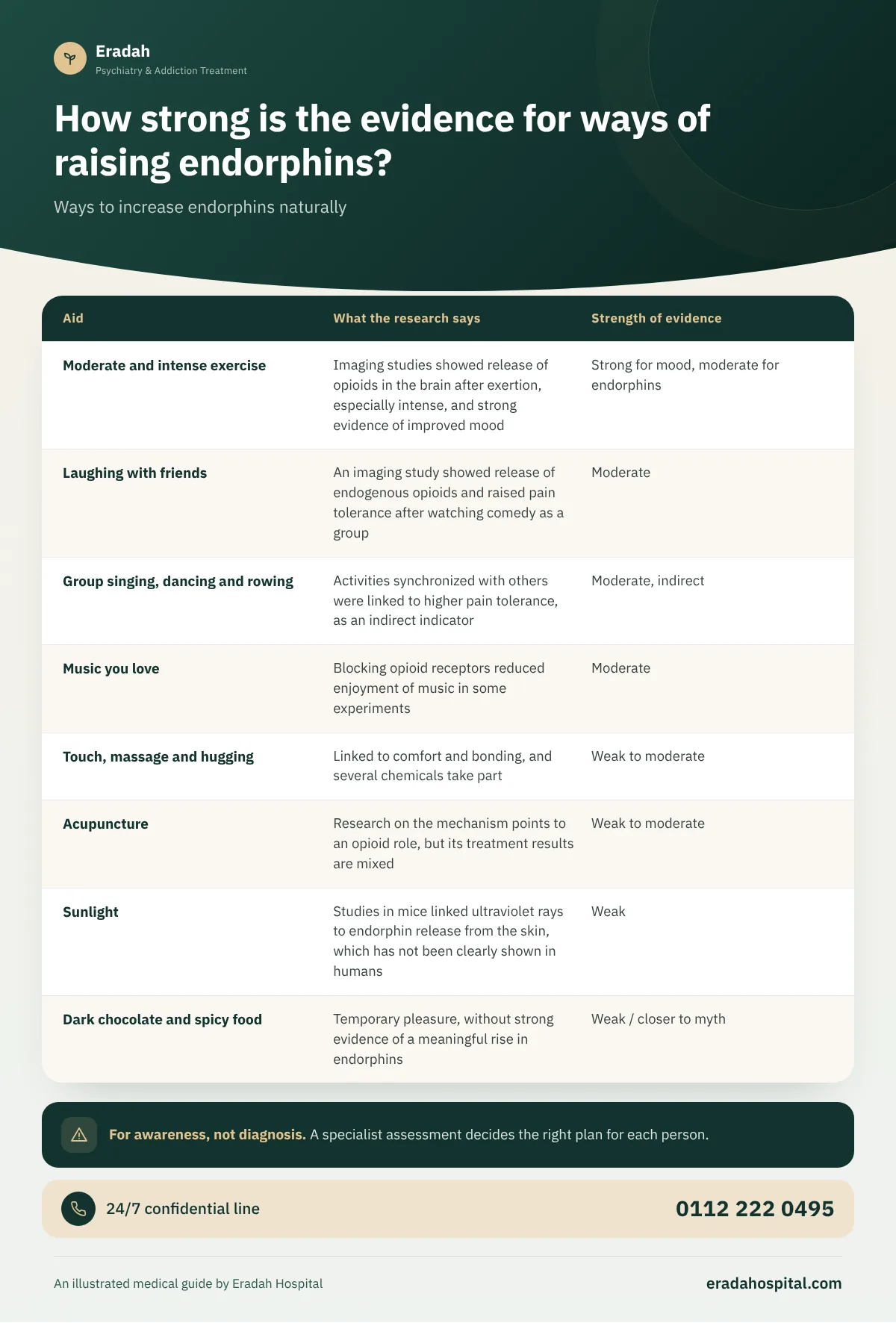
How strong is the evidence for ways of raising endorphins?
| Aid | What the research says | Strength of evidence |
|---|---|---|
| Moderate and intense exercise | Imaging studies showed release of opioids in the brain after exertion, especially intense, and strong evidence of improved mood | Strong for mood, moderate for endorphins |
| Laughing with friends | An imaging study showed release of endogenous opioids and raised pain tolerance after watching comedy as a group | Moderate |
| Group singing, dancing and rowing | Activities synchronized with others were linked to higher pain tolerance, as an indirect indicator | Moderate, indirect |
| Music you love | Blocking opioid receptors reduced enjoyment of music in some experiments | Moderate |
| Touch, massage and hugging | Linked to comfort and bonding, and several chemicals take part | Weak to moderate |
| Acupuncture | Research on the mechanism points to an opioid role, but its treatment results are mixed | Weak to moderate |
| Sunlight | Studies in mice linked ultraviolet rays to endorphin release from the skin, which has not been clearly shown in humans | Weak |
| Dark chocolate and spicy food | Temporary pleasure, without strong evidence of a meaningful rise in endorphins | Weak / closer to myth |
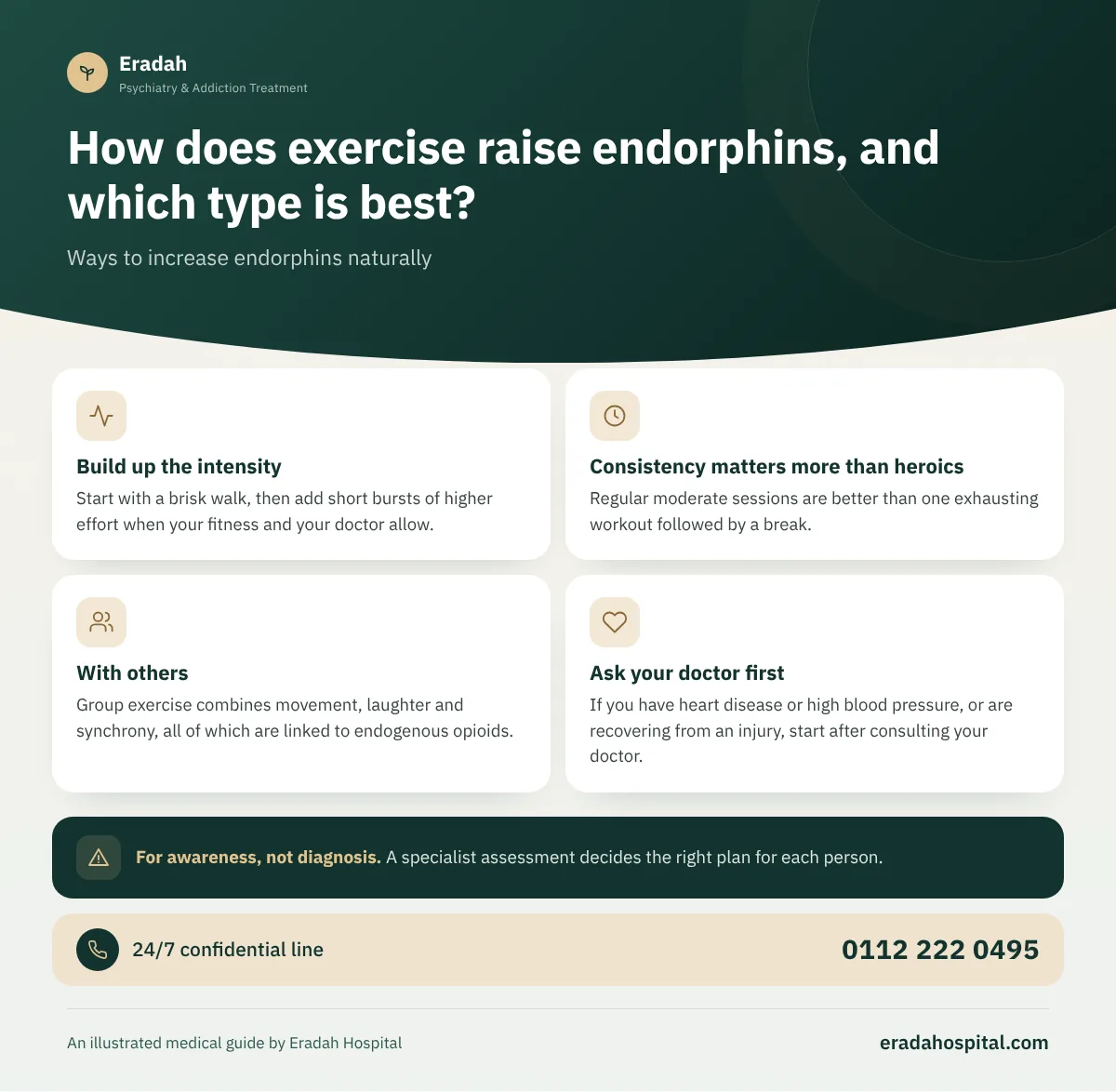
How does exercise raise endorphins, and which type is best?
Imaging studies suggest that endogenous opioids are released in the brain after physical exertion, and that this is clearer with relatively intense exercise. But recent research also shows that the calm feeling after running depends to a large extent on other substances the body makes that act like cannabis. What matters in practice is that regular exercise is one of the strongest proven ways to improve mood; a large review in 2024 concluded that it eases depression symptoms to a meaningful degree.
Start with a brisk walk, then add short bursts of higher effort when your fitness and your doctor allow.
Regular moderate sessions are better than one exhausting workout followed by a break.
Group exercise combines movement, laughter and synchrony, all of which are linked to endogenous opioids.
If you have heart disease or high blood pressure, or are recovering from an injury, start after consulting your doctor.
For people with chronic pain, graded movement under the supervision of a doctor or physical therapist is often an essential part of treatment, and it reduces reliance on painkillers. But severe pain, or pain that increases with movement, calls for assessment, not more strain on the body.
Does laughter really release endorphins?
Yes, and this is one of the loveliest things science has recently uncovered. In a Finnish study published in 2017, men watched comedy clips with close friends and then underwent imaging that tracks opioid receptors. The results showed release of endogenous opioids in brain regions linked to pleasure and body awareness, and pain tolerance rose after group laughter.
The researchers suggest that laughter is “contagious” and lets a whole group feel close at the same time, which may explain its role in building relationships. The practical lesson is simple: make time for the people who make you laugh, because laughing alone in front of a screen is not the same as laughing with those you love.
Are there foods or supplements that raise endorphins?
Lists of “endorphin foods” such as dark chocolate and hot peppers are widely shared. Tasty food may give temporary pleasure, and a spicy taste may trigger a pain response, but there is no strong evidence that they raise endorphins in a meaningful way or treat pain or depression.
Some supplements are marketed as prolonging the action of endorphins or raising them, and the human evidence for them is weak. They may interact with antidepressants and other medications, and are not suitable for pregnant and breastfeeding women, children and people with chronic illnesses without consultation. Ask your doctor or pharmacist before any supplement.
When are natural ways of raising endorphins not enough?
Natural activities improve quality of life, but they do not treat illnesses. See a doctor if you have:
- Pain that lasts more than a few weeks, pain that wakes you from sleep, or pain with weight loss or fever.
- Sadness or loss of pleasure lasting more than two weeks; see the Depression Guide.
- Dependence on an opioid painkiller or difficulty stopping it, or increasing the amount without your doctor’s knowledge.
- An urge to exercise to the point of harming your body, or exercising despite injuries.
- Thoughts of death or self-harm: call the ambulance (123) or the mental health support line 16328 immediately.
12How do group activities and music help raise endorphins?
In research that measured pain tolerance as an indirect indicator of endogenous opioids, tolerance rose after group singing, dancing and synchronized rowing more than after doing the activity alone. The idea is that synchrony with others strengthens a sense of belonging, and endogenous opioids probably take part in it.
This relates to another important chemical, oxytocin, which works with endorphins in bonding and trust, which is why family support and healthy relationships are part of the very chemistry of healing during recovery.