Do you really need to increase oxytocin?
Social media is full of advice to “boost the love hormone,” as if oxytocin were a balance that runs out. In reality, the body releases it when it needs it, and there is no standard medical diagnosis called “oxytocin deficiency” that a lab test can detect. What most people actually need is safer, warmer relationships and less stress, not a higher number in the blood.
Even so, the question is understandable: activities linked to higher oxytocin, such as affectionate touch and social support, are good for mental and physical health in their own right, whether or not oxytocin is the only reason. So here we set out honestly what the research says, separating what is established from what is exaggerated.
What are the proven natural ways to increase oxytocin?
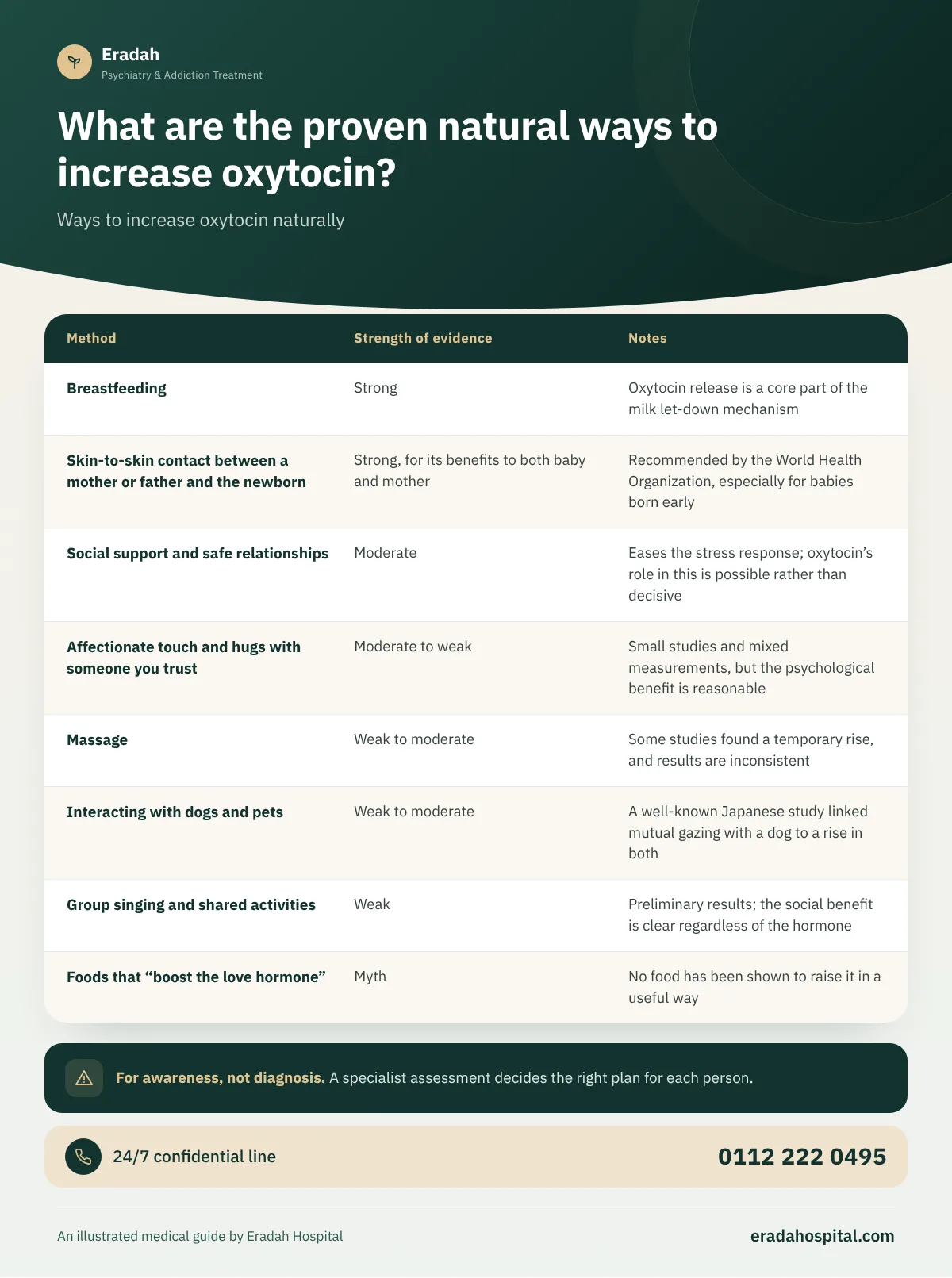
This is our overall assessment of the strength of the evidence, based on available medical references and reviews, and it may change as new research appears:
| Method | Strength of evidence | Notes |
|---|---|---|
| Breastfeeding | Strong | Oxytocin release is a core part of the milk let-down mechanism |
| Skin-to-skin contact between a mother or father and the newborn | Strong, for its benefits to both baby and mother | Recommended by the World Health Organization, especially for babies born early |
| Social support and safe relationships | Moderate | Eases the stress response; oxytocin’s role in this is possible rather than decisive |
| Affectionate touch and hugs with someone you trust | Moderate to weak | Small studies and mixed measurements, but the psychological benefit is reasonable |
| Massage | Weak to moderate | Some studies found a temporary rise, and results are inconsistent |
| Interacting with dogs and pets | Weak to moderate | A well-known Japanese study linked mutual gazing with a dog to a rise in both |
| Group singing and shared activities | Weak | Preliminary results; the social benefit is clear regardless of the hormone |
| Foods that “boost the love hormone” | Myth | No food has been shown to raise it in a useful way |
| Nasal sprays and supplements for this purpose | Unproven and not recommended | Research results conflict, and use outside medical supervision is unjustified |
How do skin-to-skin contact and breastfeeding increase oxytocin?
When a newborn is placed bare-skinned directly on the chest of the mother or father, known as “kangaroo care,” the baby’s temperature and breathing stabilize and breastfeeding is easier to start. Since 2022, the World Health Organization has recommended starting this contact immediately after birth for babies born early or with low birth weight, because it improves their chances of survival.
During breastfeeding, oxytocin rises as the baby suckles, so the milk flows, the uterus contracts and many mothers feel calm. Family can help the mother by providing a quiet environment, taking over household tasks and encouraging her without pressure. If breastfeeding is not possible for any reason, touch, holding and daily care build bonding too, and the mother should not feel guilty.
Do hugs and safe touch raise oxytocin?
Studies suggest that affectionate touch with a partner or trusted relative, such as a hug or holding hands, is linked to lower blood pressure and heart rate in stressful situations, and to higher oxytocin in some measurements. The key word here is “safe”: wanted touch from someone you trust is soothing, while forced touch, or touch within an abusive relationship, can increase stress.
- Set aside time each day to be close to your family: a quiet tea together, or a conversation without screens.
- Hug your children and listen to them; a child who feels safe is better able to face pressure.
- Respect other people’s boundaries; not everyone is comfortable with touch, and emotional warmth takes many forms: a kind word, attention and time.
Do pets and music raise oxytocin?
In a Japanese study published in 2015, oxytocin rose in both dogs and their owners after mutual gazing and interaction. It is a lovely finding, but it comes from a small study, and the companionship of pets mainly helps by reducing loneliness and encouraging activity and routine.
As for music, group singing, group dancing, group prayer and shared sports activities, preliminary research suggests a link with feelings of connection, and oxytocin and endorphins may play a part. Choose an activity you genuinely enjoy with other people; enjoyment and regularity matter more than “raising the hormone.”
How can a family raise oxytocin and support someone in recovery from addiction?
During recovery from addiction, relationships are often badly damaged: lost trust, conflicts and isolation. Rebuilding these relationships gradually is part of treatment, because safe support eases stress, which is among the strongest triggers of relapse.
- Replace blame and lectures with listening and taking an interest in what the person in recovery goes through each day.
- Create small, regular moments of closeness: a meal together, a walk or a shared activity.
- Acknowledge progress, however small; encouragement strengthens commitment.
- Set clear, calm boundaries together; a safe relationship does not mean being permissive about substance use.
- Take part in the family counseling sessions offered by the treatment program.
At Eradah Center we regard the family as a partner in treatment, because a stable home environment and warm relationships help the brain regain its balance after addiction, as explained on the cortisol and addiction page.
Are oxytocin sprays or supplements recommended to increase it?
No. Products that claim to raise the “love hormone” or “trust hormone” are sold online, some as nasal sprays and some as supplements of unclear content. Research on nasal sprays has been conflicting and has not shown benefit for personal use, and what unreliable products actually contain is unknown.
When are natural ways to increase oxytocin not enough?
If what you feel is deep loneliness, persistent sadness and loss of interest in everything for weeks, or anxiety that stops you from being with people, these may be signs of depression or social phobia that need assessment and treatment, not just more hugs. Likewise, a mother who feels severe sadness or detachment from her baby after birth deserves prompt specialist help.
If thoughts of death or self-harm appear, seek help immediately: ambulance (123) or the mental health support line 16328 (24 hours). Asking for help is a brave step, and treatment is effective.
14How does social support help raise oxytocin and ease stress?
Chronic loneliness strains both body and mind, and supportive relationships are among the strongest protective factors for mental health. Research suggests that having a supportive person with you during a stressful situation reduces the rise in stress hormones, and oxytocin is thought to be one of the mediators, alongside many psychological factors.
A weekly call or visit with a friend or relative, even a short one, is better than long meetings far apart.
Helping others and volunteering strengthen the sense of belonging and meaning.
For people in recovery from addiction, and for their families, they give a sense that you are not alone.
A shared meal or a weekly outing strengthens bonds and eases tension at home.