What are hormones?
When you wake up in the morning with energy, feel sleepy as night falls, feel your heart race at a sudden danger, or feel safe in the arms of someone you love, chemical messages are traveling through your blood to coordinate all of it. These messages are hormones.
The US National Library of Medicine defines hormones as the body’s chemical messengers, which travel in the bloodstream to tissues and organs and affect growth, metabolism, sexual function, reproduction and mood. They are released by the endocrine glands, specialized groups of cells, and a very small amount is enough to cause big changes in cells or in the whole body.
According to Cleveland Clinic, the body has more than fifty different hormones that directly or indirectly affect nearly every aspect of health. But this page does not cover all hormones; it focuses on the hormones that affect the brain and mental state and are affected by substance use and recovery. The general difference between a hormone and a neurotransmitter is explained on the main brain chemistry page.
Which glands release the hormones that affect the brain?
The hormonal system, or endocrine system, is a network of glands spread through the body. The most important ones for mood, stress and sleep are the following glands:
| Gland | Location | Examples of what it releases or controls |
|---|---|---|
| Hypothalamus | Deep in the brain | Makes oxytocin and sends stress signals to the pituitary gland |
| The pituitary gland | Below the brain, roughly behind the nose | Releases oxytocin, and directs the adrenal, thyroid and sex glands |
| Pineal gland | In the middle of the brain | Melatonin, the night and sleep signal |
| The adrenal gland | Above the kidneys | Its cortex releases cortisol, and its core releases adrenaline and norepinephrine |
| Thyroid | At the front of the neck | Hormones of energy and metabolism, and their disruption clearly affects mood |
| Sex glands | The testes or the ovaries | Testosterone, estrogen and progesterone |
Cleveland Clinic describes the hypothalamus as the main link between the nervous system and the hormonal system; it is a part of the brain that receives signals from emotions, light and stress, then translates them into hormonal commands that usually pass through the pituitary gland. So it is no surprise that sadness, fear or sleeplessness change your hormones, and that your hormones in turn change how you feel.
How does the brain control hormones?
Most hormones work through a system like the thermostat of an air conditioner: when the hormone level drops, the brain sends a signal to raise it, and when it rises enough, the message reaches the brain, which eases the signal. This is called negative feedback, and it keeps things balanced under normal conditions.
The best-known example of this system for our topic is the HPA axis, the axis that links the hypothalamus to the pituitary gland and then to the adrenal gland, and it is the body’s stress axis:
- The brain senses a stressful situation, real or imagined, and the hypothalamus sends a hormonal signal to the pituitary gland.
- The pituitary gland releases a stimulating hormone that reaches the adrenal gland through the blood.
- The adrenal gland releases cortisol, so blood sugar rises, energy is mobilized and the body copes with the pressure.
- Cortisol reaches the brain and eases the initial signal, and the axis returns to calm after the situation passes.
Types of hormones in the Eradah guide
We chose the four hormones most closely tied to stress, sleep, bonding and emergencies, and to the stages of substance use, withdrawal and recovery. Each has a full guide and separate pages, and here is a short card for each hormone:
Cortisol
CortisolAlso known as: the stress hormone
The stress hormone released by the adrenal gland; chronically high levels increase the risk of relapse.
- Type
- A steroid hormone
- Where it is released
- The adrenal cortex, signaled by the HPA axis
- Key function
- Adapting to stress and regulating blood sugar and inflammation
- Role in addiction
Strong
When to seek help? Unexplained weight gain with high blood pressure and blood sugar; and never stop cortisone medications suddenly.
Oxytocin
OxytocinAlso known as: the love hormone
The hormone of bonding and trust; family support and healthy relationships have a real effect on recovery through it.
- Type
- A hormone that also acts as a neurotransmitter in the brain
- Where it is released
- Made in the hypothalamus and released by the posterior pituitary gland
- Key function
- Bonding, trust, childbirth and breastfeeding
- Role in addiction
Moderate
When to seek help? Isolation and ongoing difficulty connecting and trusting that affect your relationships and recovery.
Melatonin
MelatoninAlso known as: the sleep hormone
A hormone released by the pineal gland to regulate the sleep cycle; its disruption is among the most common complaints during withdrawal.
- Type
- A hormone
- Where it is released
- The pineal gland; it rises at night with darkness
- Key function
- Setting the body clock and the timing of sleep
- Role in addiction
Moderate
When to seek help? Insomnia lasting weeks, and before using any sleep supplement with other medications or for children.
Adrenaline
AdrenalineAlso known as: epinephrine
The emergency hormone that speeds up the heart and breathing; stimulants mimic its effect in a way that strains the heart.
- Type
- A hormone, and a neurotransmitter in small amounts
- Where it is released
- The adrenal medulla
- Key function
- The emergency response: speeding up the heart and breathing
- Role in addiction
Moderate
When to seek help? Immediately if you have chest pain, severe palpitations or a sudden severe headache, especially after using stimulants.
What is the difference between cortisol, adrenaline, melatonin and oxytocin?
The four hormones differ in source, speed and function, but they overlap a great deal in the lives of people going through addiction and recovery. The table summarizes the main differences, and the details are on each hormone’s page:
| Hormone | Source | Speed of effect | Main role | Link to addiction and recovery |
|---|---|---|---|---|
| Cortisol | Cortex of the adrenal gland | Minutes to hours | Adapting to stress and regulating sugar and inflammation | Chronic stress and withdrawal raise it, and it is linked to cravings and relapse |
| Adrenaline | The adrenal medulla | Seconds | The emergency response: speeding up the heart and breathing | Stimulants mimic its effect and strain the heart |
| Melatonin | Pineal gland | Hours, and follows the day-night cycle | Setting the body clock and the timing of sleep | Sleep disturbance is among the most common withdrawal complaints |
| Oxytocin | Hypothalamus, released by the pituitary gland | Minutes | Bonding, trust, childbirth and breastfeeding | Supportive relationships are a core part of recovery |
It is worth noting that these hormones also follow a daily rhythm. Cortisol usually rises in the early morning to help us wake up and then falls gradually through the day, and melatonin rises as darkness falls to prepare for sleep. So staying up late and sleeping in the daytime, a common pattern during substance use, throws both hormones off, and energy, mood and concentration suffer.
What other hormones affect mental state?
We have not dedicated separate guides to all hormones, but the psychiatrist often keeps these hormones in mind, because disturbance in them can cause psychological symptoms or worsen them:
- Thyroid hormones: the US National Library of Medicine lists depression, fatigue and weight gain among the symptoms of an underactive thyroid, while overactivity can cause nervousness, palpitations and insomnia that resemble anxiety.
- Sex hormones: testosterone is linked to energy and sexual desire, and fluctuations in estrogen and progesterone affect mood in some women before the period, after childbirth and around menopause.
- Insulin and blood sugar: severe low blood sugar can cause tremor, sweating, nervousness and confusion that is sometimes mistaken for anxiety attacks.
- Prolactin: the breastfeeding hormone, which some psychiatric medications may raise, and which the doctor sometimes monitors.
That is why the doctor sometimes orders thyroid, sugar or other tests at the start of a psychiatric assessment, not because depression is a “hormone disease,” but to rule out a treatable physical cause before reaching the final diagnosis.
How do drugs and alcohol affect hormones?
Talk about addiction usually turns to dopamine, but the hormonal system pays a heavy price too, and many complaints from people who use substances and people in recovery, such as exhaustion, low sexual desire, menstrual disturbance and sleep disturbance, have a hormonal side:
| Substance | Main hormonal effect | What does this mean in practice? |
|---|---|---|
| Heroin, tramadol and other opioids | Disruption of the sex hormone axis and the adrenal axis | Sexual dysfunction, menstrual disturbance, fatigue and possible bone thinning with chronic use |
| Alcohol | Disruption of the stress and sleep axis | Tension and insomnia, especially in withdrawal, with an effect on the sex hormones |
| Shabu, cocaine and Captagon | Intense stimulation of the adrenaline and norepinephrine pathways | Raised blood pressure and pulse, and risk to the heart and blood vessels |
| Sleeplessness associated with substance use in general | Disrupted melatonin and cortisol rhythm | Disturbed sleep, unstable mood and difficulty waking |
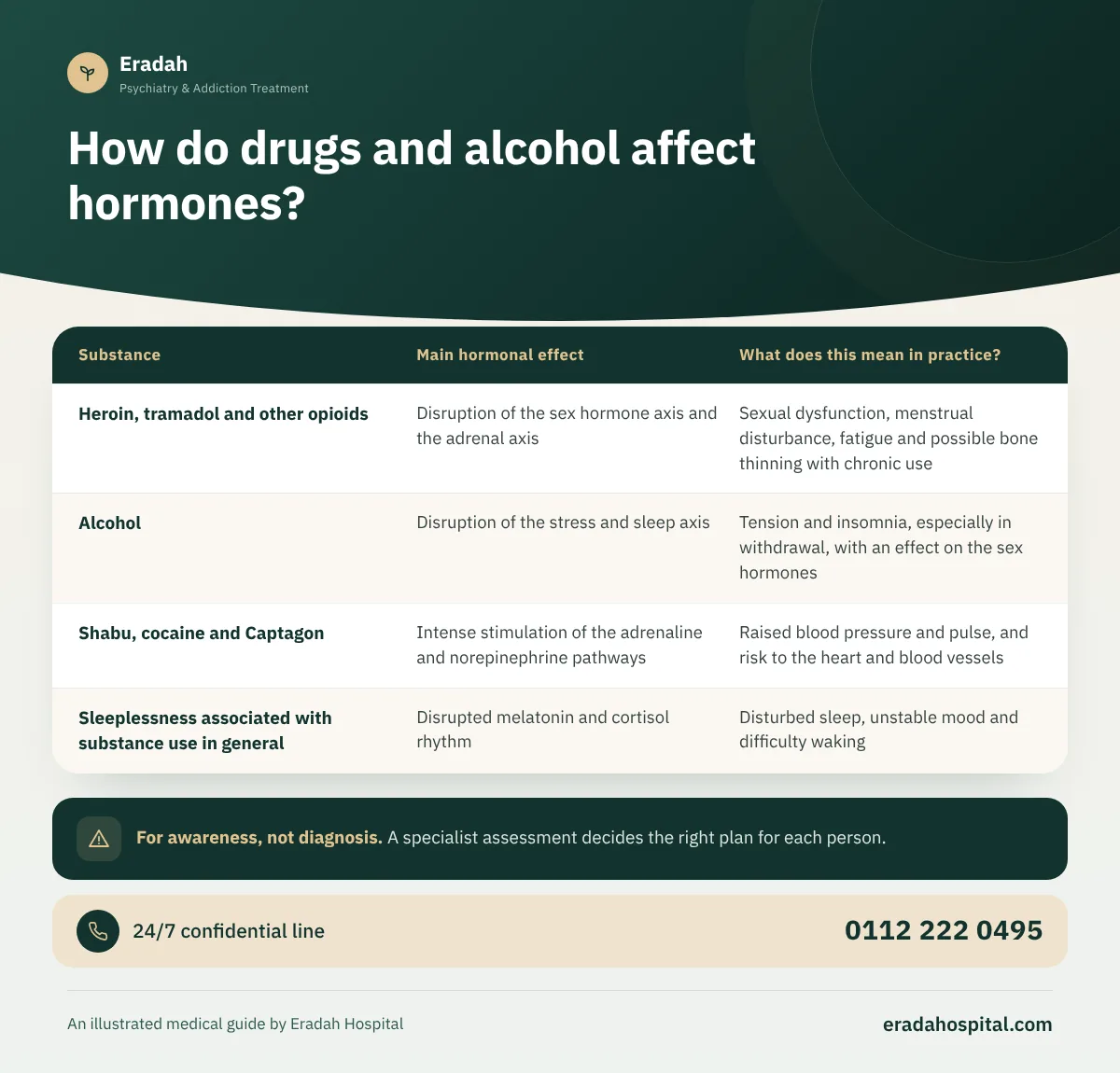
A review published in the StatPearls medical library explains that chronic opioid use can disrupt both the sex gland axis and the adrenal axis, producing symptoms such as sexual dysfunction, loss of periods, fatigue and depression. The reassuring news in the same reference is that most of these disturbances improve after stopping opioids. The role of the stress hormone in craving and relapse is explained on the cortisol and addiction page.
Can gland diseases resemble mental illnesses?
Yes, and this is one of the main reasons the psychiatric assessment should be comprehensive. There are well-known hormonal conditions that may at first look like a purely psychiatric disorder:
Fatigue, slowness, sadness, weight gain and difficulty concentrating, which may be mistaken for depression.
Nervousness, palpitations, insomnia and weight loss, which may be mistaken for generalized anxiety.
Mood swings and insomnia with physical signs such as weight gain around the trunk, high blood pressure and high blood sugar.
Attacks of headache, sweating and palpitations with very high blood pressure, which may resemble panic attacks.
This does not mean that everyone who feels anxious should suspect their glands; these conditions are less common than anxiety and depression themselves. It means that a good doctor asks about physical symptoms and orders the appropriate tests when something calls for them. Details on the last conditions are on the high cortisol and high adrenaline pages.
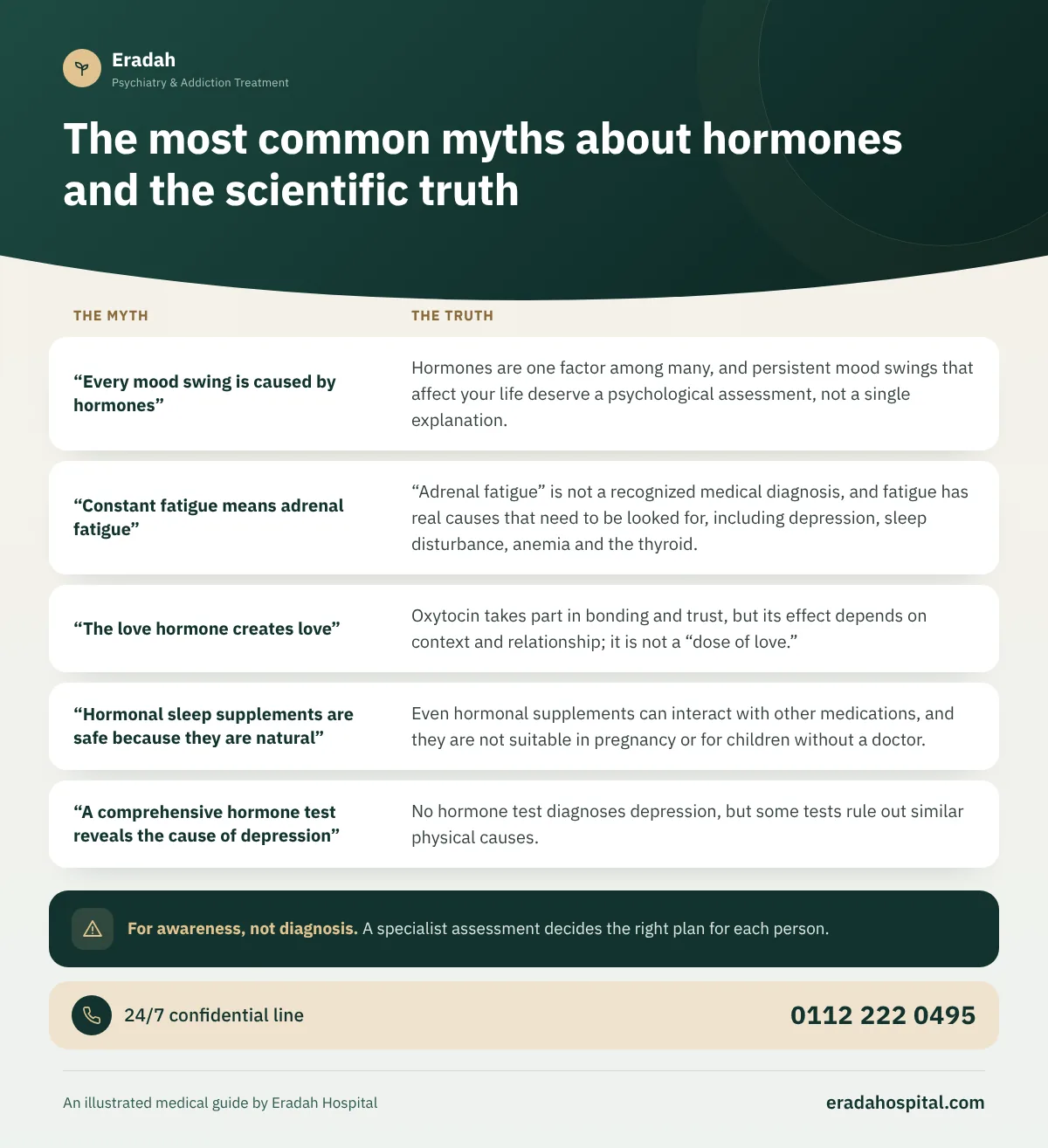
What are the common myths about hormones and mood?
| The myth | The truth |
|---|---|
| “Every mood swing is caused by hormones” | Hormones are one factor among many, and persistent mood swings that affect your life deserve a psychological assessment, not a single explanation. |
| “Constant fatigue means adrenal fatigue” | “Adrenal fatigue” is not a recognized medical diagnosis, and fatigue has real causes that need to be looked for, including depression, sleep disturbance, anemia and the thyroid. |
| “The love hormone creates love” | Oxytocin takes part in bonding and trust, but its effect depends on context and relationship; it is not a “dose of love.” |
| “Hormonal sleep supplements are safe because they are natural” | Even hormonal supplements can interact with other medications, and they are not suitable in pregnancy or for children without a doctor. |
| “A comprehensive hormone test reveals the cause of depression” | No hormone test diagnoses depression, but some tests rule out similar physical causes. |
When should you see a doctor about symptoms that may be hormonal?
You do not need to identify the responsible hormone before asking for help. Seek a medical assessment if you notice the following; an endocrinologist and a psychiatrist may both be involved. This list is for awareness and is not a diagnosis.
- Severe, persistent fatigue or a clear change in weight with no understandable reason.
- Insomnia lasting weeks, or a reversal of sleep times you cannot correct.
- Low sexual desire or menstrual disturbance during or after substance use.
- Palpitations, sweating attacks and headache with high blood pressure.
- Severe sadness or persistent anxiety after childbirth, or any thoughts of harming yourself or the baby; here, seek help immediately via 123 or 16328.
- If you have been taking cortisone medications for a long time and are thinking of stopping them, do not do so except with your doctor.
At Eradah, the psychiatrist looks at the whole picture: psychological and physical symptoms, medical history, and the substances and medications used, then orders the necessary tests and refers to an endocrinologist when needed, within a single integrated and confidential treatment plan.
Serious hormonal symptoms or suicidal thoughts? Get help now
- Sudden severe weakness with vomiting, dizziness, low blood pressure or confusion, especially after suddenly stopping cortisone medications
- Chest pain, severe palpitations or a sudden severe headache after using stimulants
- Facial drooping, arm weakness or sudden slurred speech, which are signs of a stroke
- Repeated attacks of headache, sweating and palpitations with very high blood pressure
- Talk of death or self-harm, or severe depression after childbirth
Call an ambulance (123) or go to the nearest emergency room immediately, note the time the symptoms began, and tell the medical team about all the medications the person takes, especially cortisone, and any substances they used. Never stop cortisone medications suddenly without a doctor. If the danger is thoughts of death, do not leave the person alone, keep dangerous objects out of reach, and you can call the mental health support line 16328, available around the clock.
Ambulance 123 Mental health support line 16328