Stages of ketamine addiction treatment
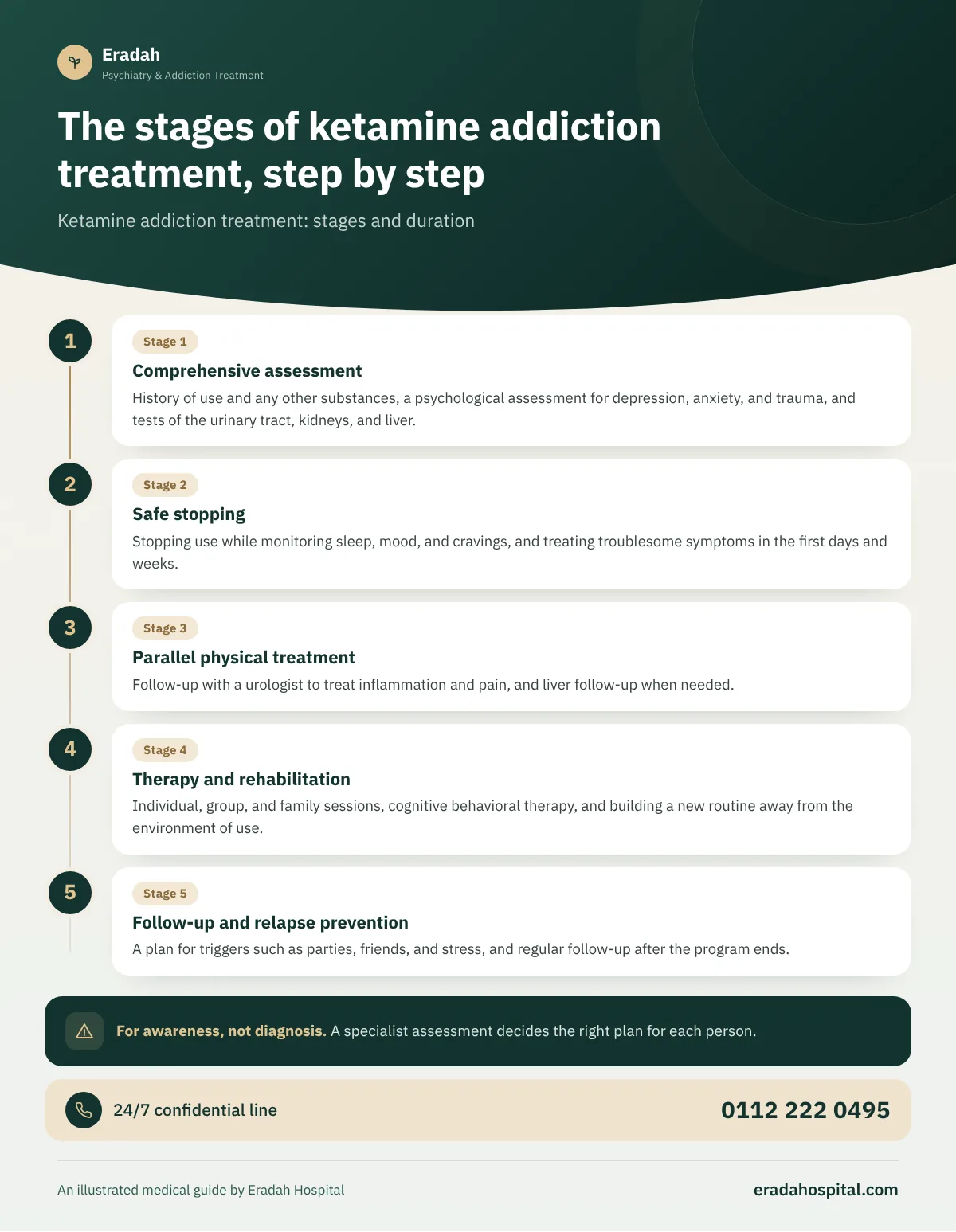
- Stage 1Comprehensive assessment
History of use and any other substances, a psychological assessment for depression, anxiety, and trauma, and tests of the urinary tract, kidneys, and liver.
- Stage 2Safe stopping
Stopping use while monitoring sleep, mood, and cravings, and treating troublesome symptoms in the first days and weeks.
- Stage 3Parallel physical treatment
Follow-up with a urologist to treat inflammation and pain, and liver follow-up when needed.
- Stage 4Therapy and rehabilitation
Individual, group, and family sessions, cognitive behavioral therapy, and building a new routine away from the environment of use.
- Stage 5Follow-up and relapse prevention
A plan for triggers such as parties, friends, and stress, and regular follow-up after the program ends.
What happens when you stop ketamine?
Stopping ketamine does not usually cause severe physical withdrawal symptoms like those seen with opioids or alcohol, but many people go through a psychologically hard period: anxiety, irritability, insomnia, low mood, exhaustion, and strong cravings. This may coincide with bladder pain, which pushes the person back to ketamine itself because it relieves the pain temporarily, a dangerous cycle that has to be broken with medical treatment for the pain.
Are there medications to treat ketamine addiction?
So far there is no approved medication specifically for treating ketamine use disorder, and treatment relies mainly on psychological and behavioral methods. But medications have a supporting role that the doctor determines in each case:
| Goal | How the doctor helps |
|---|---|
| Anxiety and insomnia in the first weeks | Suitable medications for a short period and under monitoring, taking care not to swap one substance for another. |
| Accompanying depression | Antidepressants and psychotherapy according to the assessment. |
| Bladder pain and inflammation | Treatment prescribed by a urologist, and specialist interventions may be needed in advanced cases. |
| Other accompanying substances | A separate plan for any dependence on alcohol, sedatives, or others. |
Esketamine or ketamine is not used as a treatment for ketamine addiction, no medication may be started or stopped without a doctor, and we do not give any doses here.
Psychological and behavioral therapy
It helps in understanding the triggers and thoughts linked to use, and building new ways of coping with stress, boredom, and sadness.
It helps a person who is hesitant to discover their own reasons for change, especially when they see ketamine as "not dangerous."
Tangible rewards for adherence and negative test results, an approach that has proved useful with many substances.
It rebuilds trust, teaches the family to support without enabling, and provides a space to share the experience.
Treating accompanying depression and anxiety
Some young people start using ketamine to escape sadness, anxiety, or trauma, and perhaps after hearing that it "treats depression." So treating the addiction without treating these roots leaves the door open to relapse. The psychiatrist assesses the case and sets a plan to treat the accompanying disorder with approved methods, within the concept of dual diagnosis.
How long does ketamine addiction treatment take?
| Stage | Approximate duration |
|---|---|
| Assessment and tests | One day to several days |
| Safe stopping and getting through the first weeks | One week to several weeks |
| Psychological and behavioral rehabilitation | Several weeks to a few months |
| Follow-up and relapse prevention | Several months, and it may extend to a year or more |
| Bladder follow-up | Depends on the severity of the damage, and may be longer in advanced cases |
The length varies with how long and how heavily the person used, and whether there is physical harm, psychological disorders, or other substances, and the treatment team determines it according to each person's progress.
Does ketamine addiction treatment require a residential stay?
Outpatient treatment may suit stable cases with good family support. A residential stay is advised with heavy daily use, severe depression or thoughts of self-harm, use of other substances alongside it, failed earlier attempts, or difficulty staying away from the environment of use.
Relapse prevention after ketamine treatment
- Knowing and avoiding personal triggers: parties, friends, feelings, places.
- A written plan for moments of weakness: whom to call and what to do.
- Continuing treatment for depression or anxiety if present, and sticking to follow-up.
- Monitoring the bladder and kidneys and not ignoring any new urinary symptoms.
- Building a routine of sleep, activity, and supportive relationships.
How do you choose a ketamine addiction treatment center?
Not all treatment centers are alike, and ketamine treatment in particular needs aspects that may not be available everywhere. Look for a center that:
- Begins with a comprehensive psychological and medical assessment, not one ready-made plan for everyone.
- Works with urologists and internists to assess the bladder, kidneys, and liver.
- Has psychiatrists able to treat accompanying depression, anxiety, and trauma.
- Uses proven psychological and behavioral therapies, and involves the family in the plan.
- Provides clear follow-up after discharge and fully respects confidentiality.
- Does not promise a "quick" cure in days, and does not use medications without assessment and a clear explanation.
Choosing a Hospital for Ketamine Addiction Treatment
What sets ketamine addiction apart when choosing a place for treatment is that the biggest risk may not be withdrawal, which is psychological more than physical, but a body worn down by the substance: an inflamed bladder that hurts the person so they go back to ketamine to relieve it, sometimes effects on the kidneys and liver, and depression or a feeling of detachment from reality that needs a psychiatrist. So the right center sees the whole picture. Put these questions to any provider:
- Are kidney and liver function tests and a urinary tract assessment requested from the start?
- Is there clear coordination with a urologist to treat bladder pain instead of leaving it as a reason to go back?
- Does the psychiatrist follow depression, anxiety, and episodes of detachment from reality?
- Does the center refuse to prescribe any substitute with the same effect, and explain the reasoning for each medication it suggests?
- Does the plan include the late-night and party friends and the environment of use, not the individual alone?
At Eradah the doctor assesses the case physically and psychologically on admission, and if the patient needs care beyond an addiction center, they are transferred by ambulance to the nearest general hospital. The dual diagnosis program treats accompanying depression, and the aftercare program after discharge helps protect what has been achieved. Residential treatment is available for men, and the first consultation is free and confidential for everyone. Contact us on 01122220495 by call or WhatsApp around the clock, or through the Eradah contact page.
Ketamine addiction treatment at Eradah
At Eradah we begin with a comprehensive psychological and medical assessment, and we work with urologists to assess the bladder and kidneys from the start. Then we set a safe stopping plan with individual and family psychological and behavioral therapy, and we treat any accompanying depression or anxiety within the same plan, with follow-up after the program ends, and in complete confidentiality from the first call.