Why do ketamine withdrawal symptoms happen?
"There are no withdrawal symptoms, I can quit any time." Doctors often hear this sentence from ketamine users, and then the person finds that stopping is harder than they thought: exhaustion that doesn't go away, a heavy mood, and cravings that bring them back each time. Understanding what happens when you stop is the first step to getting through it safely.
Ketamine works by blocking NMDA-type glutamate receptors in the brain, which produces detachment from the body and from reality. With repeated use the brain adapts to its presence, and the person needs a larger amount for the same effect, that is, tolerance develops. When use stops, the brain needs time to regain its balance, and symptoms appear that are mostly in mood, energy, and desire.
A scientific review published in the journal Addiction in 2012 describes how many heavy users are worried about addiction and try to stop but fail, which confirms that the absence of violent physical symptoms does not mean stopping is easy.
Common ketamine withdrawal symptoms
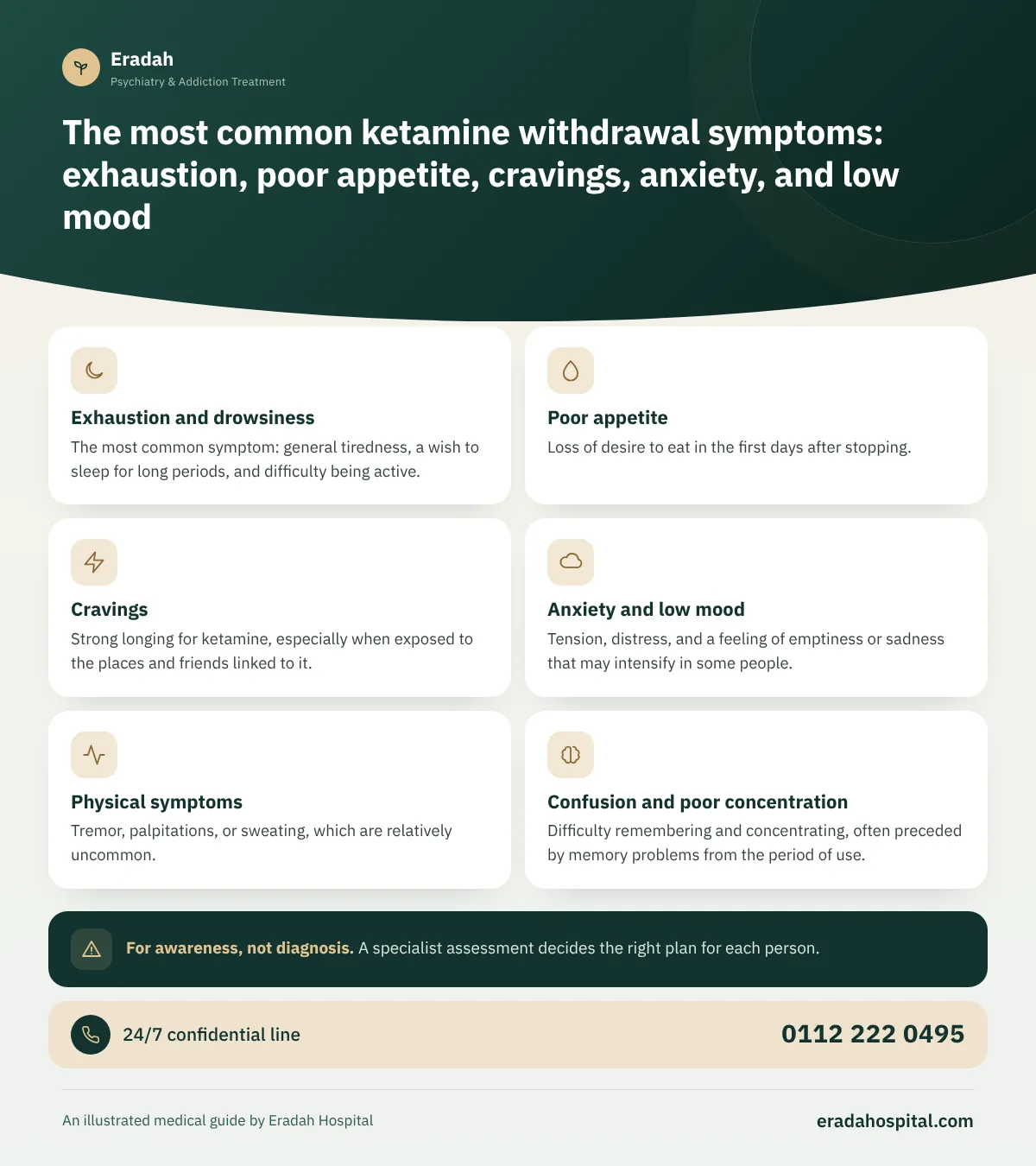
The most common symptom: general tiredness, a wish to sleep for long periods, and difficulty being active.
Loss of desire to eat in the first days after stopping.
Strong longing for ketamine, especially when exposed to the places and friends linked to it.
Tension, distress, and a feeling of emptiness or sadness that may intensify in some people.
Tremor, palpitations, or sweating, which are relatively uncommon.
Difficulty remembering and concentrating, often preceded by memory problems from the period of use.
What do studies say about ketamine withdrawal?
Research on ketamine withdrawal is scarce compared with other substances. The largest is a survey published in 2014 in Taiwan that included 1,614 users and asked about symptoms on stopping:
| Symptom | Percentage |
|---|---|
| Exhaustion | 26% |
| Poor appetite | 20٫4% |
| Drowsiness | 19٫1% |
| The craving | 18٫7% |
| Anxiety | 18٫3% |
| Low mood and distress | 17٫2% |
| Palpitations, sweating, or tremor | Roughly 3% to 5% |
The study noted that women reported more anxiety, distress, and tremor than men, and that fewer than 10% of participants expressed a wish to seek treatment despite the many symptoms and harms. These are figures from a single sample that relies on what participants report, so they should not be generalized to everyone.
How long ketamine withdrawal lasts
There are not yet enough studies to set a precise timeline for ketamine withdrawal as there is for heroin withdrawal or alcohol. What doctors generally observe is that exhaustion and disturbed sleep and appetite improve over the first days and weeks, while cravings, mood swings, and poor concentration may last longer, especially after long daily use. The duration varies with how long and how much was used, any earlier depression or anxiety, and the use of other substances.
Is ketamine withdrawal dangerous?
The withdrawal itself is not usually life-threatening, but the risks come from around it:
- Depression: low mood may intensify in some people, especially those who started ketamine to escape sadness or trauma, and it needs assessment by a psychiatrist.
- Substitution with another substance: the 2014 study noted that alcohol eased some withdrawal symptoms in participants, which may lead to a new dependence on alcohol or sleeping pills.
- Bladder pain: it may push the user back to ketamine because it relieves the pain temporarily, even though it is the cause.
- Relapse: returning after a break may be at an amount the person used to take, with a greater risk of accidents.
How is stopping ketamine done safely?
- A medical and psychological assessment covering mood and sleep, the bladder and kidneys, and any other substances the person uses.
- A clear stopping plan, at home with follow-up for mild cases, or within a detox program for heavy daily use or when there is depression or other substances.
- Treating symptoms as needed: regulating sleep, nutrition, and activity, and medications the doctor decides on when necessary.
- Treating bladder problems with a urologist in parallel.
- Starting psychological therapy early to deal with cravings and triggers, within a plan for ketamine addiction treatment.
What comes after the first symptoms end?
The end of exhaustion and insomnia does not mean the job is done; cravings may return in waves, especially at parties and gatherings or under stress. That is why recovery needs a plan for relapse prevention, treatment of any accompanying anxiety or depression within the concept of dual diagnosis, and follow-up for memory and bladder problems, which may improve gradually with abstinence.