Physical signs of ketamine use
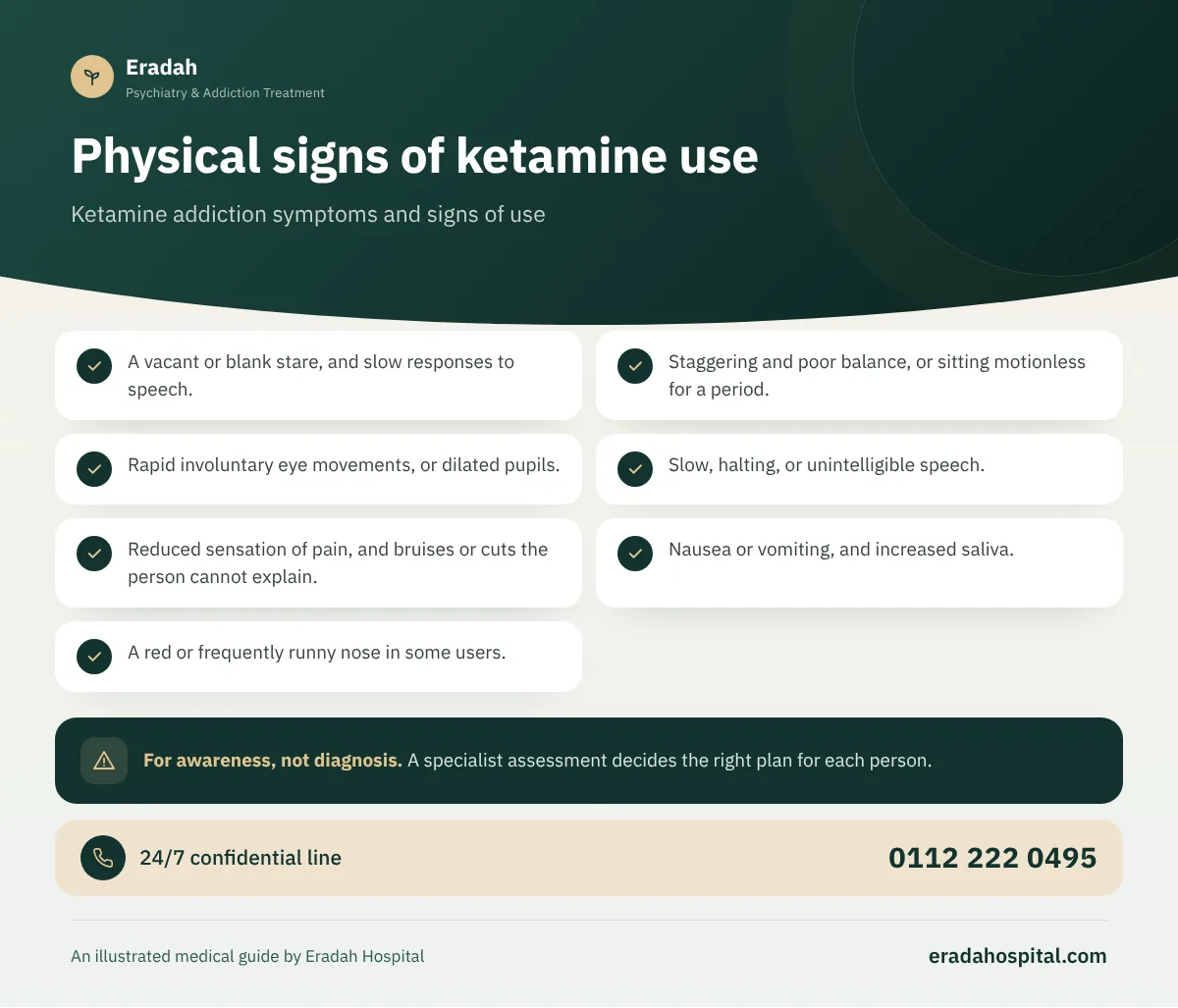
These signs appear during the effect and the few hours after it:
- A vacant or blank stare, and slow responses to speech.
- Staggering and poor balance, or sitting motionless for a period.
- Rapid involuntary eye movements, or dilated pupils.
- Slow, halting, or unintelligible speech.
- Reduced sensation of pain, and bruises or cuts the person cannot explain.
- Nausea or vomiting, and increased saliva.
- A red or frequently runny nose in some users.
Urinary signs: a distinctive sign of repeated use
What sets ketamine apart from many substances is that repeated use may leave a sign that families notice without understanding its cause:
- Going to the bathroom very many times, day and night.
- Complaints of lower abdominal pain or burning when urinating.
- Blood in the urine, or repeated urinary infections that do not respond to the usual treatment.
- Avoiding trips or places far from bathrooms.
Behavioral signs
- Withdrawal, a change from the usual friends, and spending more time at parties or late-night gatherings.
- Asking for money often, or unexplained spending.
- Excessive secrecy, and locking the room and phone.
- Neglecting school or work and being absent repeatedly.
- Small bags with white powder residue, or cards and rolled paper with powder residue on them.
Psychological and cognitive signs
- Clear impairment of memory and concentration, and forgetting appointments and details.
- Talk of feeling detached, or that the world is not real.
- Low mood and anxiety, or mood swings after periods of use.
- Preoccupation with the substance, cravings, and difficulty stopping despite the harms.
Signs that can be misread
Not every one of these signs is proof of use, and it is important that an observation does not turn into a hasty accusation:
| The sign | Other possible explanations |
|---|---|
| Frequent, painful urination | A urinary tract infection, diabetes, stones, or other causes the doctor determines. |
| Poor memory and concentration | Lack of sleep, depression, anxiety, or attention-deficit hyperactivity. |
| Withdrawal and mood change | Pressure at school or work, relationship problems, or a psychological disorder that needs assessment. |
| Staggering and a vacant stare | Alcohol, sedatives, other medications, or an acute medical condition. |
That is why the safest path is to gather observations calmly, then bring the matter to a doctor who can link the signs together and order the appropriate tests. And even if use is confirmed, treating it as a treatable health problem is far more helpful than treating it as a scandal.
Signs of ketamine use in teenagers and students
Ketamine is often linked to parties and late-night gatherings, so some patterns deserve a parent's attention: repeatedly coming home late with unusual spacing out and staggering, sleeping a long time the next day with difficulty remembering, a sudden drop in schoolwork, or new friends he avoids talking about. The earlier and calmer the conversation, the better the chance of persuading him to accept help.
When is ketamine use addiction? Diagnostic criteria
The DSM-5 diagnostic manual classes ketamine among the phencyclidine-like substances, and a use disorder is diagnosed by criteria over a year, including:
- Using larger amounts or for longer than intended.
- A persistent desire, or failed attempts, to cut down.
- Spending a great deal of time obtaining it or recovering from its effect.
- A strong, urgent craving to use.
- Continuing despite clear health problems such as bladder pain, or despite psychological and social problems.
- Using in physically dangerous situations such as driving, and tolerance and needing a larger amount.
| Number of criteria | Level |
|---|---|
| 2 to 3 | Mild |
| 4 to 5 | Moderate |
| 6 or more | Severe |
Strong physical withdrawal symptoms do not usually appear after stopping ketamine, but anxiety, cravings, and sleep and mood disturbance may, and the page Ketamine Addiction Treatment covers how to handle this stage.
How do you tell ketamine use from other substances?
| Substance | What usually distinguishes it |
|---|---|
| Ketamine | Detachment, a vacant stare, and staggering with reduced sensation of pain, and a relatively short effect. |
| Alcohol | Smell of alcohol and a flushed face, without clear detachment from reality. |
| Opioids | Very small pupils, drowsiness, and repeated nodding off. |
| LSD and magic mushrooms | Colorful visual hallucinations and dilated pupils, with greater ability to move and a longer effect. |
| Synthetic cannabis | Seizures, agitation, or sudden loss of consciousness, and unexpected violence. |
Telling them apart precisely is the doctor's job, and it may need a dedicated test, because many basic rapid tests do not detect ketamine, which we explain on the page How Long Ketamine Stays in the Body.
What should you do if you notice these symptoms?
- Do not discuss it while he is in a dissociated state; first make sure he is safe, and call an ambulance if danger signs appear.
- Write down your observations calmly, without aggressive searching or accusation.
- Choose a calm time to talk, express your concern and love, and focus on the behavior, not the person.
- If he complains of urination problems, take him to a doctor right away, and tell the doctor confidentially about the possibility of use.
- Offer help with clear steps, such as a confidential consultation or an assessment appointment.
Danger signs after using ketamine: call ambulance (123) immediately
- No response to calling or touch, or loss of consciousness
- Slow, weak or intermittent breathing, especially with alcohol, sedatives or opioids
- Severe confusion, agitation or panic that does not settle, or behavior that puts the person at risk of harm
- Vomiting while drowsy or with reduced consciousness
- Injury, a fall, drowning or an accident while under the effect, or chest pain and a very fast pulse
Call ambulance (123) immediately. If the person is unconscious but breathing, place them on their side so they do not choke on vomit. Stay with them and do not leave them alone, do not give them food or drink, and tell the paramedics everything they took.
Call the ambulance 123