Ritalin addiction treatment and ADHD treatment: what is the difference?
There are two different situations: a person who misuses Ritalin without having ADHD, and a patient with ADHD who has lost control over their medication. In the first case the goal is complete cessation and treating the motives, and in the second the goal is to treat ADHD safely, which may include changing the form or type of medication with closer oversight. You can find the details of treating the disorder itself on the ADHD page.
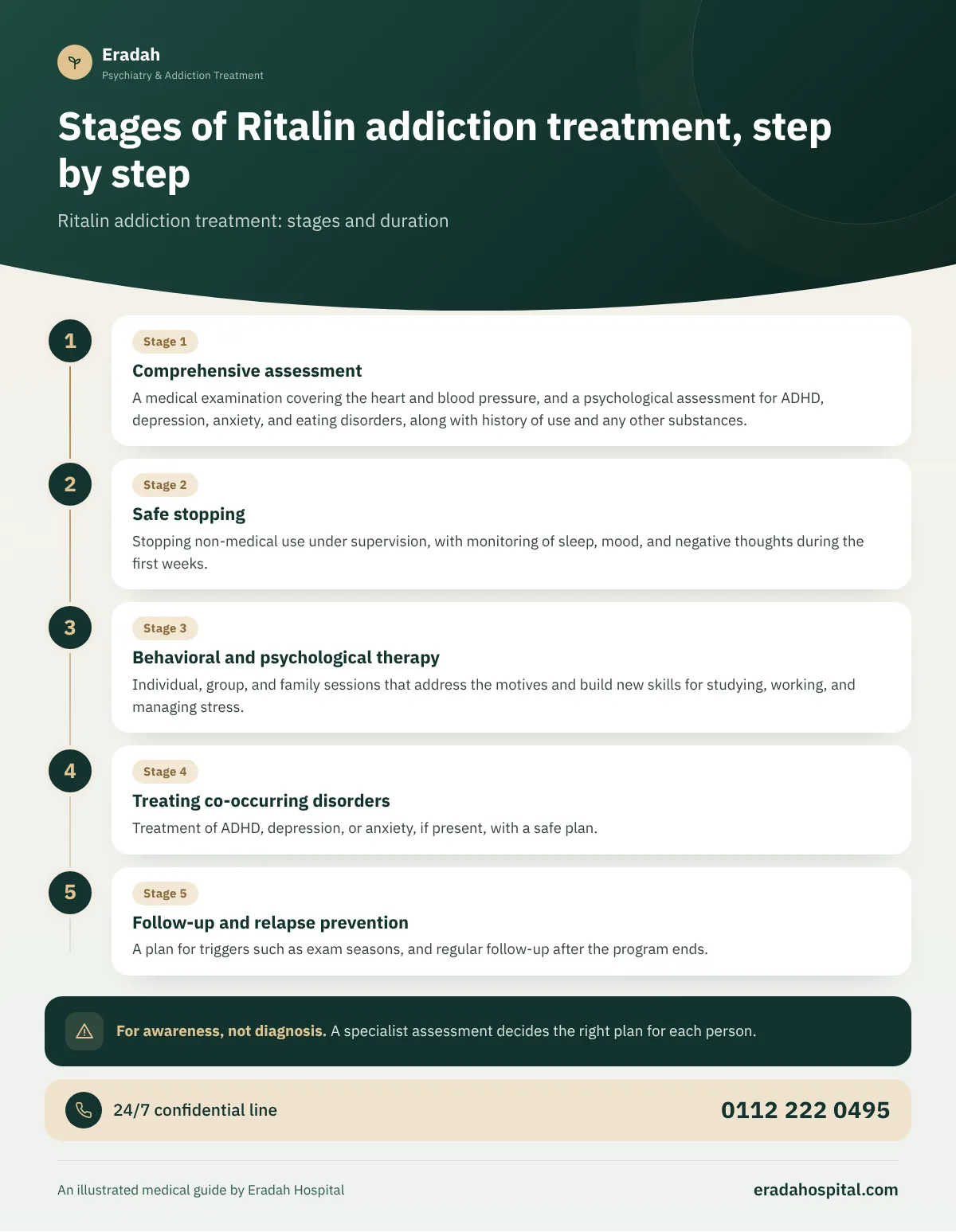
Stages of Ritalin addiction treatment
- Stage 1Comprehensive assessment
A medical examination covering the heart and blood pressure, and a psychological assessment for ADHD, depression, anxiety, and eating disorders, along with history of use and any other substances.
- Stage 2Safe stopping
Stopping non-medical use under supervision, with monitoring of sleep, mood, and negative thoughts during the first weeks.
- Stage 3Behavioral and psychological therapy
Individual, group, and family sessions that address the motives and build new skills for studying, working, and managing stress.
- Stage 4Treating co-occurring disorders
Treatment of ADHD, depression, or anxiety, if present, with a safe plan.
- Stage 5Follow-up and relapse prevention
A plan for triggers such as exam seasons, and regular follow-up after the program ends.
How is Ritalin stopped safely?
After heavy, repeated use, a person may go through a period on stopping that doctors call the "crash": severe exhaustion, low mood or depression, excessive sleep or insomnia, disturbing dreams, increased appetite, and a strong urge to go back. These symptoms are usually not life-threatening, but the depression can be severe and is sometimes accompanied by thoughts of self-harm, which makes medical follow-up essential.
- The doctor decides whether stopping should be immediate or gradual, depending on the case and whether there is a prescription.
- Daily monitoring of mood, sleep, and any negative thoughts during the first weeks.
- Treatment of specific symptoms such as insomnia or anxiety when needed, without replacing them with another substance that can be misused.
- Regular meals and a gradual return to physical activity and daily routine.
Are there medications to treat Ritalin addiction?
To date there is no medication approved specifically for treating stimulant use disorder, as confirmed by stimulant treatment guidelines issued by US health authorities. But medications can be part of the plan in other ways:
| Goal | How the doctor helps |
|---|---|
| Co-occurring depression and anxiety | Antidepressant or anti-anxiety medication chosen by the doctor according to the case. |
| Sleep disturbance | Sleep-regulating measures first, and a suitable short-term medication only when needed. |
| Genuine ADHD | Options less prone to misuse, such as non-stimulant ADHD medications like atomoxetine, or extended-release forms with controlled dispensing. |
| Other accompanying substances | Separate treatment for any other dependence on alcohol, sedatives, or other substances. |
No medication may be started or stopped without a doctor, and we do not give any doses here because they are set for each patient individually.
Behavioral and psychological therapy
It uncovers the thoughts that tie success or weight to the medication, and builds alternative skills for managing time and stress.
One of the strongest proven methods for treating stimulant use: tangible rewards for sticking with the program and for negative test results.
Helps an ambivalent person discover their own reasons for change instead of having them imposed.
Teaches the family how to support without pressure, and how to secure household medications without an atmosphere of accusation.
Healthy alternatives for focus and studying
A key part of recovery is discovering that you can get things done without the drug. The treatment team works with the person on practical skills:
- Enough regular sleep, the most important natural "stimulant" for memory and focus.
- Breaking study time into short blocks with regular rests.
- Daily physical activity, even light, and balanced nutrition.
- Managing exam anxiety with breathing techniques and advance planning.
- Seeking a specialist assessment if poor concentration continues despite all this.
How long does Ritalin addiction treatment take?
| Stage | Approximate duration |
|---|---|
| Assessment | One day to several days |
| Safe discontinuation and getting through the crash period | One week to several weeks |
| Intensive behavioral therapy | Several weeks to a few months |
| Follow-up and relapse prevention | Several months, and it may extend to a year |
The duration varies with the intensity of use and the presence of other substances or co-occurring psychological disorders, and the treatment team determines it according to each person's progress.
Does Ritalin addiction treatment require a hospital stay?
Outpatient treatment suits many cases, especially when use is limited and family support is good. Residential treatment is recommended when there is psychosis, severe depression, or thoughts of self-harm, when other substances are being used with it, when previous attempts have failed, or when the environment makes it hard to stay away from the drug.
Relapse prevention after Ritalin treatment
- A written plan for exam seasons and work pressure, which are the moments of greatest risk.
- Staying away from sources of the drug among friends, and securing any prescribed medication at home.
- Sticking with treatment for ADHD or depression if present, and regular follow-up.
- A steady routine of sleep, nutrition, and activity.
- Contacting the treatment team immediately at the first slip, because a relapse can be overcome.
Choosing a hospital for Ritalin addiction treatment
Ritalin is different from most addiction topics, because the substance is a real medication that some people need. A student who started with one pill before an exam may have undiagnosed ADHD, or may not. So the right facility does not just stop the pills. It first answers the question: is there an attention disorder that needs structured treatment, or has all the use been a search for energy and staying awake? The answer changes the whole plan.
- A psychiatrist who assesses ADHD with reliable tools before any decision.
- A medical decision on immediate or gradual discontinuation, especially for someone taking it by prescription.
- Mood follow-up after stopping, because the low can be deep in some young people.
- An alternative study and work plan prepared before the next exams.
- Communication with the family that respects the student's privacy and keeps them on track with their studies.
Many of these cases are suited to outpatient treatment and the day program at Eradah, with cognitive behavioral sessions led by psychologists, and an assessment by a psychiatrist for an attention disorder or co-occurring depression. Eradah receives children and adolescents for assessment, treatment, and follow-up. To understand what long-term use can do, read about the harms of Ritalin.
Wondering whether your son needs treatment? Call or message us on WhatsApp at 01122220495 around the clock, or contact our reception team. The first consultation is free and confidential, and residential treatment is available for adult men only.
Ritalin addiction treatment at Eradah
At Eradah we begin with a comprehensive psychological and medical assessment that shows whether there is genuine ADHD or a co-occurring disorder. Then we set up a safe discontinuation plan and individual and family behavioral therapy, with follow-up after the program ends. We treat students and young people with complete privacy, and in a way that protects their studies and work as far as possible.